



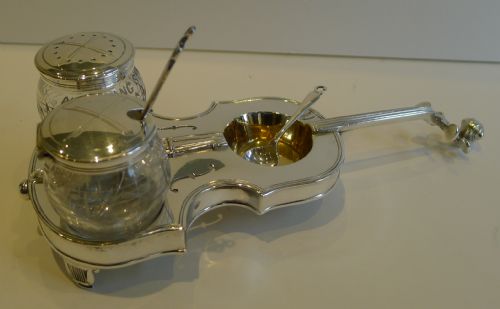
Novelty Salt Cellars
Novelty salt cellars bring whimsy to the dining table through miniature sculptures fashioned from silver and glass.
Novelty Salt Cellars
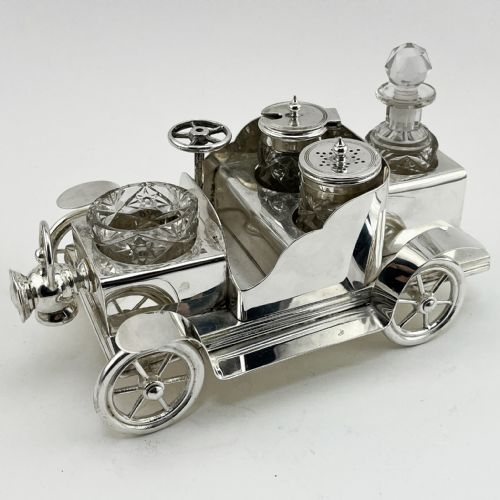
Novelty salt cellars are imaginative tableware pieces designed to hold salt and other condiments during dining, taking the form of animals, vehicles, and everyday objects. When you search for novelty salt cellars, you encounter delightful Victorian and Edwardian examples alongside mid-century and continental designs.
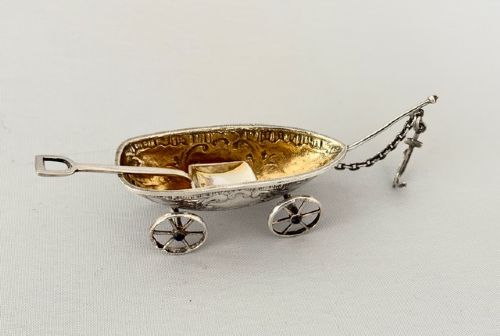
The pieces on this page span from the nineteenth century through the twentieth century, featuring distinctive forms such as birds, carriages, and garden implements. Cruet sets and individual salt dishes predominate, offering both paired sets and standalone figures.
Makers drew inspiration from nature, farmyards, and travel to create functional sculptures that double as decorative table ornaments. These salt cellars reflect the Victorian and Edwardian appetite for playful utility in domestic silver and plate.
How they were made
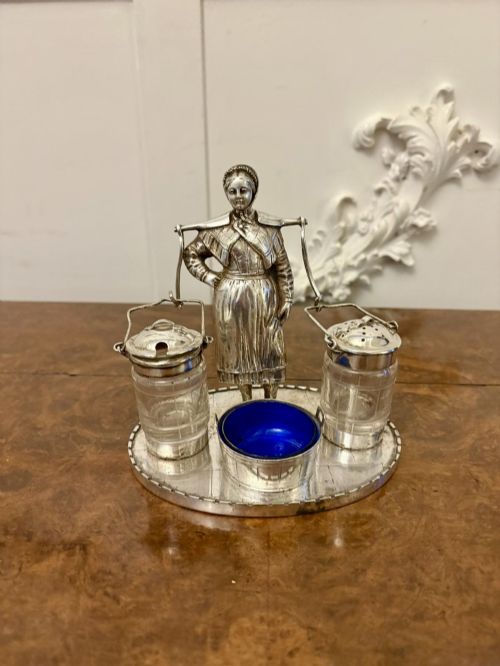
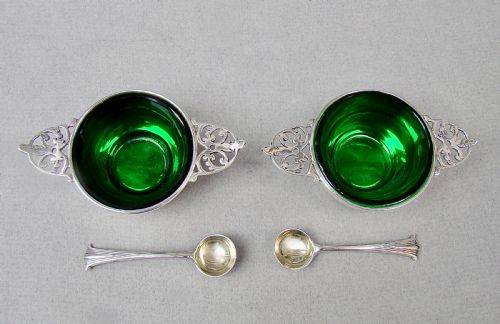
Silversmiths utilised sterling silver and silver plate to shape detailed figures and vessels, often casting the metal to achieve realistic textures and forms. Skilled artisans then incorporated cut glass, cobalt glass, and green glass inserts to hold the salt safely away from the metal.
Gilt highlights and applied details were frequently added to enhance the visual appeal of the silver and silver plated surfaces. Craftsmen also employed wood carving in pieces like Black Forest bear condiment figures, combining organic materials with functional metalwork.
Novelty Salt Cellars Retail Price Guide 2026
Typical asking prices for novelty salt cellars among the pieces listed under this phrase on Sellingantiques today, from the lower quarter to the upper quarter. They describe what is for sale here now, not the wider market.
What varies in quality
Quality rests upon the crispness of the casting and the naturalism of the animal or object portrayed, where finer pieces display intricate feather, fur, or mechanical detailing. The presence of original glass liners and clear hallmarks further distinguishes superior examples.
Maker attribution and the cleverness of the mechanism or design elevate certain items, particularly those produced by recognised silversmiths. Robust construction and balanced proportions ensure that these whimsical salt cellars remain stable and practical on the dining table.
Josiah Williams & Co·Sampson Mordan·Thomas Johnson·Berthold Muller
The Novelty Salt Cellars Glossary
- Cruet set
- A collection of small glass or ceramic bottles and cellars mounted in a frame for holding condiments at the table. These sets often incorporate novelty silver figures.
- Sterling silver
- An alloy containing ninety-two point five percent silver by mass, widely utilised for high-quality domestic tableware and salt cellars. It provides both durability and a bright finish.
- Silver plate
- A layer of silver applied to a base metal core, such as copper or Britannia metal, common in nineteenth-century novelty cruets. This technique offered the appearance of solid silver at a lower cost.
- Cobalt glass
- Deep blue glass frequently blown or moulded to create contrasting liners within silver salt cellars. The rich colour adds visual depth beneath translucent salt crystals.
- Quaich
- A traditional shallow two-handled Scottish drinking vessel, sometimes miniaturised in silver to serve as a novelty salt cellar.
Novelty Salt Cellars: Frequently Asked Questions
How were novelty salt cellars used?
These pieces sat upon the dining table to hold salt, pepper, or mustard for guests to season their food. They served as both practical tableware and clever conversation starters during formal meals.
Servants would fill the glass liners with fine salt before the meal, and diners used small spoons or pinched the salt directly from the open vessels.
Are the glass liners usually original?
Many surviving salt cellars retain their original cobalt or green glass liners, which were specifically blown to fit the metal frames. Finding a piece with its matching liner adds significantly to its completeness.
Replacement glass liners do occur due to accidental breakage over the decades, so checking the fit inside the silver mount is standard practice.
How do I date a silver novelty salt?
British pieces typically bear hallmarks stamped into the metal, revealing the assay office, date letter, and maker's mark. These tiny stamped symbols allow collectors to pinpoint the exact year of manufacture.
Stylistic clues, registration numbers, and the type of metal plating also help assign pieces to the Victorian, Edwardian, or later twentieth-century periods.
How should I clean silver salt cellars?
Silver and silver plate require gentle cleaning with a specialised non-abrasive polish to remove tarnish without wearing away the fine details of the casting. Glass liners can be washed separately in warm soapy water.
Harsh chemical dips should be avoided, particularly on pieces with gilt highlights or delicate glass inserts, to preserve the finish.