
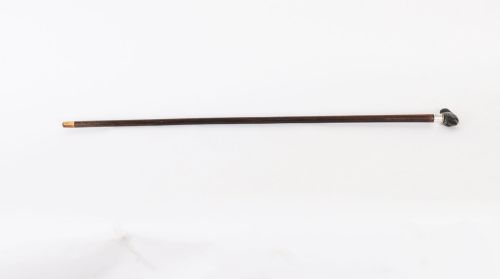
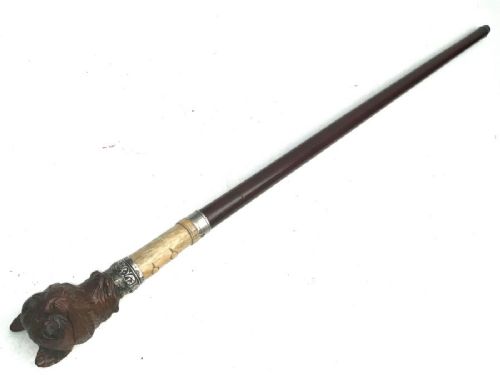
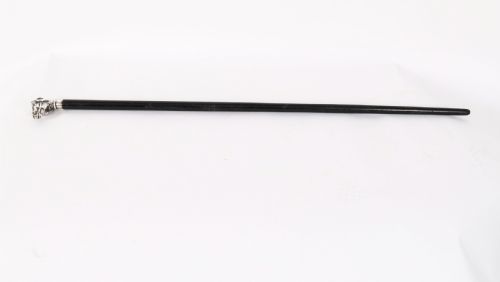
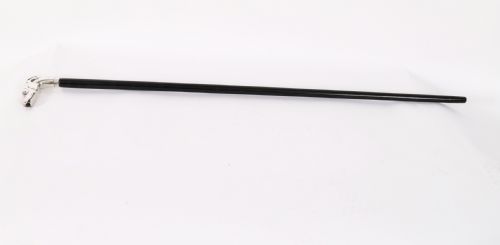
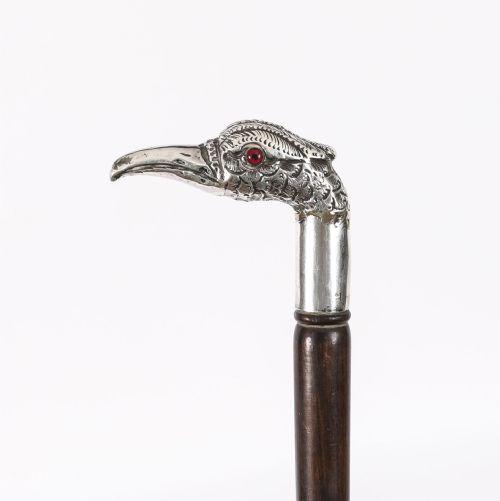


Novelty Head Walking Stick
A novelty head walking stick brings character and conversation to a collection through sculpted silver and carved wood handles.
Novelty Head Walking Stick
A novelty head walking stick is a gentleman or lady accessory featuring a carved or cast handle shaped as an animal, bird, or functional object. These canes appear across the nineteenth century, the Victorian era, the Edwardian period, and into the Art Deco years of the twentieth century.
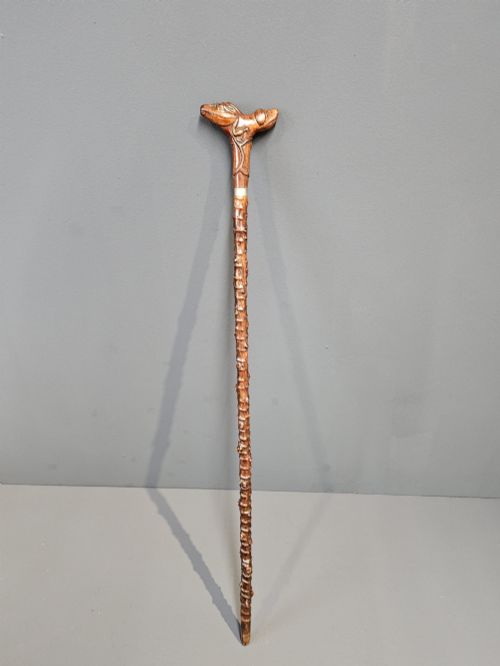
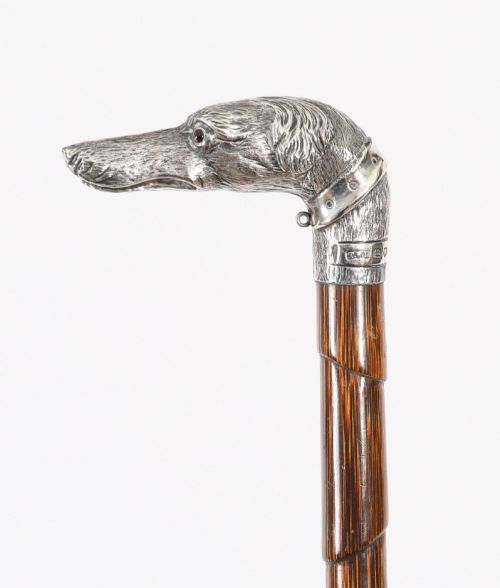
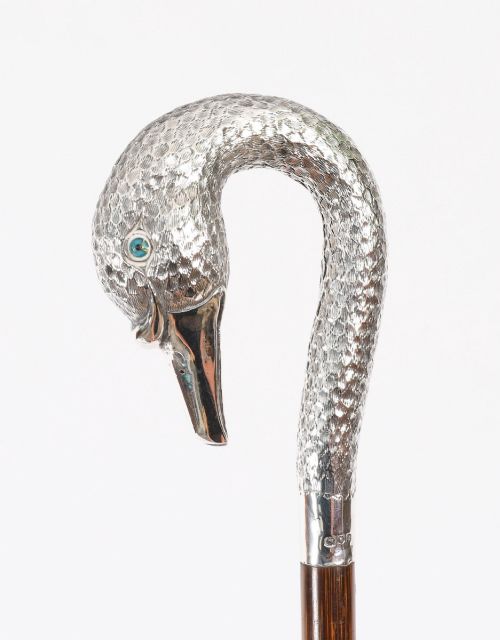
The versions most commonly met on this page combine silver mounts with hardwood shafts, alongside carved wooden pieces in styles such as Black Forest. Animal forms dominate the selection, showing greyhounds, swans, ducks, horses, dogs, and pheasants.
Origin details in the evidence point towards English, French, and German craftsmanship, spanning functional walking sticks, sword sticks, and parasol handles.
How they were made
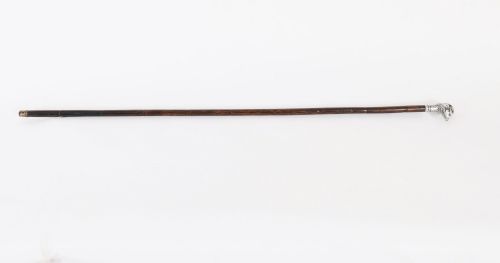
Silversmiths cast and chased metal handles in detailed animal shapes, often incorporating hallmarked sterling silver for the top mount. Woodworkers shaped shafts from ebonised wood, malacca, bamboo, and general hardwoods to support the decorative handles.
Carvers worked bone, ivory, and wood by hand to create intricate animal expressions and functional elements such as articulated jaws or hidden mechanisms. Metal shafts and internal blades were fitted alongside the sculpted heads to complete each stick.
Listings feature items from the Victorian, Edwardian, and Art Deco periods, utilising silver, hardwood, glass, and bone.
What varies in quality
Material selection dictates the standing of a piece, with dense hardwoods, fine ivory or bone, and heavy sterling silver mounts representing the higher end of period production.
The Novelty Head Walking Stick Glossary
- Sterling silver
- A silver alloy containing 925 parts per thousand by mass of silver and 75 parts of other metals. This standard metal appears frequently in the handles and collars of nineteenth-century canes.
- Malacca
- A sturdy, mottled cane stem material imported from Southeast Asia. Collectors prize this flexible and resilient wood for traditional walking stick shafts.
- Ebonised wood
- Timber treated to resemble ebony through a dark staining process. Makers utilised this finish to provide a smart, uniform contrast against bright silver handles.
- Black Forest
- A style of wood carving originating from the mountainous region in Germany. These pieces are typically carved from solid timber with naturalistic animal motifs.
Novelty Head Walking Stick: Frequently Asked Questions
What is a novelty head walking stick?
A novelty head walking stick is a period cane featuring a handle sculpted into the likeness of an animal or specific object.
These pieces combine practical support with decorative artistry, reflecting the tastes of nineteenth and early twentieth-century gentlemen and ladies.
How were these walking sticks used?
Original owners carried these canes as daily accessories for fashion, social standing, and outdoor promenades.
Certain examples also served dual purposes, concealing swords, gadgets, or functional mechanisms within the shaft.
How do I identify the period?
Dating relies on assay marks stamped into the silver handles, stylistic clues from Victorian or Edwardian design, and material combinations.
Makers often recorded dates or assay office towns directly on the metal collars of the canes.
How should I care for a cane?
Preserving these pieces involves keeping them in stable indoor humidity away from direct sunlight and extreme temperature shifts.
Wooden shafts benefit from occasional light waxing, while silver mounts require gentle cleaning without harsh abrasive polishes.