


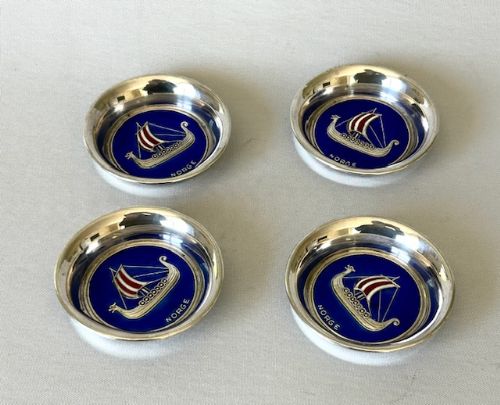


Norwegian Guilloche Enamel Pin
These Norwegian guilloche enamel pin pieces are brilliant silver jewels that bring unmatched colour and mid-century modern style to any collection.
Norwegian Guilloche Enamel Pin
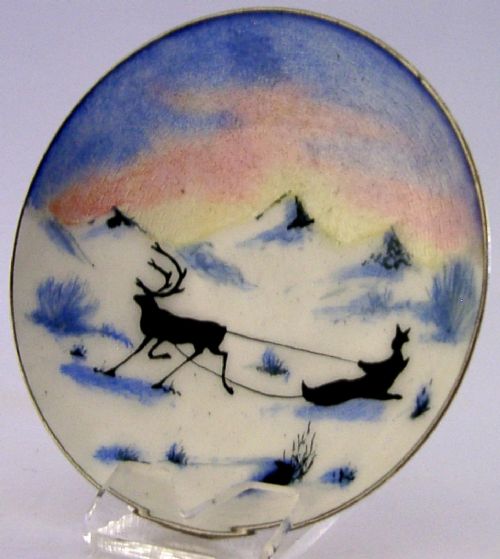
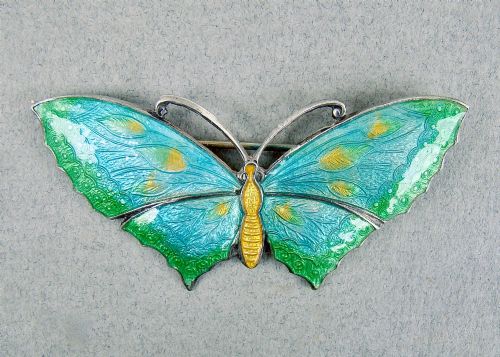
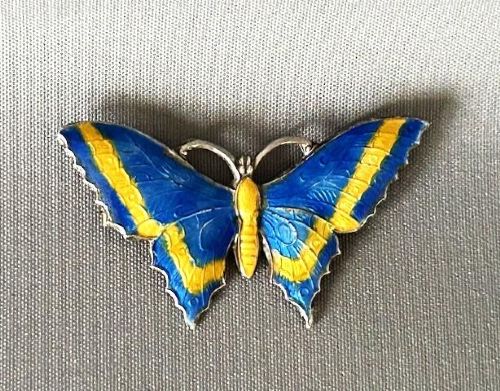
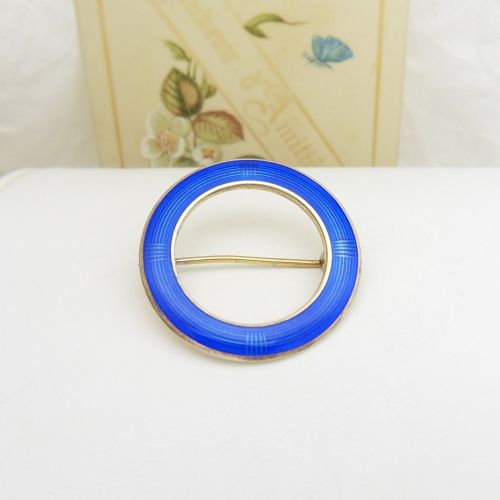
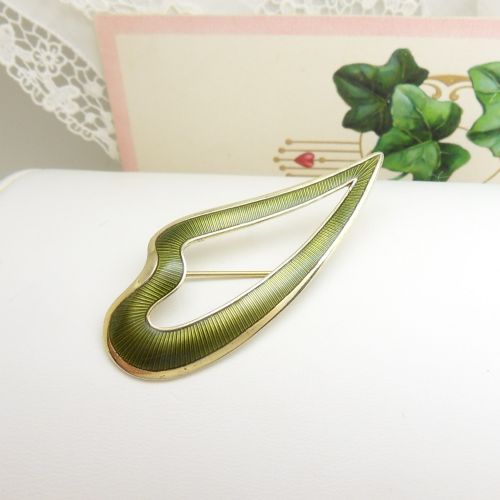
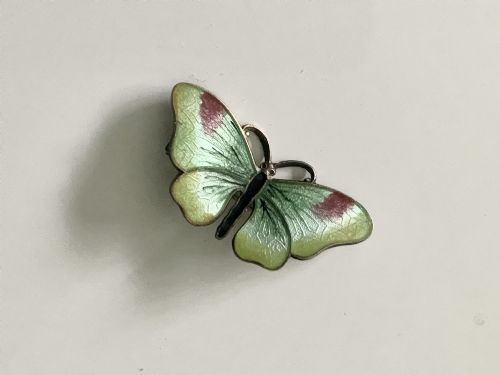
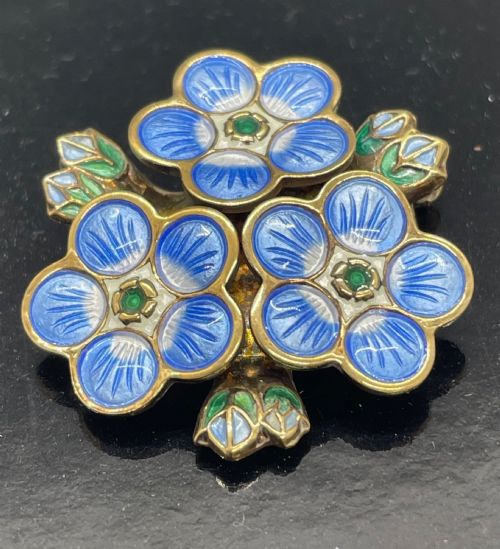
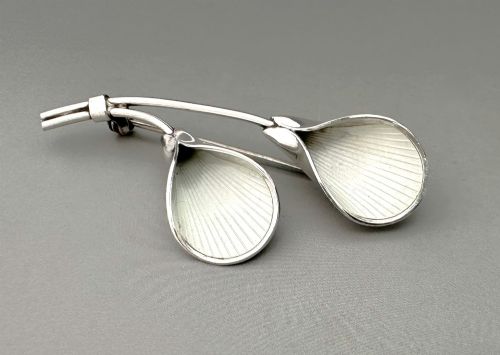
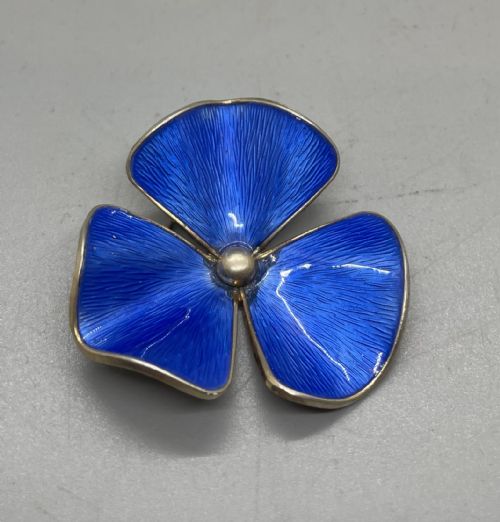
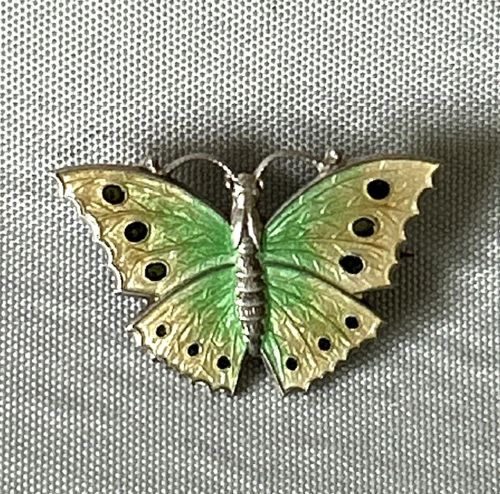
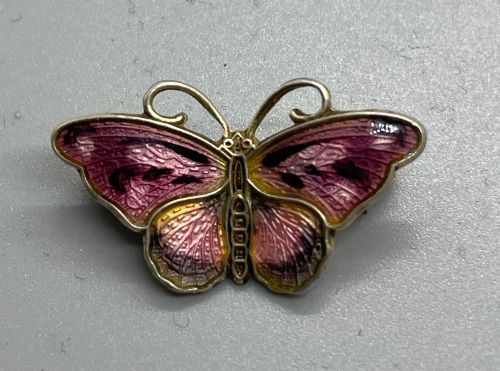
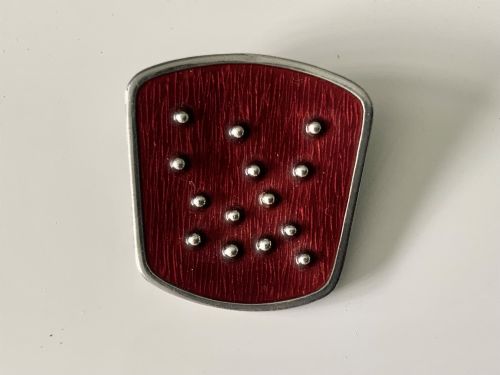
A Norwegian guilloche enamel pin is a small silver brooch or trinket dish featuring intricate engine-turned patterns beneath coloured vitreous enamel. These pieces emerge primarily from the twentieth century, spanning periods from Victorian times through the 1920s, 1930s, 1940s, 1950s, and 1960s. The most common forms found here are delicate butterfly brooches, floral motifs, bar brooches, and Viking ship designs.
Makers working within the Mid-Century Scandinavian and Art Deco traditions produced these ornaments using sterling silver and silver gilt. Buyers frequently encounter designs associated with notable Scandinavian workshops alongside unmarked pieces of the same period. The scale tends to be petite, making them versatile accessories or cabinet items.
How they were made
Silversmiths constructed these items using sterling silver, frequently applying silver gilt, gold gilt, or gold vermeil to the base metal. The surface received a mechanical engraving or guilloche pattern to create repeating geometric textures beneath the translucent coating.
Vitreous enamel was then applied in powdered form and fired at high temperatures to fuse the glass to the silver base. This technique produced the vibrant red and polychrome finishes characteristic of Scandinavian modern jewellery.
Norwegian Guilloche Enamel Pin Retail Price Guide 2026
Typical asking prices for norwegian guilloche enamel pin among the pieces listed under this phrase on Sellingantiques today, from the lower quarter to the upper quarter. They describe what is for sale here now, not the wider market.
Butterfly and floral motifs dominate the object types, alongside bar brooches and trinket dishes.
What varies in quality
The sophistication of the engine-turned pattern beneath the enamel sets individual pieces apart, ranging from simple concentric lines to complex rayed designs. Precision in the application of vitreous enamel dictates the clarity and depth of the colour achieved across the silver surface.
The presence of a recognised workshop mark or designer attribution influences the standing of a brooch within the field. Workmanship in the underlying silver chasing and the gilding finish further distinguishes standard production from finer examples.
David Andersen·Aksel Holmsen·Hroar Prydz·Gustav Gaudernack
The Norwegian Guilloche Enamel Pin Glossary
- Guilloche
- An ornamental engraving technique in which a precise, intricate geometric pattern is mechanically etched into a metal surface. This engraved texture shines through translucent enamel to create shimmering optical effects.
- Vitreous Enamel
- A material made by fusing powdered glass to a metallic substrate by firing at high temperatures. The resulting glossy compound provides durable, permanent colour.
- Silver Gilt
- Silver that has been coated with a thin layer of gold on its exterior surfaces. This finish gives the metal a warm, golden appearance while retaining a silver core.
- Sterling Silver
- An alloy comprising ninety-two point five percent silver and seven point five percent other metals, usually copper. This standard composition provides the necessary durability for detailed brooches.
Norwegian Guilloche Enamel Pin: Frequently Asked Questions
How do I wear a butterfly brooch?
These small silver pins suit lapels, collars, and hats where their bright enamel colours can catch the eye. Their petite scale makes them easy to pin onto heavy winter coats or delicate summer scarves alike.
Securing the pin properly ensures the safety of the delicate silver gilt and glass enamel components during daily wear.
What is guilloche enamel?
Guilloche enamel combines mechanical metal engraving with fused glass powders. Artisans etch precise patterns into silver before applying translucent coloured enamel over the top.
This method allows light to reflect off the engraved lines below, creating a shimmering depth that flat enamels lack.
How do I date these brooches?
Dating relies on stylistic markers and maker marks rather than complicated tests. Pieces range from Victorian interpretations through Art Deco and Mid-Century Scandinavian designs.
Consulting workshop stamps helps place specific items within decades like the 1930s or 1950s.
Are these pieces made of solid silver?
Most items utilise sterling silver foundations, frequently enhanced with gold gilt or vermeil finishes. The underlying metal provides structural strength for the enamel work.
Examining the reverse side often reveals silver purity stamps alongside maker hallmarks.