



Norwegian Enamel Badge
A norwegian enamel badge brings together vibrant vitreous colour and sterling silver, offering a distinct mid-century or earlier miniature piece of wearable art.
Norwegian Enamel Badge
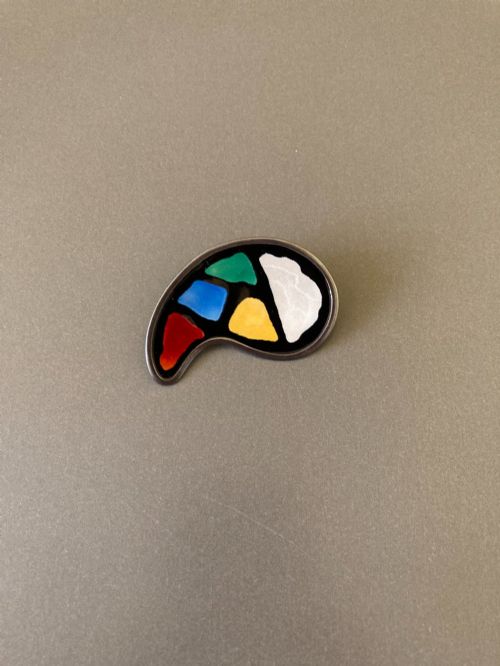
The inventory spans several eras, running from the Victorian period through the Art Deco and Art Nouveau movements into Mid-Century Modern designs. Pieces from the nineteen-fifties and nineteen-sixties dominate the selection, showcasing clean Scandinavian lines.
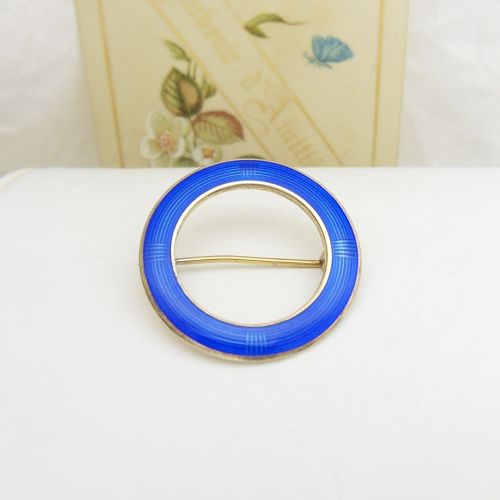
Makers utilise vibrant shades of blue and red enamel over textured or guilloche backgrounds. Buyers find both simple geometric shapes and figurative subjects like the classic Viking ship.
How they were made
Silversmiths formed the base structures using sterling silver, frequently applying a gold wash known as silver gilt or vermeil to enhance the visual depth of the metal. Vitreous enamel was then fused to the silver surfaces through high-temperature firing.
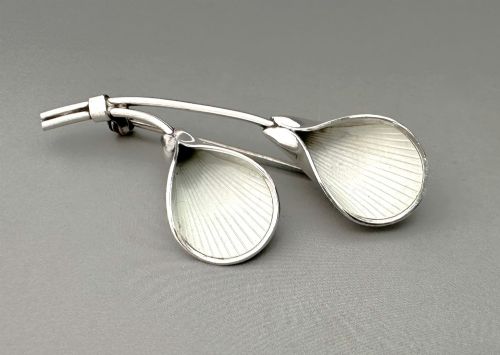
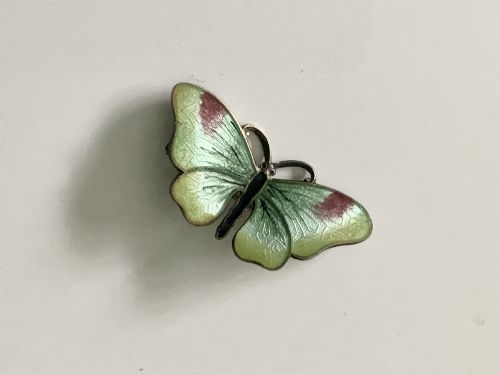
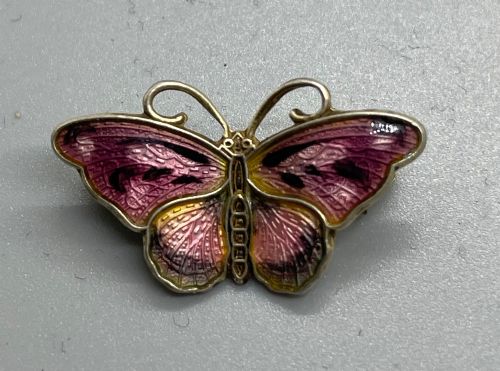
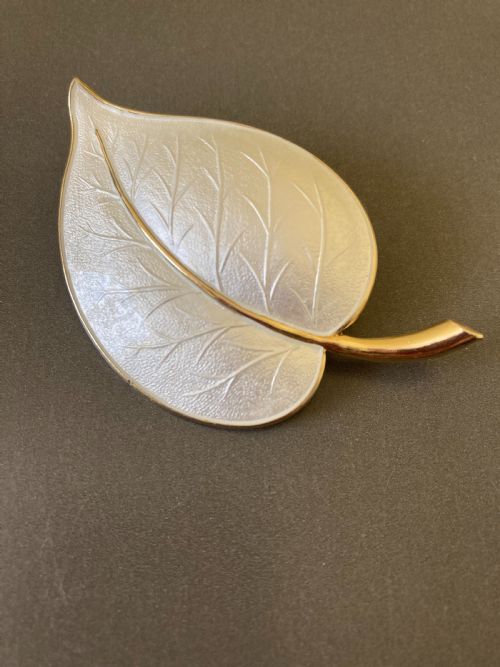
Many examples incorporate guilloche techniques, where the metal beneath the translucent enamel is machine-turned with precise geometric patterns to catch the light. Hand-applied enamel work defines the intricate wings of butterfly brooches and the petals of floral designs.
Materials recorded across the inventory include sterling silver, silver gilt, vermeil, and vitreous enamel in shades of blue and red.
What varies in quality
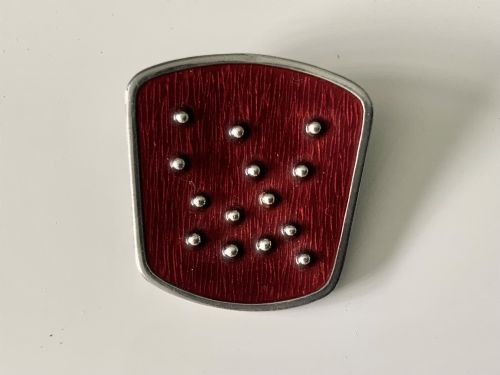
The distinction between standard production pieces and finer items rests on the complexity of the enamelling technique and the precision of the underlying metalwork. Guilloche patterns that show exceptional crispness beneath translucent enamel elevate a piece above flat, opaque colour fields.
Attribution to documented designers and workshops adds a layer of distinction, as does the preservation of the delicate silver gilt surfaces. The weight of the sterling silver frame and the finesse of the pin mechanism also signal the standard of manufacture.
Aksel Holmsen·Gustav Gaudernack
The Norwegian Enamel Badge Glossary
- Guilloche
- A decorative technique where a precise mechanical pattern is engraved into metal beneath translucent enamel. This method creates shimmering light effects that shift as the viewing angle changes.
- Vitreous Enamel
- A material made by fusing powdered glass to a substrate through firing at high temperatures. The resulting glossy surface provides durable colour that resists fading over decades.
- Silver Gilt
- Sterling silver that has been coated with a thin layer of gold. This finish was frequently applied to Norwegian enamel brooches to contrast with bright blue or red enamel.
- Vermeil
- A specific term for high-quality sterling silver plated with gold. It offers the rich appearance of solid gold while utilising a silver base.
Norwegian Enamel Badge: Frequently Asked Questions
How do I wear a norwegian enamel badge?
These pieces function primarily as brooches and pins, suited for fastening to lapels, scarves, or heavy knitwear. Their secure pin mechanisms allow them to be worn daily with modest care.
Because the enamel surface can chip upon hard impact, it pays to place them where they will not suffer sharp knocks against surfaces or other jewellery.
What periods do these pieces cover?
The selection spans from Victorian and Art Deco eras through to the nineteen-fifties and nineteen-sixties. Mid-century Scandinavian modernism accounts for a large portion of the available inventory.
Earlier examples from the nineteen-twenties and nineteen-thirties lean into distinct period aesthetics like Art Nouveau, while retaining traditional Norwegian silver craftsmanship.
Are these badges made of solid silver?
Most pieces are constructed from sterling silver, often marked with standard purity numbers like 925. Many examples feature a gold wash over the silver, known as silver gilt or vermeil.
This gilt finish creates a warm contrast against the bright blue and red vitreous enamel work characteristic of Scandinavian workshops.
What motifs are most common?
Butterflies and floral sprays appear frequently across the mid-century inventory, alongside geometric circles and abstract modernist shapes. Traditional cultural subjects, such as Viking ships, also surface in Victorian and later designs.
Each motif highlights the versatility of guilloche enamel and coloured glass worked into miniature metal canvases.