

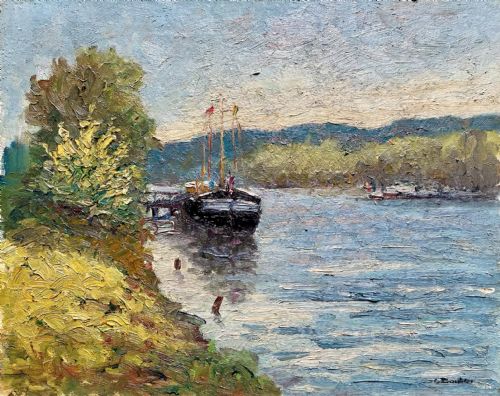
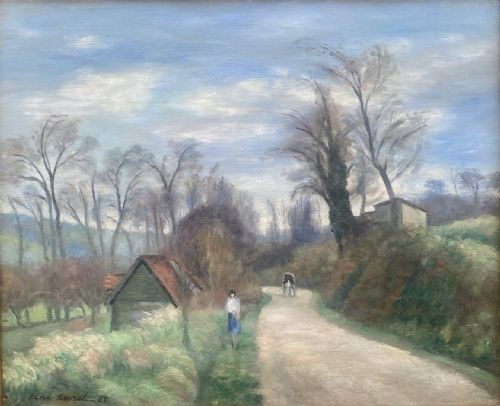


Normandy Landscape Oil Artwork
These normandy landscape oil artwork pieces capture French river scenes and coastal cliffs with enduring brushwork.
Normandy Landscape Oil Artwork
A normandy landscape oil artwork presents rural and coastal scenes across northern France, spanning the late nineteenth century to the mid twentieth century. Buyers encounter atmospheric river views, agricultural valleys, and harbour scenes rooted in regional traditions.
The selections on this page draw from Impressionism, Post-Impressionism, and French Provincial aesthetics. Works range from intimate panel paintings to large canvases depicting locations such as the Seine, Rouen, and the Alabaster Coast.
How they were made
Artists painted primarily with oil paint on stretched canvas or prepared wood panels, sometimes incorporating gesso layers for a stable ground. These materials allowed painters to build rich surface textures and capture shifting light outdoors.
Makers utilised plein air techniques to record direct observations of French weather, employing layered brushstrokes that define the water, rolling hills, and skies characteristic of the region.
Normandy Landscape Oil Artwork Retail Price Guide 2026
Typical asking prices for normandy landscape oil artwork among the pieces listed under this phrase on Sellingantiques today, from the lower quarter to the upper quarter. They describe what is for sale here now, not the wider market.
Recorded periods span from the 1870s through to the 1960s.
What varies in quality
Quality rests upon the strength of the composition and the artist's handling of light and atmosphere. Stronger works demonstrate confident brushwork and a cohesive sense of place rather than mechanical replication.
The depth of colour harmony and the preservation of the original paint surface determine the overall standing of each piece. Finer examples retain their original framing and surface vibrancy without excessive restoration.
Rene Levrel·Paul-Élie Gernez·Paul-Jean Anderbouhr·Raimond Louis Lecourt·Fred Pailhes·André Prévot-Valéri·Martin Lamotte
The Normandy Landscape Oil Artwork Glossary
- Oil paint
- A slow-drying paint made by mixing pigments with a drying oil, commonly linseed oil. This medium allows for rich blending and textured applications.
- Canvas
- A heavy woven fabric used as a surface for painting, typically stretched over a wooden frame. It provides a flexible and durable support for oil works.
- Wood panel
- A rigid wooden board utilised as a painting support, often offering a smooth ground for detailed brushwork. Panels appear frequently in earlier works.
- Gesso
- A primer mixture consisting of a binder mixed with chalk, gypsum, or pigment, applied to a substrate to prepare the painting surface. It seals the wood or canvas.
- Plein air
- The act of painting outdoors to capture direct natural light and atmosphere. Artists working in this method observe their subjects on site.
Normandy Landscape Oil Artwork: Frequently Asked Questions
What periods do these paintings cover?
The selection spans from the late nineteenth century through to the mid twentieth century. Works reflect evolving regional styles across successive decades.
Key periods include Impressionism and Post-Impressionism movements that developed across French artistic circles.
Where were these scenes painted?
Artists painted across northern French locations including riverbanks along the Seine, coastal cliffs, and busy harbours. Normandy provided varied terrain for landscape painters.
Locations frequently cited include Rouen, Le Havre, and Giverny.
How should I display them?
These works suit traditional or mid-century interiors when hung on neutral walls away from direct sunlight. Proper placement protects the oil pigments over time.
Many pieces arrive in period frames that complement the painting style.
What surfaces are used?
Paintings utilise either stretched canvas or prepared wood panels as a structural base. Some pieces also incorporate gesso priming.
Canvas supports offer traditional texture while wood panels provide a rigid surface.