



Nomadic Saddle Rug
A nomadic saddle rug brings the geometric power and rich village palette of nineteenth-century tribal weavers directly onto a floor or wall.
Nomadic Saddle Rug
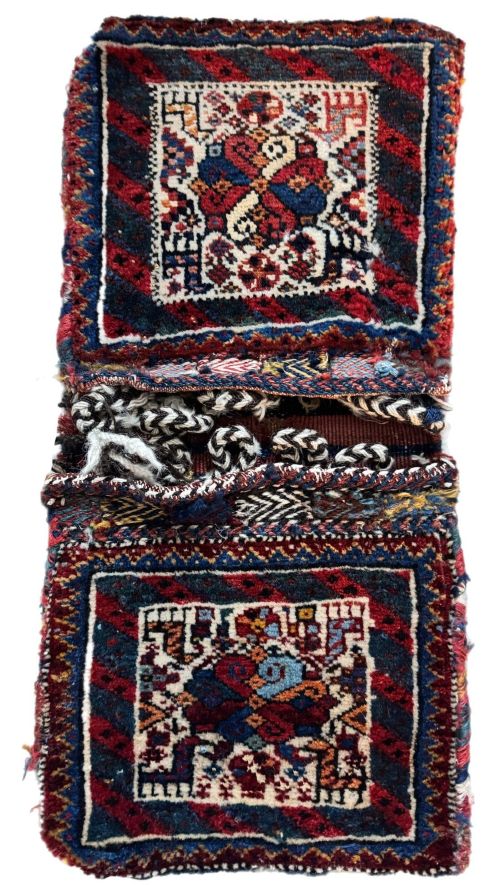
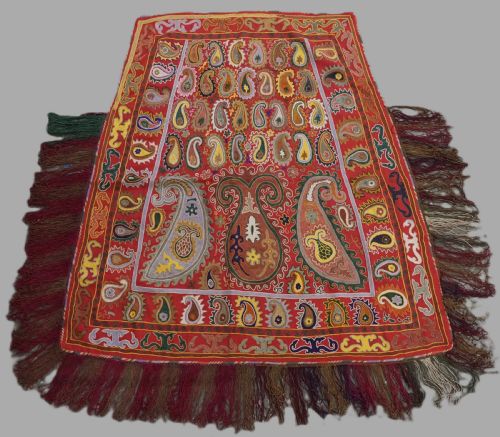
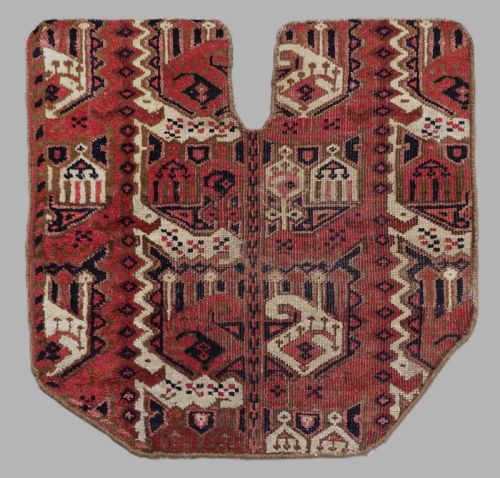
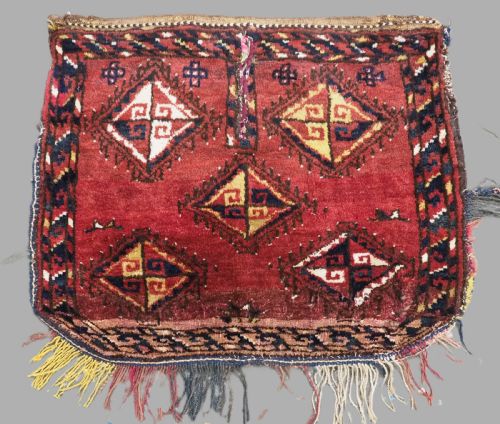
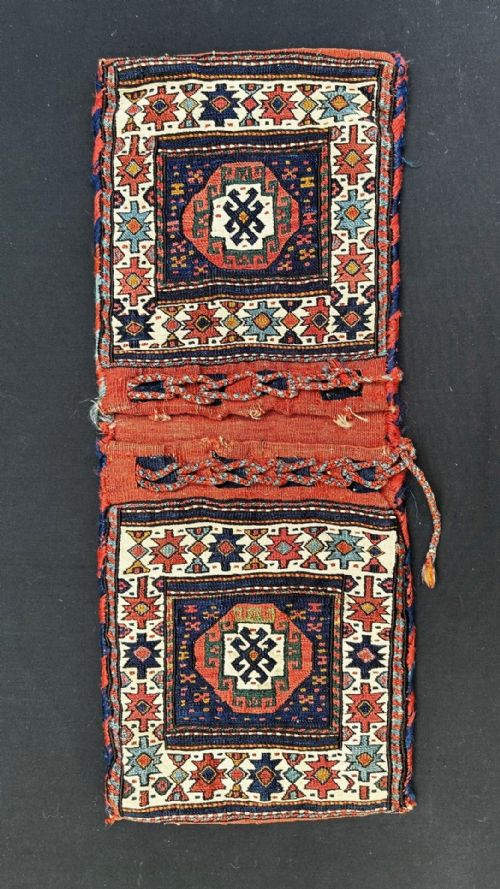
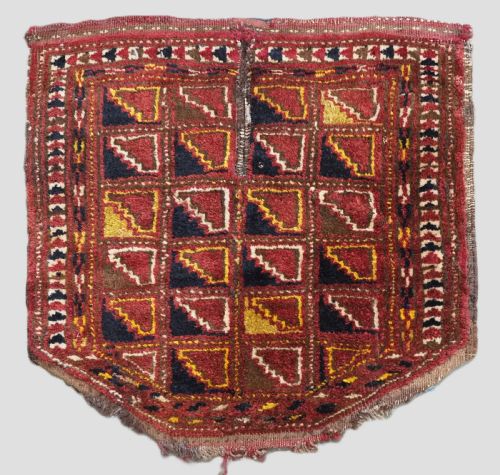
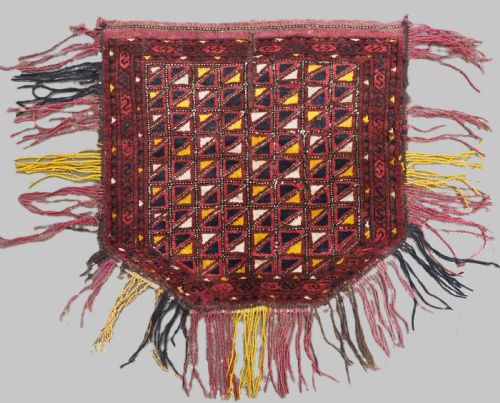
A nomadic saddle rug represents utilitarian tribal weaving produced across Persia, the Caucasus, and Central Asia during the nineteenth and early twentieth centuries. These pieces originated as functional horse or camel equipment, including complete double pouches, single bag faces, and protective covers designed for daily camp life.
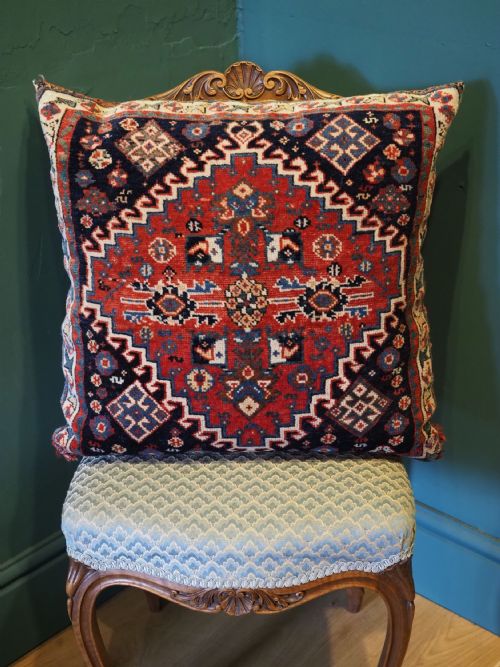
Most examples date from the mid-nineteenth century up to the nineteen-twenties, reflecting a period before commercial synthetic dyes altered traditional village production. Their formats range from compact square cushion covers to elongated double saddlebags intended to drape across animal flanks.
Materials and Construction
Weavers relied primarily on hand-spun sheep wool for the pile and foundation, occasionally incorporating cotton for structural warps or wefts and utilising silk for specific highlights. Natural dyes derived from local plants and minerals provided the deep reds, indigos, and golds that matured gracefully over decades of use.
Construction methods varied from dense Turkish or Persian knotting in pile rugs to flatwoven Soumak and kilim techniques utilised on bag faces and backs. Leather reinforcements and original woollen tassels frequently survived on well-preserved pieces designed for practical service on the trail.
Nomadic Saddle Rug Retail Price Guide 2026
Typical asking prices for nomadic saddle rug among the pieces listed under this phrase on Sellingantiques today, from the lower quarter to the upper quarter. They describe what is for sale here now, not the wider market.
Listings feature nineteen-century nomadic saddle rugs utilising hand-spun wool, natural dyes, and flatwoven Soumak techniques from Persian and Central Asian tribes.
Judging Quality and Character
Quality rests upon the handle of the wool and the saturation of the natural dye palette, where high lanolin content gives the pile a lustrous finish. Finer knot density and precise execution of tribal motifs distinguish accomplished village weaving from standard utility work.
Survival of original plain-weave backs, closing systems, and tassels elevates the historical integrity of a piece. The crispness of drawing within medallions and guls indicates the weaver's mastery over traditional pattern repertoires passed down within specific tribal confederations.
The Nomadic Saddle Rug Glossary
- Khorjin
- The traditional Persian term for a double saddlebag used by nomadic tribes to transport personal belongings during migration.
- Soumak
- A wrap-around flatweaving technique that creates a durable patterned surface resembling embroidery on the reverse side.
- Gul
- A repeating medallion or octagonal floral motif characteristic of Turkmen and Central Asian tribal weaving traditions.
- Boteh
- A stylized almond or pear-shaped motif representing a sprouting bush, frequently deployed across Persian tribal fields.
- Heybe
- The Turkish and Anatolian term for a saddle bag or utility pouch woven on a narrow nomadic loom.
Nomadic Saddle Rug: Frequently Asked Questions
How were nomadic saddle rugs used?
These textiles served practical functions as animal transport gear, hanging storage pouches inside tribal tents, and ground covers for daily camp life.
Nomads slung the paired bags across horses or camels during seasonal migrations to carry household goods, food, and personal possessions.
How do I clean a antique saddle bag?
Maintenance requires gentle surface vacuuming without a rotating brush to remove dust from the wool pile and flatwoven sections.
Professional textile conservation specialists should handle any wet cleaning to protect fragile natural dyes and historic wool foundations.
Are complete pairs better than single bag faces?
Complete double bags joined by their original central web hold greater historical completeness and rarity for advanced collectors.
Single bag faces still offer exceptional decorative utility and artistic merit when displayed as compact wall hangings or small floor mats.