







Nomadic Camel Rug
When you handle a nomadic camel rug, you hold a piece of tribal weaving crafted by pastoralists across Central Asia and Persia during the nineteenth and early twentieth centuries.
Nomadic Camel Rug
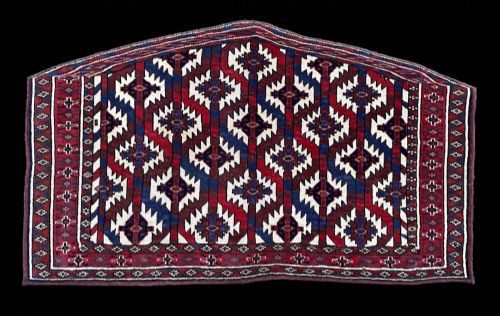
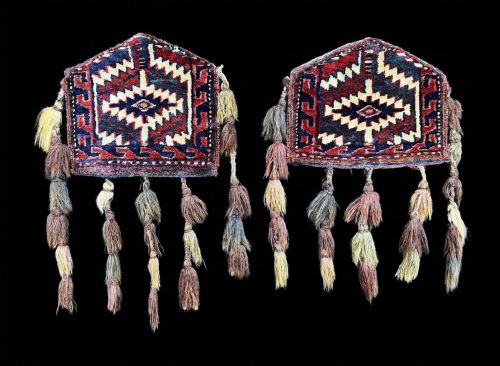
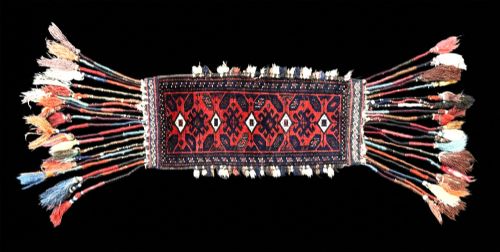
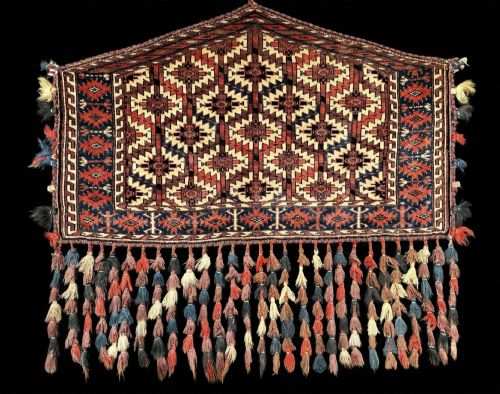
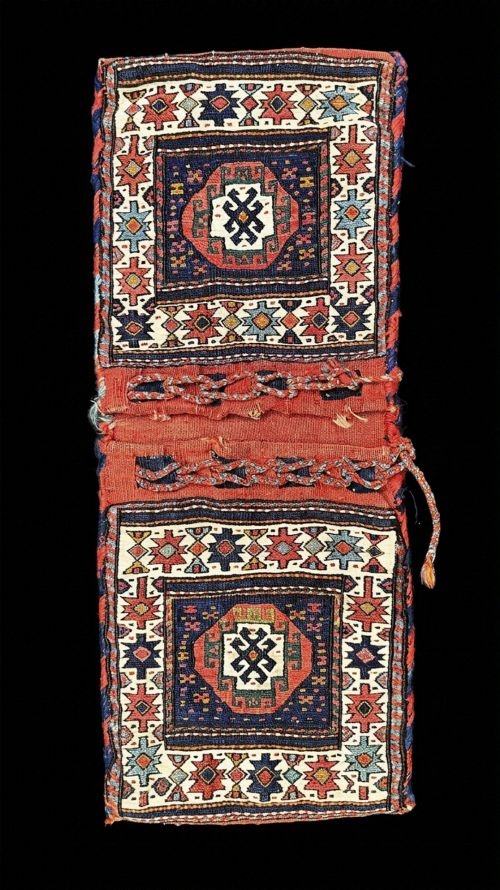
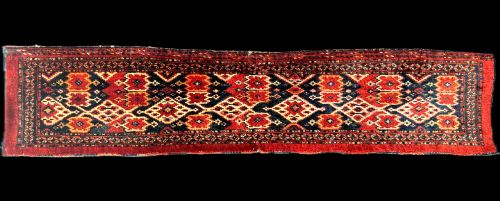
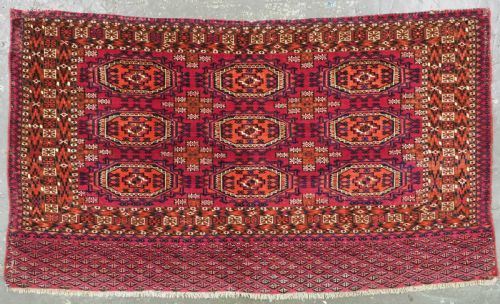
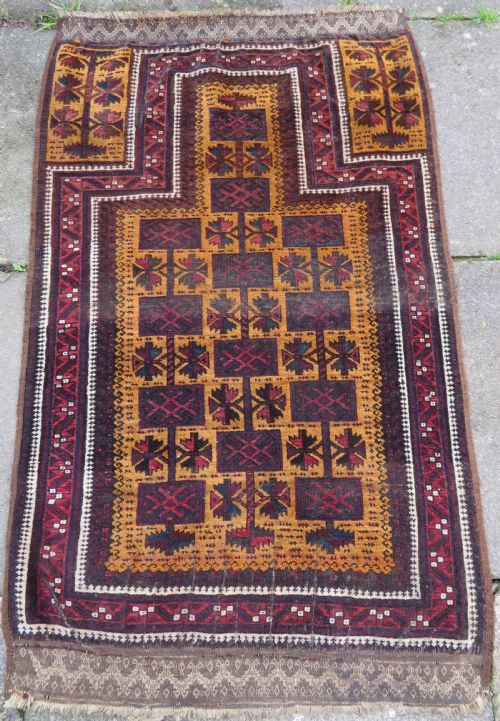
A nomadic camel rug encompasses utilitarian tribal trappings, prayer rugs, saddle bags, and animal decorations produced by groups such as the Turkmen, Baluch, and Shahsavan. Buyers searching for a nomadic camel rug will encounter formats ranging from small prayer mats with tree of life motifs to large chuval faces and wedding trappings created for tribal life.
The objects originate from regions spanning Turkmenistan, Afghanistan, Azerbaijan, and Persia, dating primarily from the mid-nineteenth century up to the nineteen-thirties. These textiles served functional roles within tribal households and animal transport, utilising traditional regional layouts and tribal guls rather than urban workshop designs.
How they were made
The materials rely heavily on hand-spun wool, camel hair or camel wool, and cotton foundations, occasionally accented with silk highlights and leather or metal details. Natural dyes provide the palette, creating deep earthy tones across the camel grounds and field designs.
Techniques combine pile weaving with flatweave structures such as banded flatweaves and embroidered faces. Trappings frequently incorporate hanging loops, complete plain-weave backs, and intricate supplementary weft-floats.
Nomadic Camel Rug Retail Price Guide 2026
Typical asking prices for nomadic camel rug among the pieces listed under this phrase on Sellingantiques today, from the lower quarter to the upper quarter. They describe what is for sale here now, not the wider market.
The inventory records tribal items originating from Turkmen, Baluch, Shahsavan, and Yomut weavers across Central Asia and Persia.
What varies in quality
Quality rests upon the fineness of the knotting, the crispness of the tribal guls, and the integrity of the structural wool or camel hair. Pieces retaining complete backs, original hanging loops, or paired components demonstrate superior preservation.
The depth and saturation of the natural dyes distinguish standard work from exceptional examples. Handling reveals differences in the density of the wool and the precision of flatwoven details.
The Nomadic Camel Rug Glossary
- Chuval
- A large tribal bag used for storage inside a yurt or tent, often featuring multiple guls arranged in rows across the face.
- Torba
- A smaller storage bag utilised by nomadic tribes, typically wider than it is tall and hung on the interior walls of a dwelling.
- Gul
- A repeated octagonal medallion motif used by Turkmen and other Central Asian tribes to identify specific clans and lineages.
- Asmalyk
- A pentagonal trapping hung on the flanks of a camel during wedding processions and tribal ceremonies.
- Prayer rug
- A small mat featuring a mihrab arch or tree of life design, intended for daily ritual devotions by nomadic weavers.
Nomadic Camel Rug: Frequently Asked Questions
What is a nomadic camel rug?
It is a hand-woven textile created by tribal groups using wool and camel hair for functional transport or domestic use.
These pieces reflect the distinct cultural motifs and regional weaving traditions of nineteenth-century nomads.
How were these rugs used originally?
Nomads utilised them as storage bags, animal trappings for weddings and transport, and floor coverings inside tents.
Many items served practical roles on pack animals before transitioning into decorative household textiles.
How do I identify a Baluch rug?
Baluch pieces often feature camel grounds, latch hook medallions, and prayer formats created by tribes in Afghanistan and Persia.
They display rustic wool textures and darker regional palettes compared to Turkmen weaving.
What are Turkmen guls?
Guls are distinct geometric medallions repeated across tribal formats to signify specific ancestral clans.
Variations in these motifs help distinguish between Yomut, Tekke, Saryk, and Ersari groups.