



Nineteenth Century Writing Cabinet
A nineteenth century writing cabinet brings domestic order and secret compartments into a room, offering a dedicated surface for correspondence.
Nineteenth Century Writing Cabinet
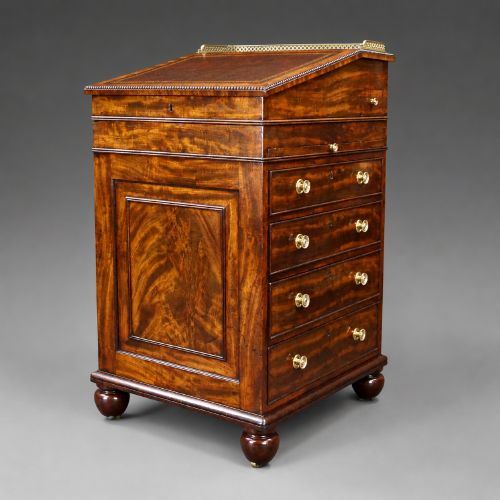
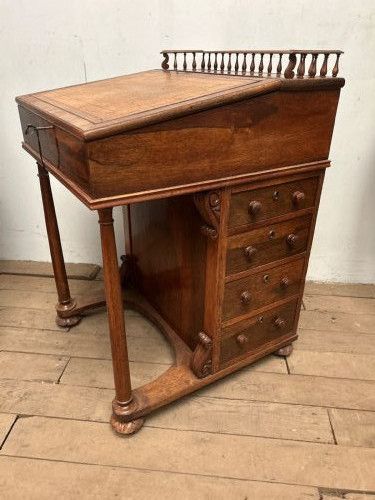
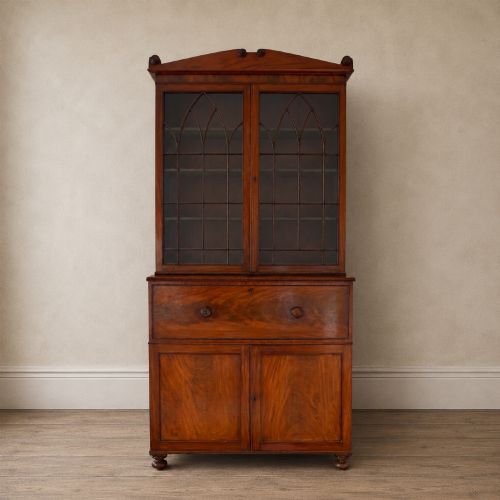
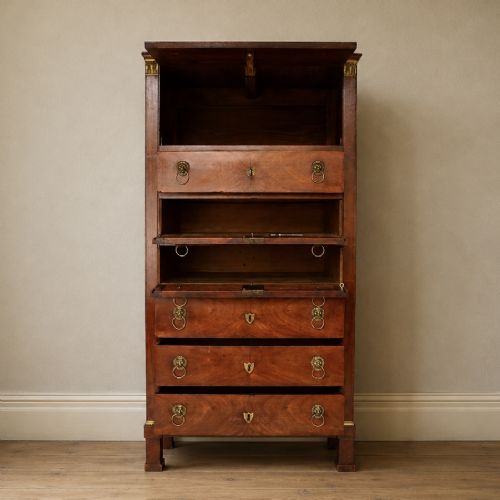
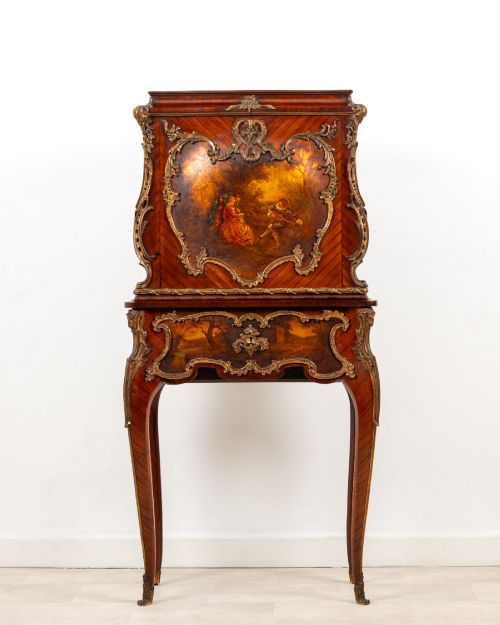
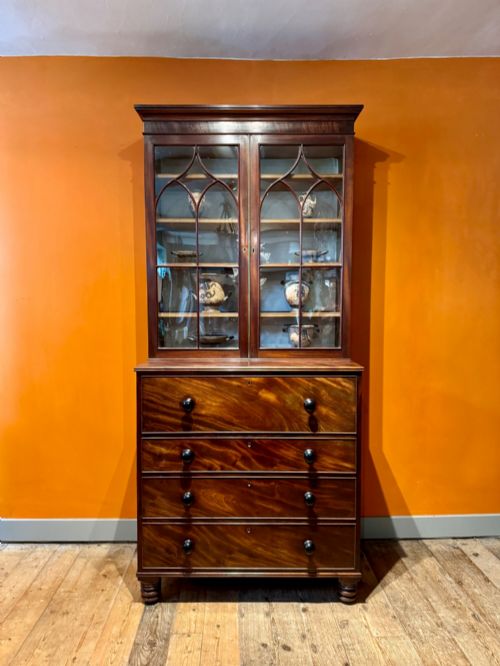
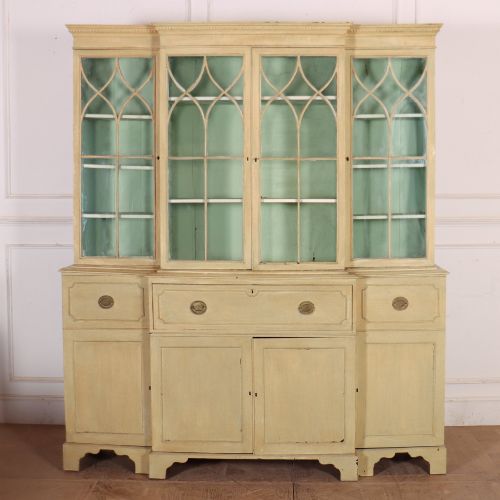
A nineteenth century writing cabinet encompasses tall secretaire bookcases, compact Davenport desks, and refined bonheur du jour tables designed for domestic correspondence and storage. Buyers searching for a nineteenth century writing cabinet meet diverse regional forms, from English mahogany bookcases with fitted fall-front drawers to French walnut and kingwood abattants mounted with ormolu.
The pieces emerge from Regency, Georgian, Victorian, and later nineteenth century periods, reflecting shifting domestic habits towards private study and letter writing. English workshops and French makers dominate the selection, producing pieces that combine display shelving with secure writing surfaces.
Tall secretaire bookcases dominate the larger architectural forms, while compact Davenport desks and ebonised writing cabinets serve smaller chambers. Each variation provides specialised compartments for paper, ink, and ledgers behind lockable panels.
Materials and Technique
Cabinetmakers select dense timbers such as mahogany, walnut, rosewood, and kingwood, frequently employing figured veneers and flame mahogany to create rich surface patterns. Inlays of boxwood and brass stringing define panels and borders, while exotic woods like amboyna and pollard oak add distinctive grain movement.
Structural joinery relies on seasoned hardwoods, dovetail joints for drawer construction, and secondary woods like oak or pine for internal carcases. Drop-front writing surfaces require robust hinges and internal quadrant arms to support the weight of the writing flap during use.
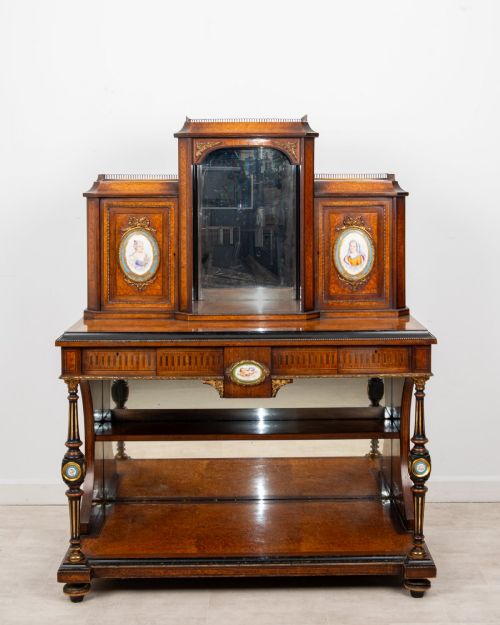
Decorative embellishments include cast ormolu mounts, porcelain plaques, and marquetry details set into walnut or ebonised surfaces. French abattants often feature inset marble tops above fitted interiors containing small drawers and pigeonholes.
Secret spring-loaded drawers hide within many nineteenth century writing cabinets, waiting for modern owners to discover forgotten compartments.
Evaluating the Pieces
The standard of timber selection and veneer matching dictates the visual impact of a piece, particularly on large book-matched doors or cylinder fronts. Subtle details like continuous grain across drawer banks and precise brass or boxwood stringing separate workshop standards.
Internal engineering of secret compartments, sliding mechanisms, and fall-front supports demonstrates the skill of the original maker. High quality pieces retain original fitted interiors with undamaged pigeonholes, functioning brass locks, and coordinated secondary timbers.
The integration of decorative elements such as ormolu mounts, porcelain plaques, and marquetry determines the refinement of the finished cabinet. Fine proportion and restrained carving indicate superior design choices over heavier, mass-produced alternatives.
Gillows·Edwards and Roberts·John McClean
The Nineteenth Century Writing Cabinet Glossary
- Secrétaire à abattant
- A tall upright cabinet featuring a drop-front writing surface that conceals an arrangement of small drawers and pigeonholes. This French form typically includes lower storage doors and an upper marble top.
- Davenport
- A compact pedestal desk with a sloping, sliding writing surface and side drawers. Early examples often incorporate panelled doors and stationery compartments above the main desk body.
- Bonheur du jour
- A light writing table with a small cabinet or set of shelves superstructure mounted on the rear of the top. The form gained popularity during the nineteenth century for boudoir and drawing room use.
- Ormolu
- Gilt bronze mounts cast and chased for decorative application on furniture corners, feet, and friezes. The technique adds metallic contrast to dark woods like kingwood and rosewood.
- Marquetry
- The art of applying decorative veneer pieces to a structural surface to form intricate pictorial or geometric patterns. Cabinetmakers use contrasting tinted woods and shell to create elaborate motifs.
Nineteenth Century Writing Cabinet: Frequently Asked Questions
Where were nineteenth century writing cabinets used?
These cabinets served primarily in private libraries, studies, and drawing rooms where correspondence and household accounts were managed daily. The lockable compartments provided security for private letters and financial documents.
In larger houses, tall secretaire bookcases stood in public reception rooms while smaller Davenport desks fitted into bedroom suites or smaller morning rooms.
How do I care for leather writing surfaces?
Leather inserts benefit from occasional cleaning with specialised neutral leather balms to prevent drying and cracking over time. Avoid excessive moisture and harsh chemical cleaning agents.
Keeping the room at a stable humidity prevents the timber surrounding the leather from expanding and splitting the delicate gold-tooled borders.
Can I use a Davenport desk for a laptop?
Compact Davenport desks offer a designated surface for modern writing, though the internal stationary wells suit traditional paper rather than modern electronics. The sloping desk top requires careful measurement against laptop dimensions.
Many collectors prefer to preserve the original leather or wood writing slopes without placing heavy modern machinery upon them.
How do I distinguish Regency from Victorian examples?
Regency pieces often display classical restraint with brass inlay, rosewood veneers, and clean architectural lines inspired by ancient Roman forms. Proportions tend to remain lighter and more linear.
Victorian cabinets generally feature heavier proportions, darker ebonised finishes, or elaborate marquetry work reflecting the eclectic revival styles of the later nineteenth century.