

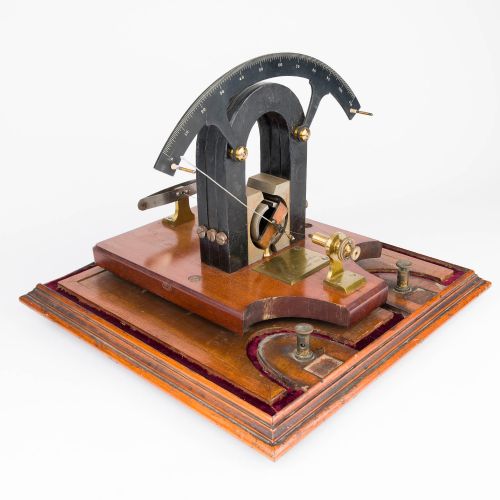


Nineteenth Century Scientific Instrument
Nineteenth century scientific instrument pieces combine precision engineering with decorative presence, offering both functional utility and historical charm.
Nineteenth Century Scientific Instrument
When you search for a nineteenth century scientific instrument, you encounter apparatus designed for measurement, observation, and calculation during an era of rapid industrial and empirical advancement.
The objects on this page span diverse practical categories, including barometers, telescopes, balance scales, microscopes, and specialised meteorological devices.
Victorian examples dominate the selection, alongside items reflecting French Empire, Neoclassical, and Dutch aesthetic influences.
Materials and construction methods
Makers relied heavily on polished brass for mechanical components, mounts, and dials, often pairing the metal with dense hardwoods such as mahogany.
Optical and barometric apparatus incorporated blown or cast glass, while protective transport cases utilised fitted leather, velvet, and paper linings.
Nineteenth Century Scientific Instrument Retail Price Guide 2026
Typical asking prices for nineteenth century scientific instrument among the pieces listed under this phrase on Sellingantiques today, from the lower quarter to the upper quarter. They describe what is for sale here now, not the wider market.
Listings feature items dated across the nineteenth century, including specific years like 1846, 1850, 1860, 1870, 1880, 1890, and 1900.
Distinctions in execution and finish
The hierarchy of these objects rests on the precision of their calibration, the crispness of their engraved scales, and the integrity of their original optics or movements.
Enhanced quality appears in pieces featuring signed maker plates, secondary materials like mother-of-pearl inlay, and fitted mahogany storage boxes.
Parkes And Hadley·G Adam Of Paris·H Hughes And Son·Callaghan And Co·L Casella London·Chadburn Brothers·Negretti And Zambra·Davis Of London·Jules Richard Of Paris
The Nineteenth Century Scientific Instrument Glossary
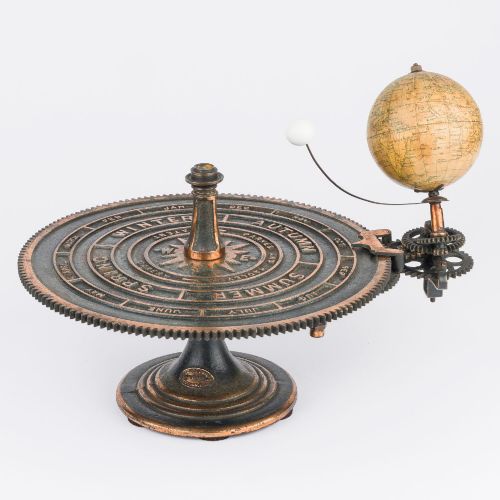
- Orrery
- A mechanical model of the solar system that illustrates the relative positions and motions of the planets and moons.
- Galvanometer
- An instrument used for detecting and measuring small electric currents through the deflection of a magnetic needle.
- Barometer
- A device used to measure atmospheric pressure in forecasting weather and determining altitude.
- Telescope
- An optical instrument designed to make distant objects appear magnified by using an arrangement of lenses and draw tubes.
Nineteenth Century Scientific Instrument: Frequently Asked Questions
How do I use a nineteenth century barometer?
These barometers measure atmospheric pressure to help track local weather patterns over time. You read the current pressure on the calibrated scale and compare it against the secondary indicator needle.
Ensure the instrument hangs away from direct heat sources and drafts to maintain accurate readings. Most traditional barometers require careful calibration upon relocation.
Are these scientific instruments still accurate?
Many barometers, thermometers, and telescopes retain their functional mechanics and can still provide working measurements. Their precision depends heavily on how well the internal components and glass have survived.
Delicate items like balance scales and galvanometers may need professional recalibration before use. Collectors generally treat them with care to preserve their historical integrity.
What indicates a piece is Victorian?
Victorian scientific pieces frequently exhibit robust brass construction combined with mahogany cabinetry or serpentine stone bases. Maker signatures, patent stamps, and specific typographic styles on the paper dials also point toward this period.
Stylistic influences range from austere industrial designs to ornate Neoclassical and French Empire motifs. Documentation or original fitted cases often help confirm the exact era of production.