


Nineteenth Century Rosewood Cabinet
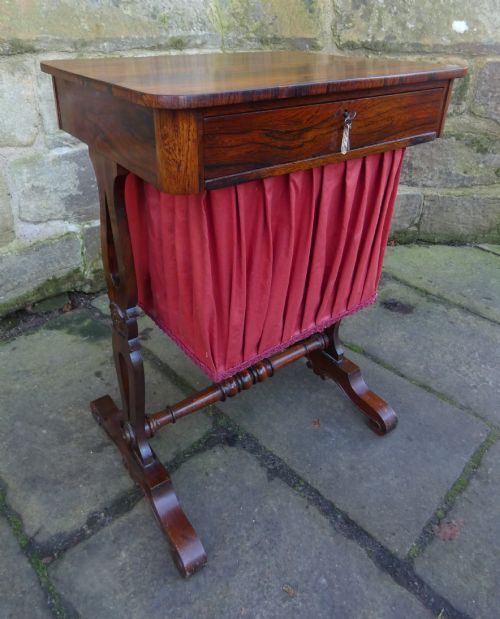
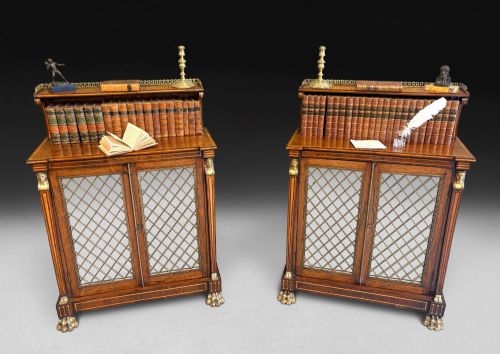
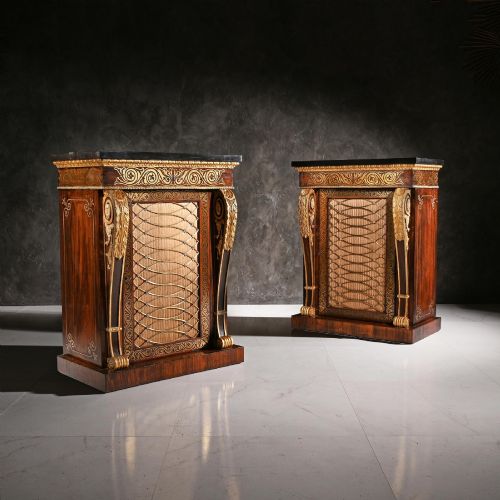
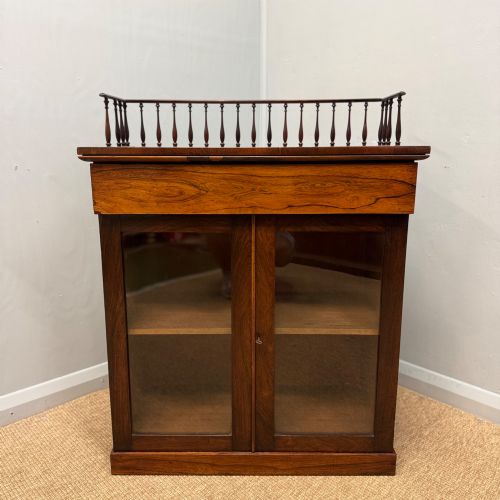
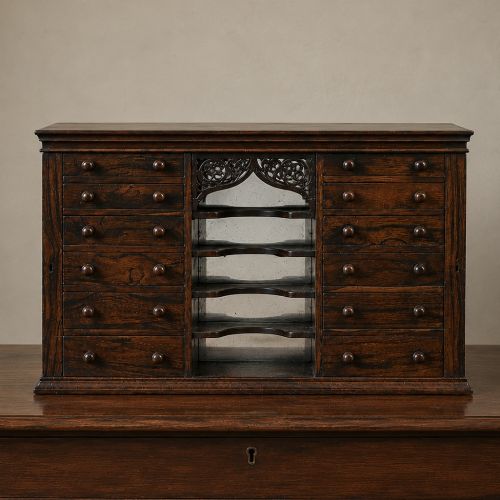
A nineteenth century rosewood cabinet brings rich timber grain, polished brass inlay and architectural presence into a room.
Nineteenth Century Rosewood Cabinet
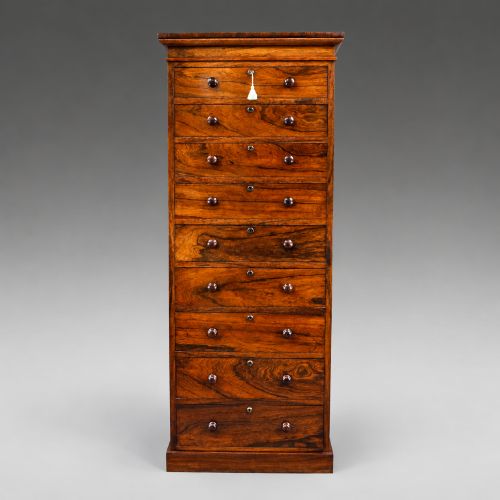
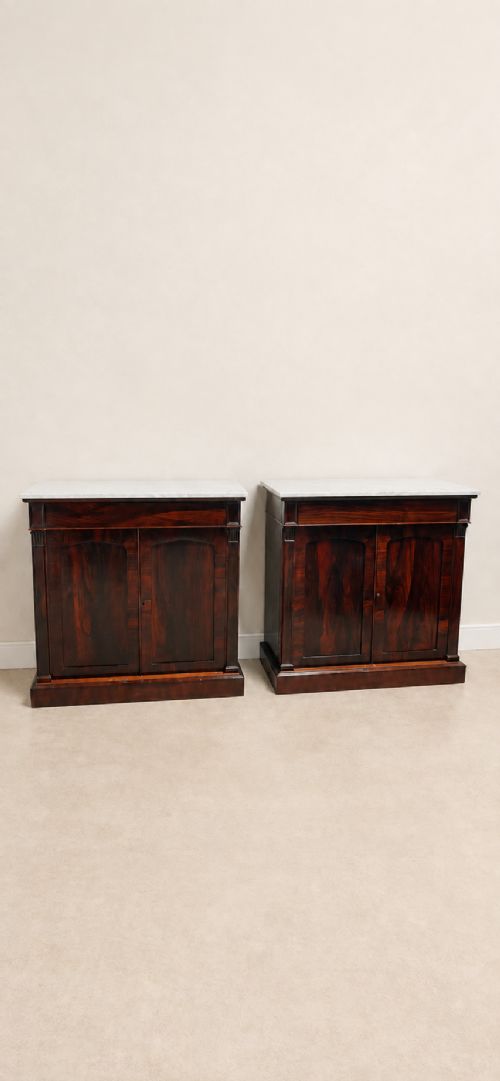
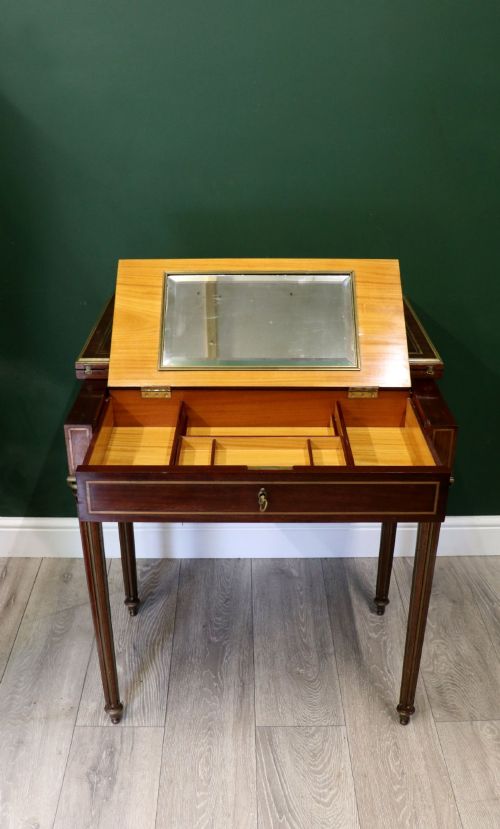
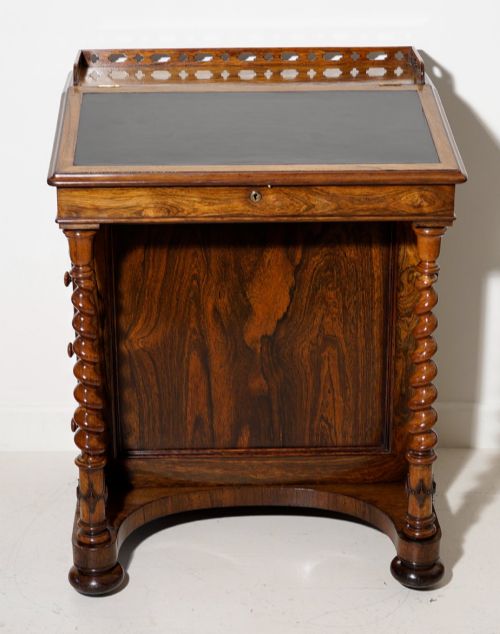
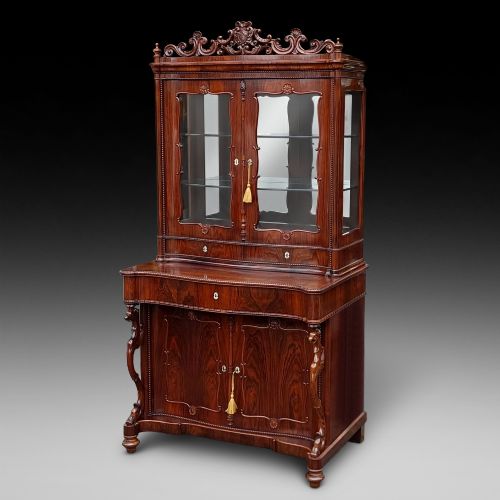
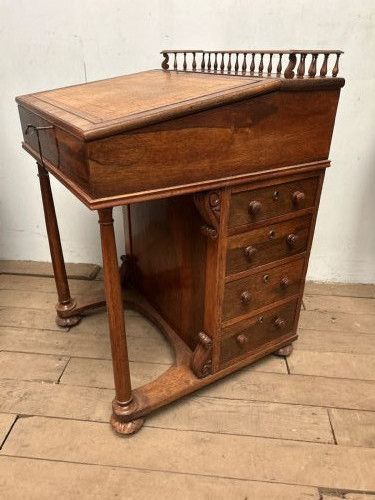
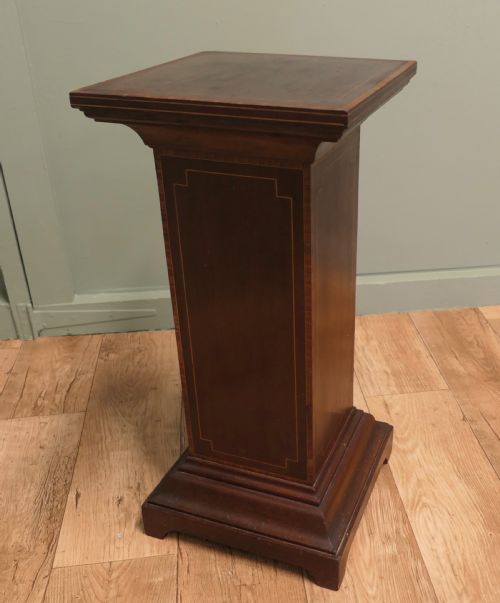
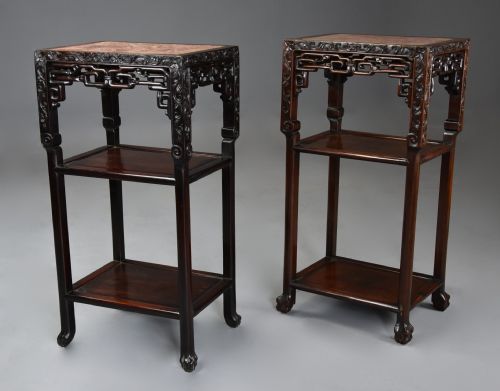
A nineteenth century rosewood cabinet encompasses varied forms from side cabinets and chiffoniers to open bookcases, display cabinets, and secretaire desks. The selection reflects diverse periods including Regency, Victorian, William IV, and Biedermeier expressions alongside Louis XV revival pieces.
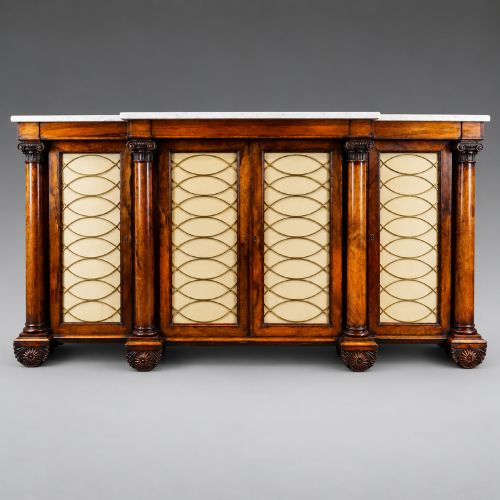
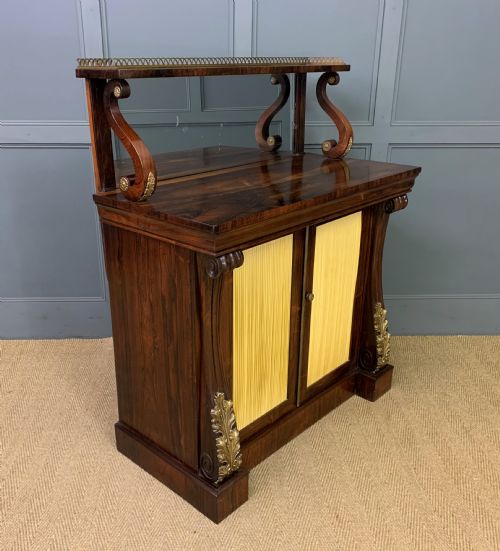
Chiffoniers and side cabinets emerge most frequently among the listings, often featuring enclosed cupboard bases topped by shelving or mirrored backs. Pieces originate from British workshops as well as French cabinet makers working in continental revival styles.
Materials and Technique
Constructed primarily from figured rosewood timber, makers frequently incorporated brass inlay, boxwood stringing, and parcel gilding to accentuate structural lines. Ormolu mounts and mirror glass appear on continental vitrines and display pieces.
Interiors incorporate secondary timbers alongside specialised fittings such as leather writing surfaces, fabric linings, and marble tops. Surface finishes rely on traditional polish that highlights the dense grain patterns of the wood.
Nineteenth Century Rosewood Cabinet Retail Price Guide 2026
Typical asking prices for nineteenth century rosewood cabinet among the pieces listed under this phrase on Sellingantiques today, from the lower quarter to the upper quarter. They describe what is for sale here now, not the wider market.
Listings feature periods spanning Regency, Georgian, William IV, Victorian, and late nineteenth century production.
Craftsmanship and Proportion
The standard of a nineteenth century rosewood cabinet rests on the selection of the timber veneer and the precision of brass or boxwood inlay. Superior examples display continuous grain alignment across doors and drawers alongside finely cast or chased ormolu mounts.
Structural integrity and the retention of original fittings, locks, and keys distinguish finer cabinetwork from altered pieces. Proportional harmony and crisp carving separate workshop production from simpler output.
Collinson and Lock·William Trotter·John McClean
The Nineteenth Century Rosewood Cabinet Glossary
- Chiffonier
- A low cabinet featuring enclosed cupboards below, frequently surmounted by a shelf or mirror backed superstructure. These pieces gained popularity during the Regency and Victorian periods for drawing rooms.
- Vitrine
- A glass fronted display cabinet designed for the exhibition of porcelain and collectors items. They often incorporate elaborate marquetry or ormolu mounts in French revival designs.
- Secretaire
- A cabinet or desk incorporating a drop down writing flap that conceals small drawers and pigeon holes. They combine workspace storage with formal cabinetry.
- Ormolu
- Gilded bronze used for decorative mounts and feet on high status nineteenth century furniture. The technique requires mercury gilding or electroplating on cast bronze bases.
Nineteenth Century Rosewood Cabinet: Frequently Asked Questions
What is a nineteenth century rosewood cabinet used for?
These cabinets serve as practical storage furniture and display surfaces for books, porcelain, and household objects. Many include specialised compartments for writing or organising papers.
In contemporary interiors, they function as focal points in living spaces, dining rooms, and hallways while housing collections or everyday items behind lockable doors.
How do I identify a Regency period piece?
Regency cabinets typically display classical architectural restraint, clean lines, and symmetrical arrangement of doors and shelving. Brass inlay and rosewood veneers characterise the British output from this era.
Subtle details such as turned feet, brass gallery rails, and pleated fabric panels behind glass doors often point directly to the early decades of the nineteenth century.
Where were these cabinets made?
Production spans British workshops in London and regional centres, alongside continental ateliers particularly in France. French pieces frequently exhibit Louis XV revival forms with extensive marquetry and ormolu.
British examples lean toward Regency and Victorian utility, utilising indigenous construction methods alongside imported tropical hardwoods.
How should I care for rosewood furniture?
Rosewood surfaces benefit from stable indoor humidity and protection from direct sunlight to prevent timber movement and fading. Dusting with a dry, soft cloth maintains the polished finish without chemical buildup.
Avoid placing damp items directly onto marble or wood tops, and use professional conservation wax sparingly if the finish requires nourishment over time.