


Nineteenth Century Pendant
A nineteenth century pendant brings intimate Victorian and Georgian craftsmanship to the neck or lapel through gold, silver, and gemstones.

Nineteenth Century Pendant
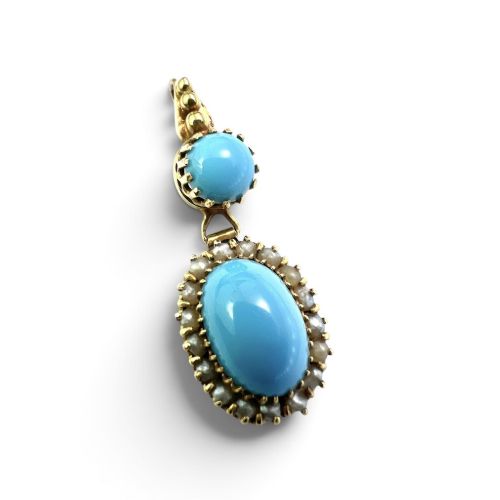
A nineteenth century pendant encompasses distinct iterations worn across the Victorian and Georgian periods, ranging from intricate gemstone clusters to convertible brooches. The selection on this page shows a strong representation of Victorian pieces alongside earlier examples.
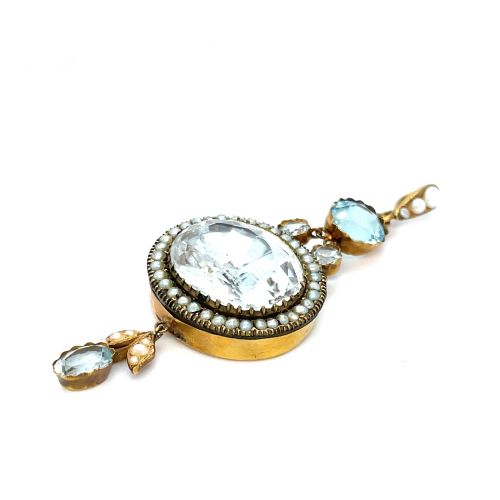
Buyers encounter designs set with foil back aquamarine, rock crystal, turquoise, pearl, amethyst, tigers eye, and diamond. Many items function dually as a pendant and brooch, reflecting the versatile jewellery traditions of the era.
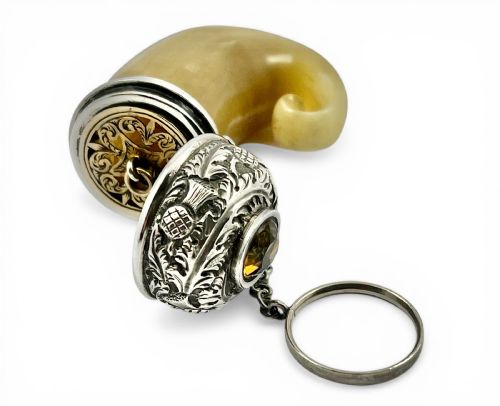
Origins span English, Scottish, and continental workshops, incorporating local materials such as horn and citrine alongside imported precious stones. Forms include classical floral halos, starbursts, and substantial gold mountings.
Materials and Construction
Jewellers shaped these pieces using gold, 9ct gold, 14K gold, and silver, often combining metals to support delicate settings. Gemstones including diamonds, pearls, and amethysts were secured by hand using traditional claw or collet techniques.
Specialised decorative elements involved foil backing beneath aquamarines to enhance colour reflection, and intricate piercework in gold and brass. Scottish items utilised native horn paired with citrine, showcasing regional mineral wealth.
Convertible mechanisms incorporated hinged loops and pin stems, allowing a single jewel to transition between a necklace pendant and a breast ornament.
Scottish makers turned Highland ram horns into chic citrine-studded vinaigrettes.
Evaluating Quality and Finish
Quality rests upon the crispness of the metalwork, the symmetry of the stone arrangement, and the preservation of original foil or backing materials. Superior examples display precise gemstone faceting and secure, well-integrated conversion mechanisms.
The choice of materials dictates the tier of the piece, with matched diamond and natural pearl clusters occupying the upper echelon above standard gold and semi-precious stone iterations. Hand-engraved detailing on the reverse further separates workshop output.
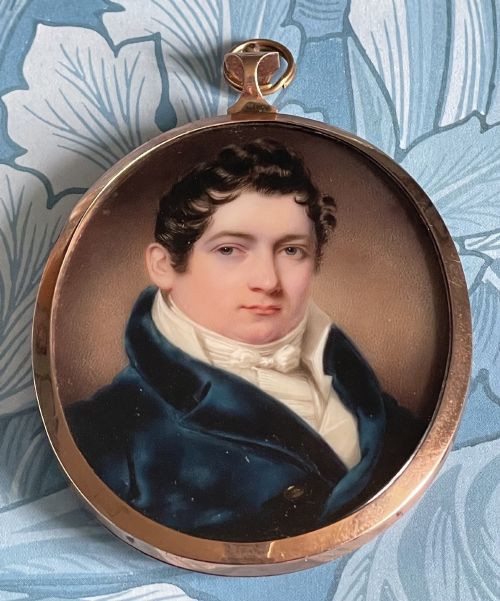
John C D Engleheart·Henry Bone ARA
The Nineteenth Century Pendant Glossary
- Foil Back
- A thin sheet of coloured metallic foil placed behind a gemstone to enhance its brilliance and hue. This technique was common in Georgian and Victorian jewellery before synthetic treatments.
- Collet
- A band of metal that holds a gemstone in place by folding the upper edge over the stone. It provides a smooth, enclosed border characteristic of older settings.
- Vinaigrette
- A small ornamental box or pendant containing a perforated grill, used to hold a sponge soaked in aromatic vinegar. These containers were carried to mask unpleasant odours.
- Halo Pendant
- A central gemstone encircled by a ring of smaller accent stones, typically diamonds or pearls. This arrangement maximises visual impact and light reflection.
Nineteenth Century Pendant: Frequently Asked Questions
How do I wear a convertible pendant brooch?
Many Victorian examples feature a hidden bale and a detachable pin stem on the reverse. You thread a chain through the loop for necklace wear or secure the pin to fabric.
Ensure the safety catch is fully engaged when using the item as a brooch to prevent loss.
What is foil backing in antique gems?
Foil backing places a reflective metallic sheet beneath a stone like aquamarine to intensify light return. Makers utilised this method to brighten stones set in closed-back mounts.
Keep these pieces away from water immersion, as moisture slipping behind the stone ruins the foil.
How are Victorian and Georgian pieces told apart?
Georgian items generally feature closed-back settings and hand-cut stones tailored for candlelight. Victorian jewellery often employs open-backed mounts and varied regional motifs.
Hallmarks and pin stem construction provide further clues to the specific decade of manufacture.
How do I clean an antique gold pendant?
Use a soft, dry cloth to remove surface dust from the gold and gemstones. Avoid chemical dips or ultrasonic cleaners, which damage foil backs and delicate pearls.
Store the item separately in a lined box to prevent scratching softer stones like turquoise and amber.