


Nineteenth Century Jugs
Nineteenth century jugs span earthenware, porcelain, glass and metal, offering functional service and decorative presence across Georgian, Regency and Victorian periods.
Nineteenth Century Jugs
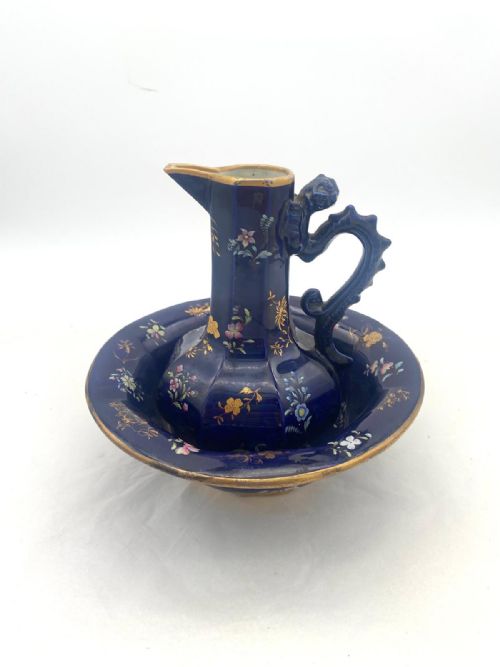
Nineteenth century jugs encompass a diverse range of vessels designed for water, wine, milk and decorative display, reflecting the domestic habits of Georgian, Regency and Victorian households. These pieces appear in forms varying from sturdy earthenware pitchers and ironstone basin sets to delicate porcelain creamers and cut glass claret jugs.
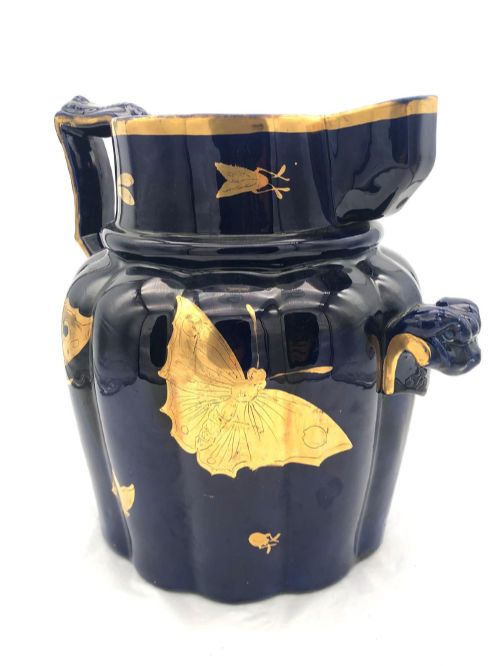
The versions most commonly met on this page include robust ironstone examples by makers such as Mason's, alongside Staffordshire pottery and moulded glass pieces. Regional English potteries and continental makers both contributed to the vast output of utilitarian and decorative vessels during this era.
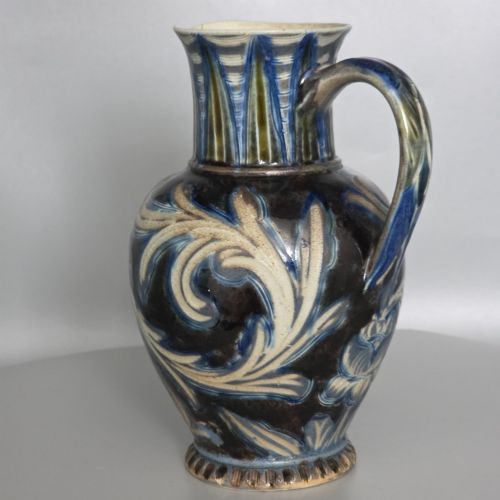
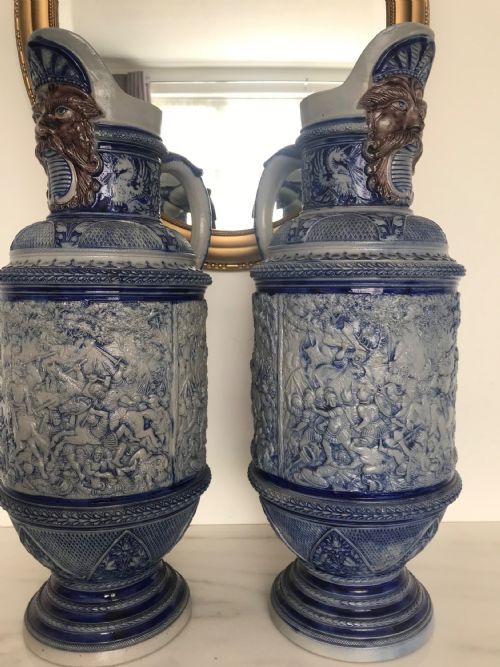
Buyers encounter everything from simple salt-glazed stoneware pitchers with cobalt blue decoration to monumental bronze ewers and silver-mounted glass claret jugs. Each object demonstrates the specific manufacturing priorities of its decade, whether utilitarian durability or ornate drawing-room display.
Materials and production techniques
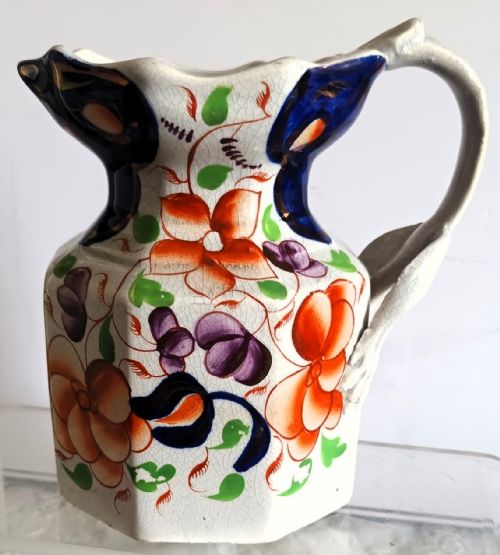
Potters utilised earthenware, ironstone, pearlware and porcelain, shaping bodies through moulding, casting or hand-throwing on a wheel. Transfer printing, hand-painting with enamel colours, and the application of gold leaf provided surface ornamentation across earthenware and porcelain bodies.
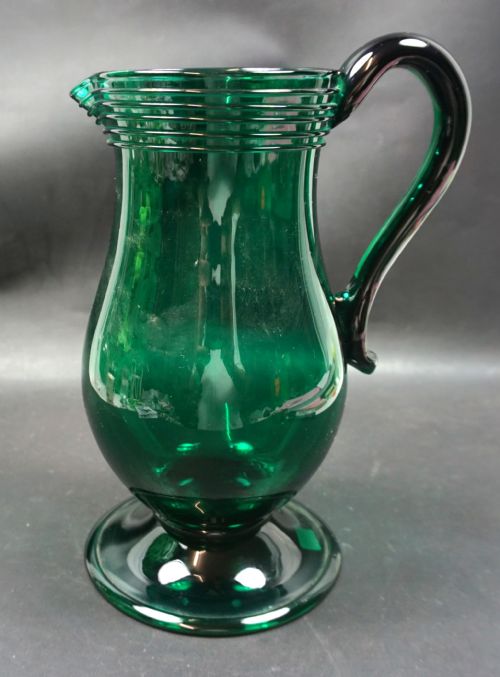
Glass vessels relied on blowing, cutting and engraving techniques, producing clear crystal champagne jugs, green glass ewers with trail rims, and latticino glass decanters. Metal examples combined bronze casting, silver plating and solid silver fabrication with detailed chasing and engraving.
Salt-glazing techniques defined utilitarian stoneware, wherein salt thrown into the kiln during firing reacted with the clay body to create a durable, textured finish. Ironstone bodies offered a dense, vitrified alternative that resisted chipping while supporting complex moulded shapes like the hydra handle.
Listings for nineteenth century jugs incorporate materials ranging from earthenware and ironstone to cut glass, porcelain, bronze and silver.
Assessing quality and execution
Quality rests upon the crispness of moulding and the precision of hand-painted or transfer-printed decoration. Superior ironstone and porcelain pieces exhibit sharp relief details and cleanly applied glazes without pooling or running.
In glass and metalwork, craftsmanship shows in the depth and clarity of wheel-engraved motifs, the weight of the metal mountings, and the seamless integration of handles and spouts. Finer glass jugs display even thickness across blown walls and neatly finished pontil marks.
Artistry in design elevates certain pieces beyond standard production, such as intricate cobalt blue salt-glazed scenes or detailed silver mounts by noted makers like Asprey. The harmony between form, material and decorative technique dictates the standing of each vessel.
Simon Peter Gerz·Livesley Powell and Co·Richardsons Birmingham·Asprey and Co·Doulton Lambeth
The Nineteenth Century Jugs Glossary
- Ironstone
- A patented ceramic body invented to imitate porcelain while offering greater durability and strength. It forms the heavy, opaque base for many decorative nineteenth century jugs.
- Pearlware
- A refined earthenware developed by Josiah Wedgwood featuring a subtle blue-tinted glaze over a pale body. This glaze made the underlying ceramic appear whiter than standard creamware.
- Latticino
- A glass-making technique incorporating white or coloured glass threads twisted within a clear glass matrix. It creates delicate, web-like patterns seen in Venetian glassware.
- Salt glaze
- A vitreous coating formed on stoneware by throwing common salt into the kiln at the height of firing. The sodium reacts with the silica in the clay to produce an orange-peel texture.
- Transfer printing
- A method of decorating ceramics by engraving a design on a copper plate, pulling it on tissue paper, and pressing it onto the biscuit ware. This allowed complex scenes to be applied consistently before glazing.
Nineteenth Century Jugs: Frequently Asked Questions
What were nineteenth century jugs used for?
These vessels served a multitude of domestic functions, ranging from pouring water at the washstand and serving milk at breakfast to decanting wine and claret at the dinner table.
Many examples also fulfilled purely decorative roles on sideboard displays or functioned as commemorative pieces marking specific historical events and figures.
How do I distinguish ironstone from porcelain?
Ironstone is a heavy, opaque earthenware that does not transmit light when held up to a strong source. Porcelain is finer, thinner, and typically translucent with a more vitreous feel.
While ironstone offers robust durability suitable for daily service, porcelain prioritises delicate translucency and refined decorative painting.
What is a claret jug?
A claret jug is a specialised serving vessel designed specifically for holding and pouring red wine, popular during the Victorian dining ritual. They commonly feature glass bodies mounted with silver or silver-plated handles, rims, and hinged lids.
Craftsmen often embellished the glass with cut flutes, engraving, or novelty shapes such as ducks.
How can I tell the period of a ceramic jug?
Dating relies on combining stylistic evidence with makers' marks, glaze characteristics, and potting techniques. Georgian and Regency pieces often feature neoclassical transfer prints or Kakiemon palettes, whereas Victorian examples introduce bolder moulded shapes and rich colorations.
Stamps and registry marks on the base provide precise chronological anchors for pieces produced after the mid-nineteenth century.
How do I care for antique glass jugs?
Antique glass requires hand washing in lukewarm water with mild detergent, avoiding sudden temperature changes that can cause thermal shock and cracking. Metal mounts and silver-plated elements should be cleaned separately with appropriate silver care products to prevent tarnishing.
Displaying them away from direct sunlight preserves the clarity and colour of both the glass and any applied enamel work.