



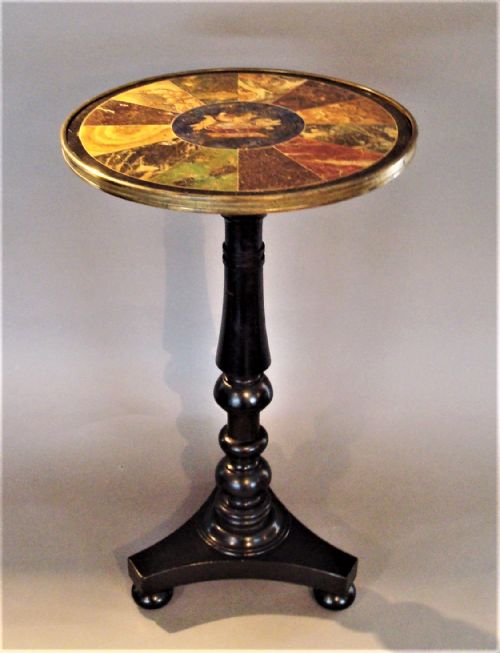


Nineteenth Century Gueridon Table
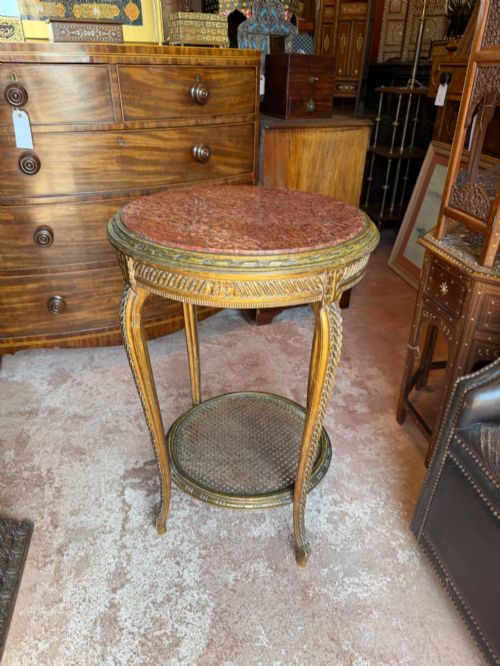
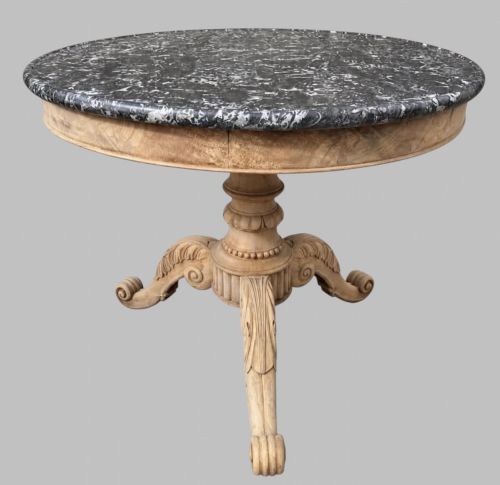
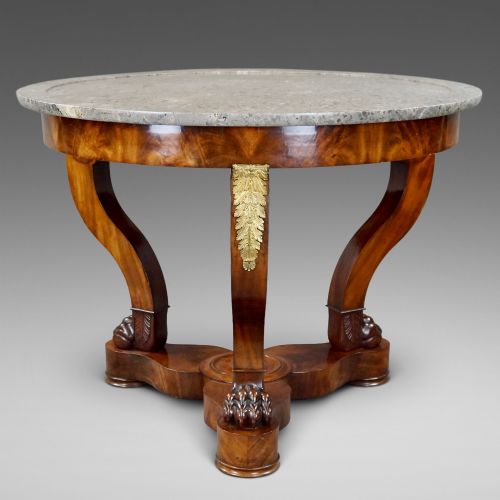
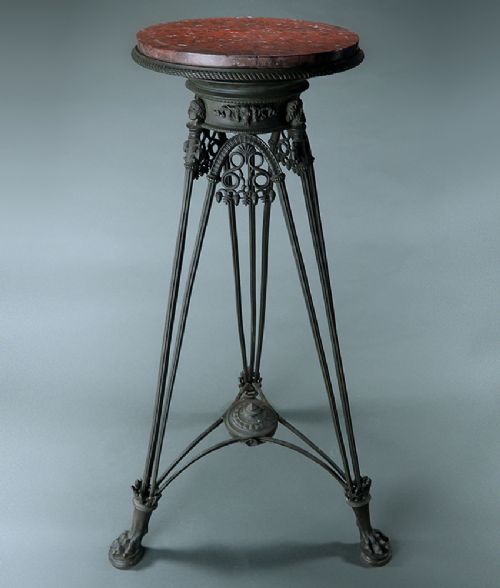
These nineteenth century gueridon table examples bring French classical presence to a room, offering a compact circular surface supported by a central pillar.
Nineteenth Century Gueridon Table
A nineteenth century gueridon table functions as an occasional, centre, or side table, typically featuring a circular top carried on a single central column or tripod base. The examples met on this page originate from France and span the nineteenth century, including specific decades such as 1850, 1860, 1900, and 1870.
Makers and workshops of the period produced these pieces in forms ranging from French Empire and French Restoration to Napoleon III and Etruscan Revival styles. Buyers encounter plant stands, lamp tables, and heavy marble-topped centre tables designed for principal rooms.
The form adapts to varied domestic uses through its freestanding nature, allowing access from all sides. Proportions vary from compact occasional tables to unusually large Empire examples.
How they were made
Cabinetmakers constructed the structural carcasses of these tables using timbers such as mahogany, bleached walnut, burr walnut, kingwood, and carved oak. Surfaces frequently incorporate flame mahogany veneers or intricate marquetry patterns.
Nineteenth Century Gueridon Table Retail Price Guide 2026
Typical asking prices for nineteenth century gueridon table among the pieces listed under this phrase on Sellingantiques today, from the lower quarter to the upper quarter. They describe what is for sale here now, not the wider market.
Some Empire tables feature cast bronze swans peering outward from the column, watching over the room with silent dignity.
What varies in quality
The standard of carving and metalwork dictates the distinction between everyday production and exceptional workshop output. Tables associated with known makers display crisper chasing in the ormolu and gilt-bronze mounts, alongside finer timber selection such as burr walnut and kingwood.
Structural integrity of the central pillar and the weight and fit of the marble top separate superior examples from standard regional pieces. The sophistication of stylistic details, from Etruscan Revival motifs to Empire swan mounts, elevates the piece.
Francois Linke·Zwiener Jansen Sucesseur
The Nineteenth Century Gueridon Table Glossary
- Gueridon table
- A circular occasional or centre table supported by a single central pillar or column. The form originated in France and remains popular for display.
- Ormolu
- Gilded bronze used for decorative mounts and furniture trim during the eighteenth and nineteenth centuries. The technique involves applying a mercury and gold amalgam to bronze.
- Marquetry
- The art of applying pieces of veneer to a structure to form decorative patterns and pictures. Makers used varied exotic timbers to create tonal contrast on table tops.
- Empire style
- A design movement drawing inspiration from ancient Roman, Greek, and Egyptian cultures. It is characterised by heavy mahogany timbers and classical bronze mounts.
- Tripod base
- A three-legged support structure commonly found beneath the central column of these tables. It provides stability for heavy marble tops.
Nineteenth Century Gueridon Table: Frequently Asked Questions
What is a gueridon table used for?
These tables served as lamp tables, plant stands, and centre tables in nineteenth-century salons and principal rooms. Their circular tops and central supports allowed them to sit freely in a space.
Today they function effectively as occasional tables for holding lamps, decorative objects, or drinks. Their compact footprints suit entrance halls and sitting rooms.
How do I identify an Empire style table?
Empire pieces typically feature dense mahogany timbers, heavy proportions, and classical motifs such as swans or rams heads. Ormolu mounts applied to the central column or base are common.
These designs reflect early nineteenth-century French taste, drawing heavily on classical antiquity. The silhouette prioritises architectural presence and symmetry.
Are marble tops original to these tables?
Many nineteenth-century examples were designed specifically to carry heavy white or black marble slabs. The weight of the stone helps anchor the central pillar and tripod base.
Surviving pieces frequently retain their original stone tops, though inspection of the supporting frame reveals how the timber was built to bear the load.
How do I care for wood and ormolu?
Timber surfaces require occasional dusting with a dry cloth and protection from direct sunlight and extreme humidity changes. Avoid modern silicone polishes which can damage antique French finishes.
Ormolu and gilt-bronze mounts should be dusted gently without chemical cleaners, as harsh products strip the original mercury gilding from the bronze.