
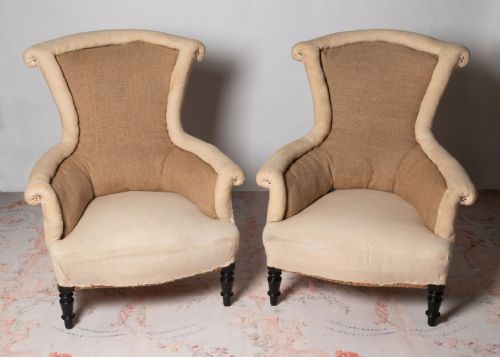


Nineteenth Century French Chairs
Nineteenth century french chairs are seating pieces spanning neoclassical to revival styles, offering substantial historical character and decorative presence for period interiors.
Nineteenth Century French Chairs
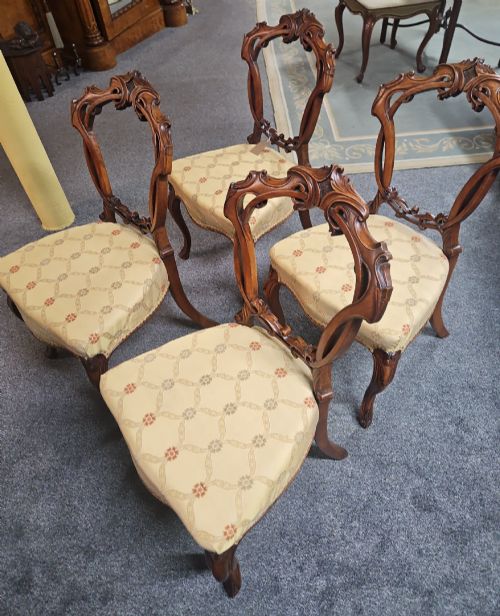
Nineteenth century french chairs encompass a wide variety of seating forms, ranging from grand giltwood armchairs and salon suites to fruitwood dining chairs and intimate slipper chairs. You will frequently encounter upholstered open armchairs and carved parlor suites reflecting distinct design movements across the period.
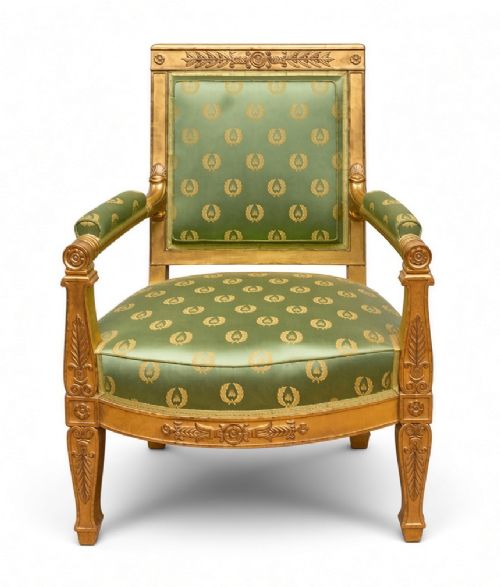
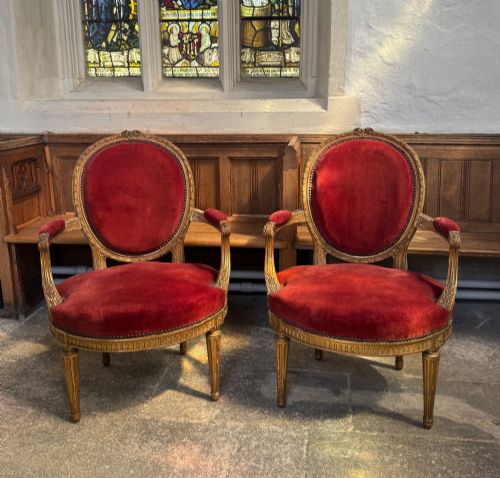
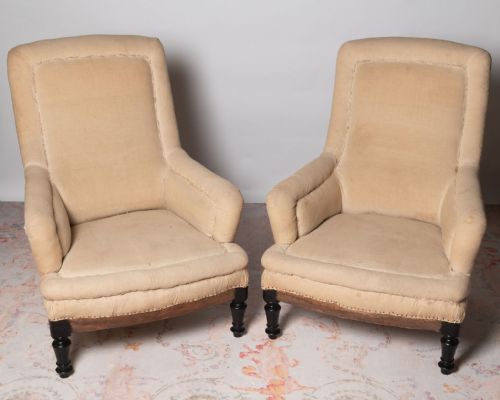
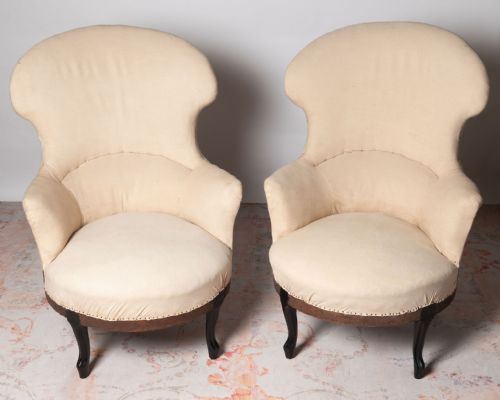
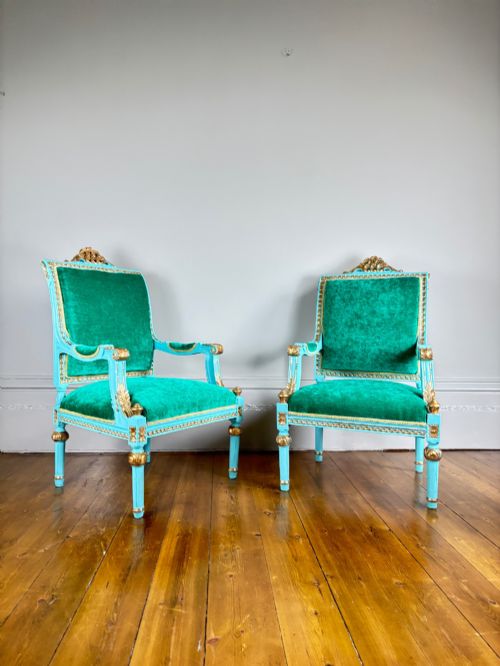
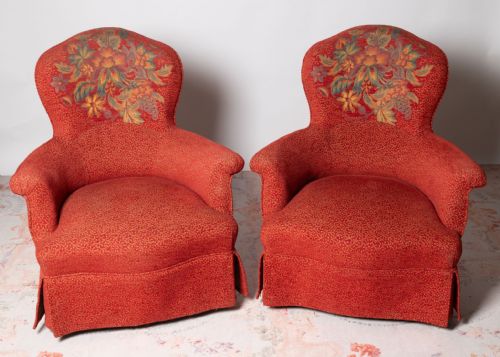
The selection includes specific regional subtypes such as Napoleon III buttoned back seats, Restauration fauteuils, and Louis XVI style giltwood seating. These pieces demonstrate the shifting tastes of nineteenth century French design, moving from formal Empire structures to exuberant revival styles.
How they were made
Construction relies heavily on traditional timber frames fashioned from walnut, mahogany, fruitwood, and giltwood. Master makers employed precise joinery and detailed hand carving to achieve the elaborate ornamentation characteristic of French seating.
Upholstery techniques utilised traditional stuffing and materials including calico, velvet, and various decorative fabrics. Many pieces survive with exposed frames ready for bespoke recovering, whilst others retain buttoned back panels and traditional webbed foundations.
A tiny bone highchair proves that nineteenth century miniature furniture makers spared no effort for the most diminutive household members.
What varies in quality
The distinction between ordinary and superior pieces rests in the crispness of the timber carving and the architectural proportion of the frame. Finer examples display deeply undercut ornamentation and well-balanced structural lines that reflect the hand of a skilled workshop rather than mass production.
Surface finishing and original gilding state heavily influence the character of a piece. High quality seating retains its original gilded surfaces or well-patinated fruitwood and walnut timber, showing harmonious integration between the carved decoration and the underlying frame.
Jacob Desmalter
The Nineteenth Century French Chairs Glossary
- Bergere
- An enclosed upholstered armchair featuring solid upholstered sides filled with padding or cane work. It provides a deeper and more enclosed seat than the standard fauteuil.
- Giltwood
- Timber coated with a thin layer of gold leaf or gold paint for decorative effect. This finish is frequently found on formal salon chairs and revival seating.
- Restauration
- A design period spanning the early nineteenth century characterised by refined classical proportions and restrained ornament. Pieces from this era often bridge the gap between Empire and later revival styles.
- Prie Dieu
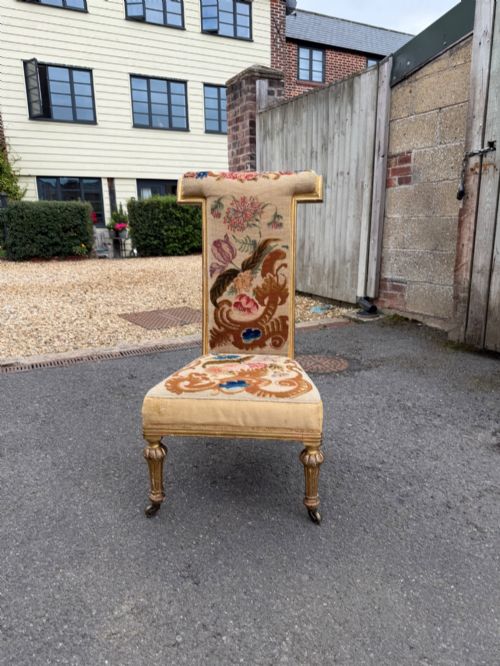
- A small devotional chair designed for kneeling during prayer, featuring a low seat and an upper rest for the arms. Nineteenth century variants often incorporate fine carved woodwork and upholstered pads.
Nineteenth Century French Chairs: Frequently Asked Questions
What is a fauteuil?
A fauteuil is an open-armed upholstered armchair featuring exposed wooden framing around the back and armrests. These chairs were designed for formal reception rooms and parlours during the nineteenth century.
The style typically includes carved woodwork along the crest rail and cabriole or tapered legs. They provide comfortable seating while displaying the decorative arts of the period.
Are these chairs suitable for daily use?
Nineteenth century French seating can be integrated into modern living spaces with careful placement and appropriate usage. Many armchairs and dining sets remain sturdy enough for regular seating.
Pieces requiring upholstery offer an opportunity to reinforce internal webbing and springs. This ensures the seating meets modern comfort standards while preserving the antique frame.
What distinguishes Louis XVI style chairs?
Louis XVI style chairs are characterised by neoclassical restraint, straight tapered fluted legs, and geometric back frames such as ovals or rectangles. This aesthetic revived classical Greek and Roman motifs during the nineteenth century.
The carving is typically more linear and architectural compared to the earlier curved rococo styles. Giltwood and polished walnut finishes are common across this aesthetic.