



Nineteenth Century French Bureau
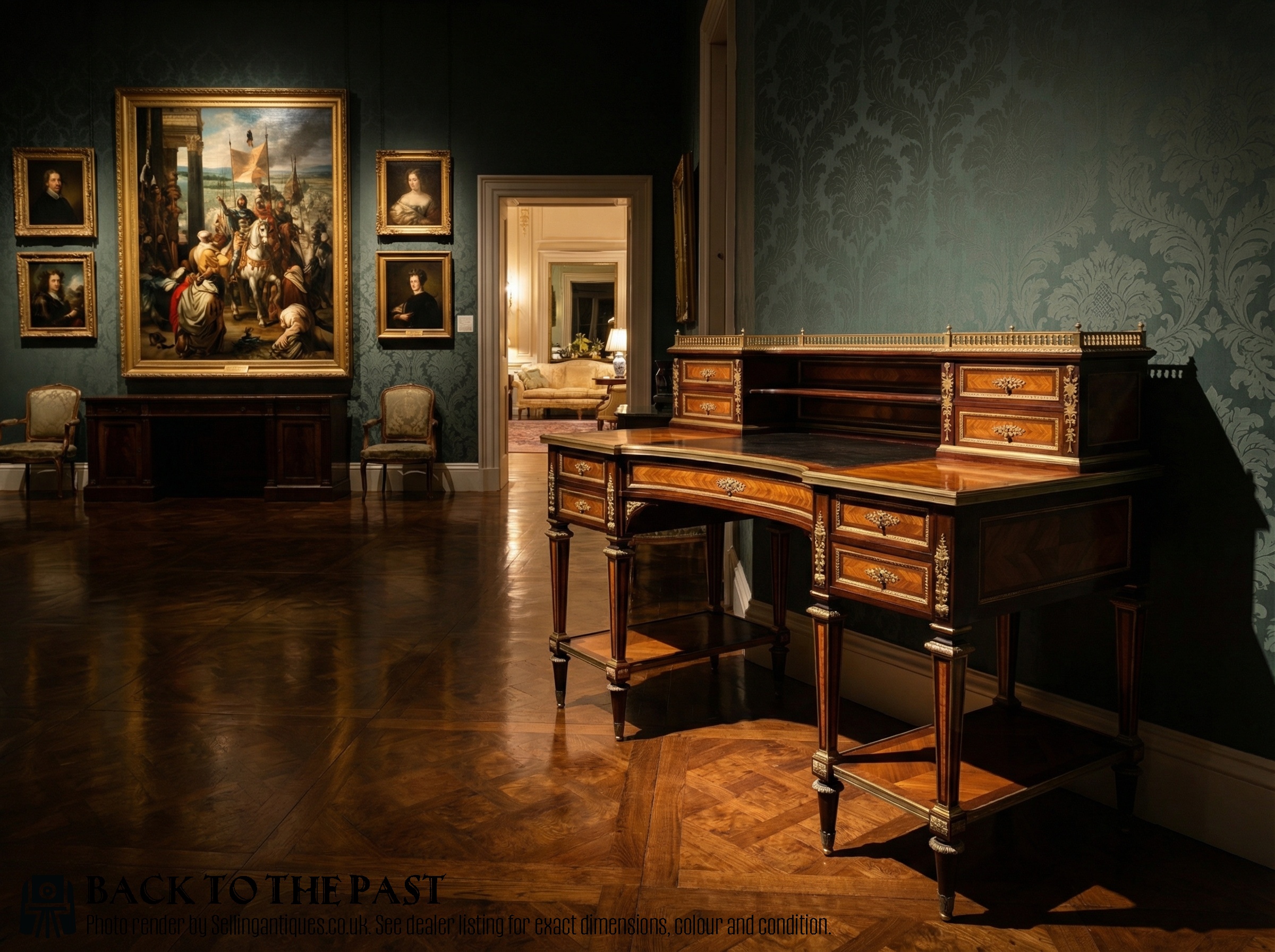
A nineteenth century french bureau brings dramatic continental flair to a study, offering rich timbers and elegant mounts designed for serious correspondence.
Nineteenth Century French Bureau
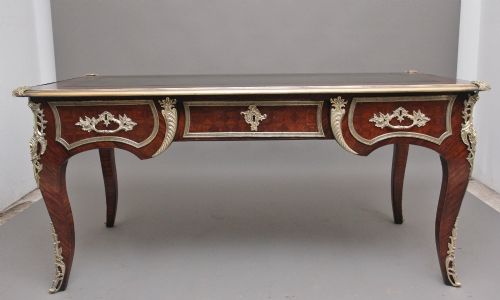
When you search for a nineteenth century french bureau, you encounter writing furniture spanning flat-top tables, fall-front cabinets, and tiered lady's desks. The bureau plat dominates the selection, providing a broad writing surface supported by cabriole or tapered legs.
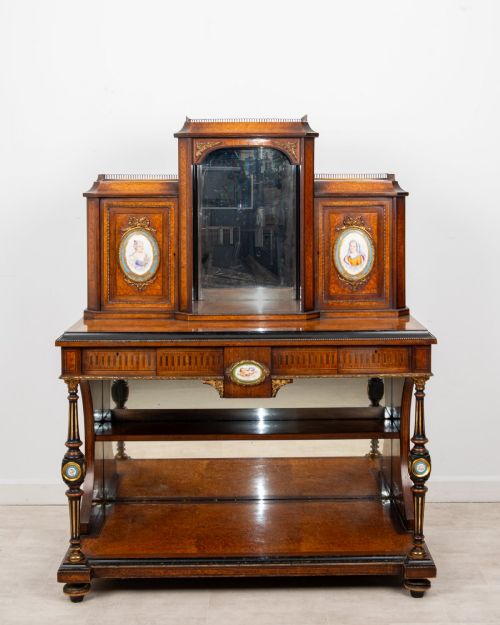
Makers of this era also produced the bureau de dame and the bonheur du jour, smaller writing cabinets often fitted with drawers and small compartments above the desk top. These pieces emerge in styles ranging from Louis XV revival and rococo to empire and napoleon iii.
Woods such as kingwood, walnut, rosewood, and mahogany form the carcasses, frequently enhanced by intricate marquetry or tulipwood crossbanding. Pieces date from across the eighteen-sixties, seventies, eighties, and nineties, reflecting shifting continental tastes.
Materials and construction methods
Cabinetmakers utilised dense hardwood bases of mahogany, walnut, kingwood, and rosewood, applying fine veneers in geometric or floral marquetry patterns. Brass and ormolu mounts were cast and chiselled to highlight the corners, legs, and aprons of desks.
Leather inserts traditionally formed the writing surfaces, often tooled with gilt borders to frame the central panel. Porcelain plaques and marble tops occasionally appeared on luxury cabinets, secured with precise brass framing.
Secretaries once hid love letters behind false drawer bottoms, ensuring private correspondence stayed out of prying hands.
Distinctions in craftsmanship
Quality rests upon the crispness of the bronze or ormolu mounts and the depth of the timber figuring. Finer desks display hand-chiseled mounts with sharp detail rather than soft, mass-produced castings.
The precision of the marquetry inlay and the stability of the carcass timber separate standard workshop output from pieces bearing maker signatures. Drawer construction, using fine dovetails and matching secondary timbers, indicates superior cabinetwork.
François Linke·Edwards and Roberts·Maison Millet·Jean Werner
The Nineteenth Century French Bureau Glossary
- Bureau plat
- A freestanding writing table with a finished back and drawers fitted beneath the top, popular in elite French salons. It lacks the sloping fall-front of a traditional bureau.
- Ormolu
- Gilded bronze used for decorative mounts on furniture. The technique involves applying a mercury and gold amalgam to bronze before firing.
- Bonheur du jour
- A small, light writing desk featuring a superstructure of shelves, drawers, or a small cabinet on top. This ladies' desk appeared during the mid-eighteenth century and saw revival in the nineteenth.
- Secrétaire abattant
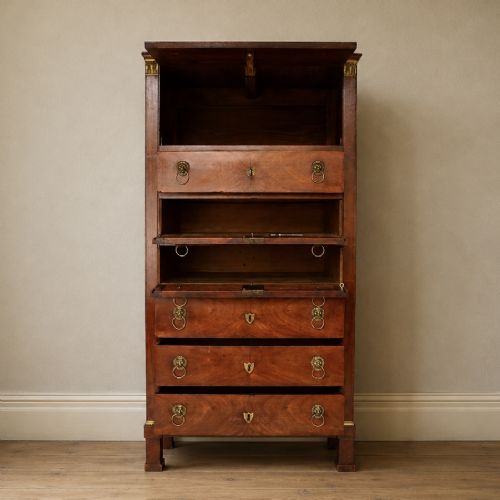
- A tall wall cabinet featuring a vertical drop-front writing surface that conceals pigeonholes and small drawers. It hides paperwork when closed.
- Marquetry
- The art of applying thin veneers of different woods, metals, or shells to a structure to form decorative patterns. Craftsmen cut these pieces meticulously to fit together without gaps.
Nineteenth Century French Bureau: Frequently Asked Questions
How do I style a bureau at home?
These desks suit studies, living rooms, or bedrooms as statement writing spaces. Pair a kingwood or walnut bureau with a simple chair to let the timber and ormolu mounts stand out.
Keep the writing surface uncluttered to showcase the leather insert and marquetry. Ensure the room has balanced lighting to highlight the gilded bronze details.
What is a bonheur du jour?
A bonheur du jour is a small lady's writing desk with a tiered cabinet superstructure on top. The upper section usually contains small drawers or pigeonholes for correspondence.
Originating in France, these desks became fashionable again during the Victorian period. They combine delicate proportions with practical desktop space.
How do I tell Louis XV revival from empire style?
Louis XV revival pieces feature curved cabriole legs, asymmetrical rococo scrolls, and flowing floral marquetry. The lines are soft, organic, and ornate.
Empire style desks draw on neoclassical architecture, displaying straight columns, heavier mahogany timbers, and classical military or floral ormolu mounts. The overall silhouette is formal and symmetrical.