

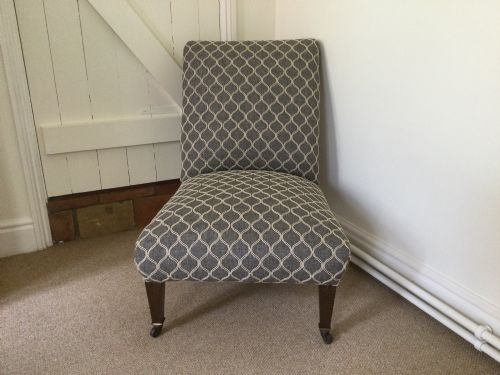


Nineteenth Century Fireside Chair
A nineteenth century fireside chair brings low-slung comfort and vernacular charm to a room, drawing on regional Windsor traditions, French chateau elegance and robust Victorian upholstery.
Nineteenth Century Fireside Chair
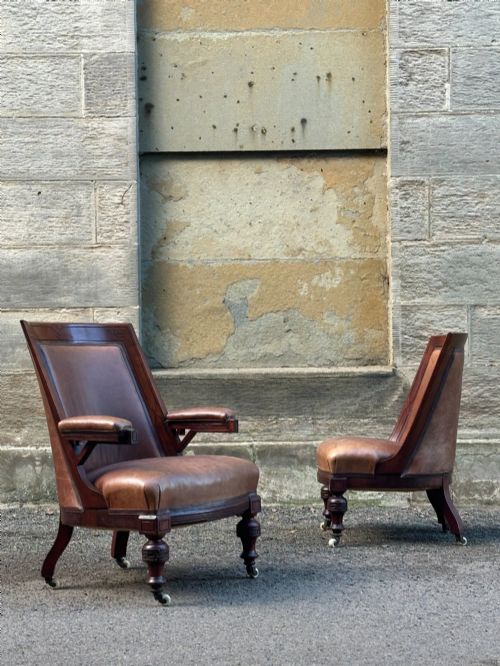
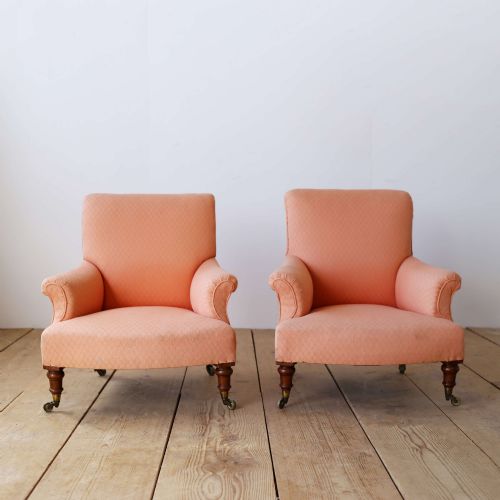
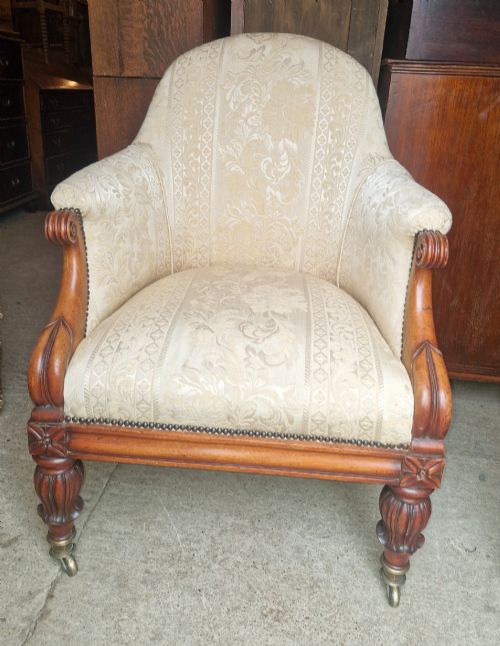
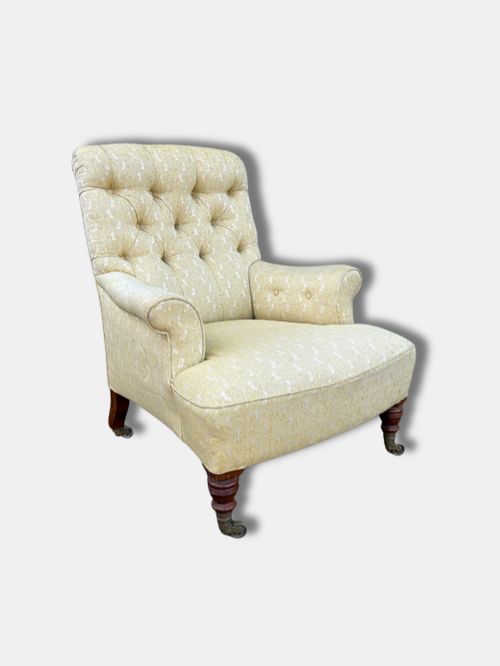
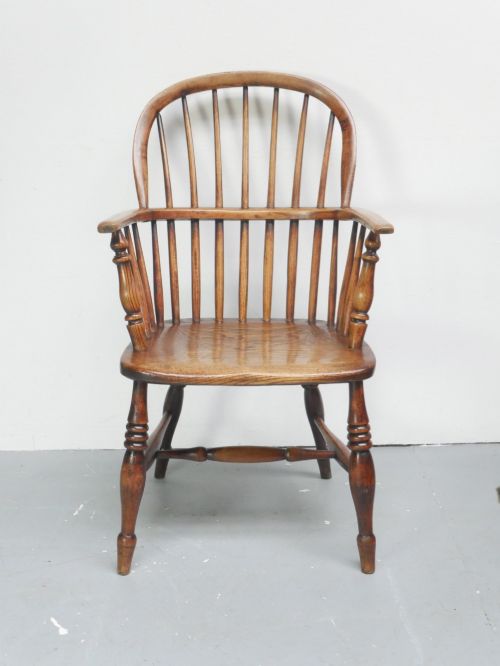
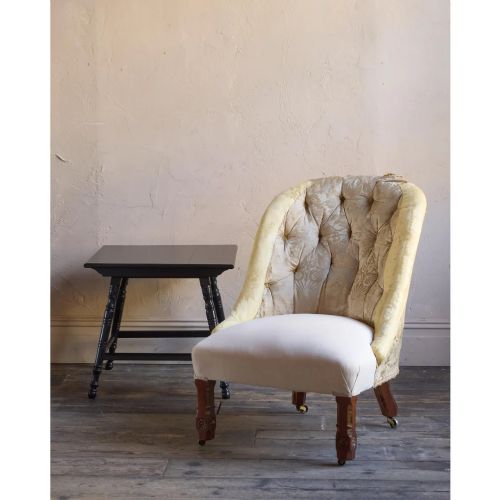
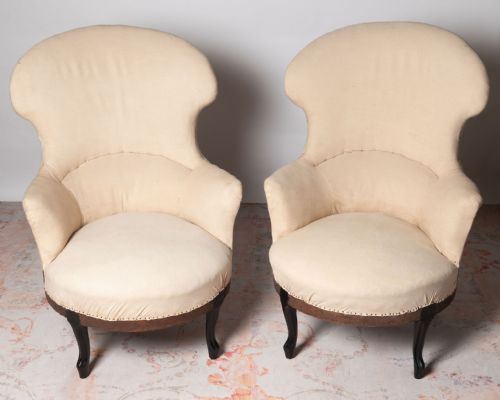
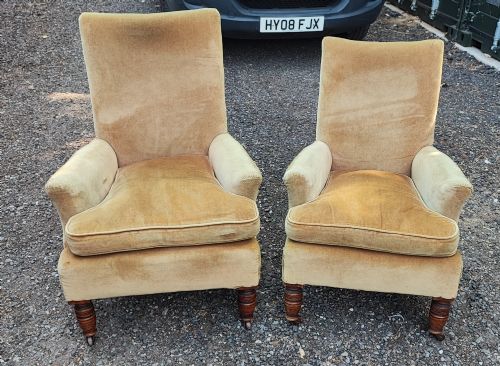
A nineteenth century fireside chair encompasses a wide range of low seating forms, from solid elm and fruitwood Windsor armchairs to button-tufted walnut spoonback chairs and upholstered library seats. These pieces were built for low hearths and drawing rooms, offering supportive backs and deep seats designed for long hours by the fire.
The selections available here span vernacular country styles, formal Regency lines and French chateau aesthetics. Buyers frequently encounter low slipper chairs, rocking variations and substantial mahogany frames alongside lighter bedroom and library models.
Makers ranged from provincial turners working in ash and elm to renowned London cabinetmakers supplying stamped walnut and upholstered armchairs. This variety means a buyer can source a rustic farmhouse seat or a grand salon chair depending on the intended interior.
How They Were Made
Timbers like mahogany, walnut, elm, ash and fruitwood form the structural skeletons of these chairs, shaped through traditional turning, carving and steam-bending. Joinery methods rely on mortise and tenon joints for wooden frames, while upholstered versions depend on webbing, coil springs and horsehair stuffing.
Surface treatments vary from polished showwood frames in walnut and mahogany to waxed or scrubbed fruitwood and elm on country Windsor models. Upholstery utilises calico, velvet, fabric and rexine, often applied over deep-sprung foundations.
Nineteenth Century Fireside Chair Retail Price Guide 2026
Typical asking prices for nineteenth century fireside chair among the pieces listed under this phrase on Sellingantiques today, from the lower quarter to the upper quarter. They describe what is for sale here now, not the wider market.
Country rocking chairs often bear the polished wear marks of nineteenth-century hearths where generations sat reading by the fire.
What Varies in Quality
Quality rests in the integrity of the timber frame, the precision of the joinery and the pedigree of the maker. Master workshops employed dense hardwoods and intricate carving, whereas vernacular pieces display the straightforward competence of regional turners.
Upholstery foundations define the longevity and comfort of padded forms, separating standard commercial production from bespoke London commissions stamped by prominent makers. Original showwood finishes and untouched timber patination elevate the standing of a piece.
Howard and Sons·C. Hindley and Sons·Johnstone and Jeanes·James Shoolbred
The Nineteenth Century Fireside Chair Glossary
- Spoonback
- A chair back carved with a concave oval shape resembling the bowl of a spoon, designed to fit the contours of the spine. This silhouette is common in Victorian walnut and mahogany seating.
- Windsor chair
- A wooden chair constructed with a solid elm or fruitwood seat into which the legs and back spindles are wedged directly. Regional variations include low-back, high-back and rocking formats.
- Showwood
- Polished wooden framing left exposed around the upholstered elements of a chair. Walnut and mahogany were frequently utilised for this purpose in nineteenth-century drawing rooms.
- Slipper chair
- A low-seated upholstered chair originally designed for bedrooms to allow ladies to dress comfortably. These pieces typically sit close to the floor without arms.
- Vernacular
- Objects made by regional artisans following local traditions rather than high-style metropolitan designs. These chairs prioritise functional utility and local timbers such as ash and elm.
Nineteenth Century Fireside Chair: Frequently Asked Questions
How do I identify a Windsor fireside chair?
Windsor fireside chairs feature a thick wooden saddle seat into which turned spindles and legs are wedged. They often combine elm seats with ash or fruitwood frames.
These pieces rely on timber construction rather than upholstery for their primary structure, though some accept squab cushions for added comfort.
Where should I place a slipper chair?
Slipper chairs work well in bedrooms, dressing rooms and low-ceilinged sitting areas due to their compact scale and low seat height. Originally designed to assist with footwear, they fit easily into small corners.
Their armless profile allows them to tuck neatly beneath windows or beside larger armchairs without crowding a room.
How do I care for nineteenth-century wood?
Nineteenth-century wooden frames require occasional applications of beeswax to nourish the timber and maintain a soft lustre. Avoid placing them near direct heat sources or strong sunlight.
Gentle dusting with a dry cloth prevents dirt build-up on carved details and polished mahogany or walnut surfaces.