
Nineteenth Century Chest of Drawers
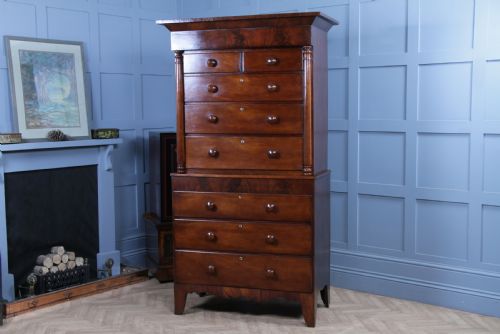
A nineteenth century chest of drawers is a storage piece that organises domestic spaces while showing the cabinetmaker's skill through timber and proportion.
Nineteenth Century Chest of Drawers
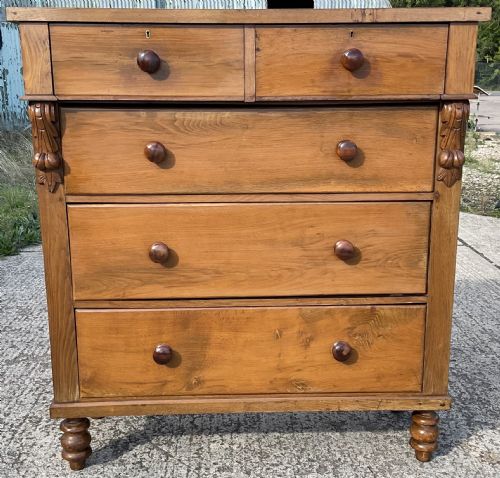
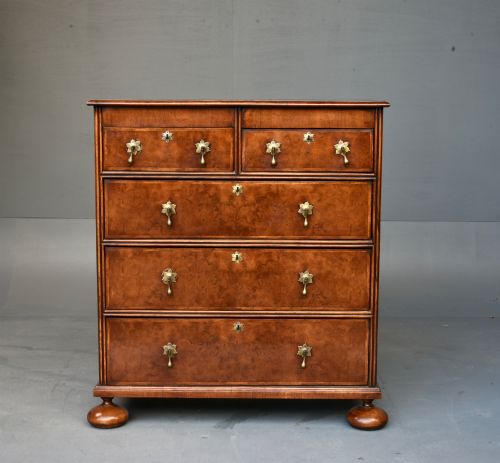
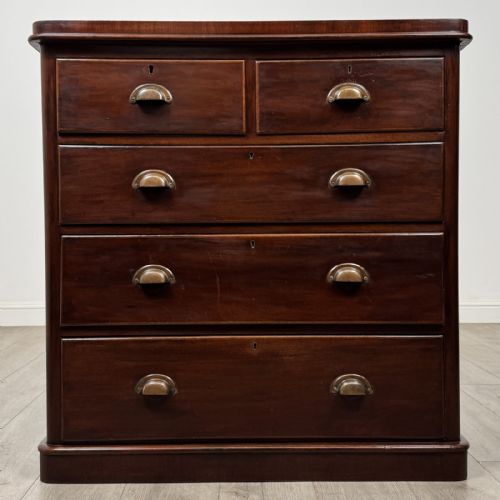
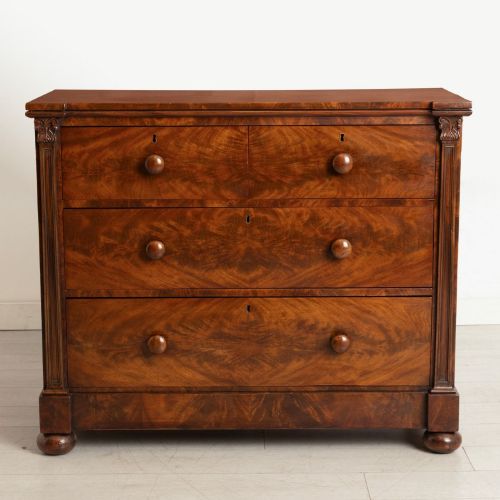
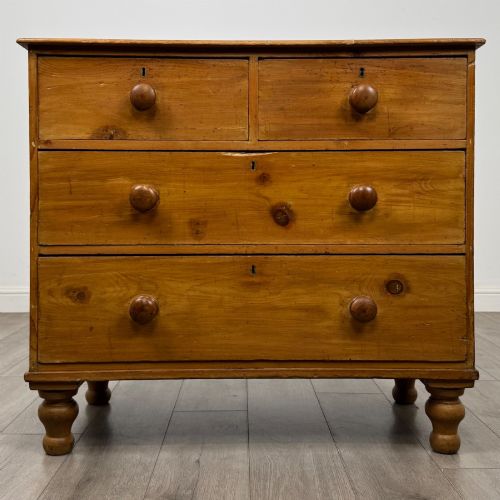
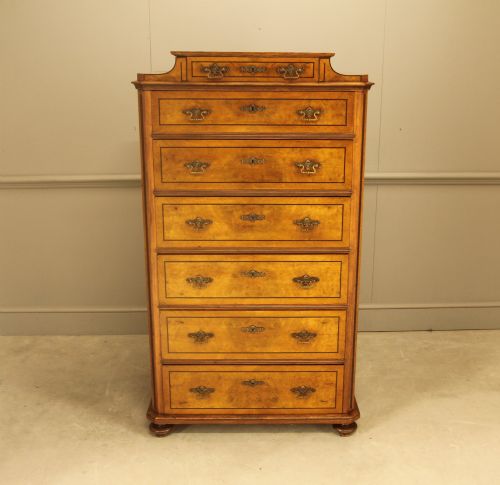
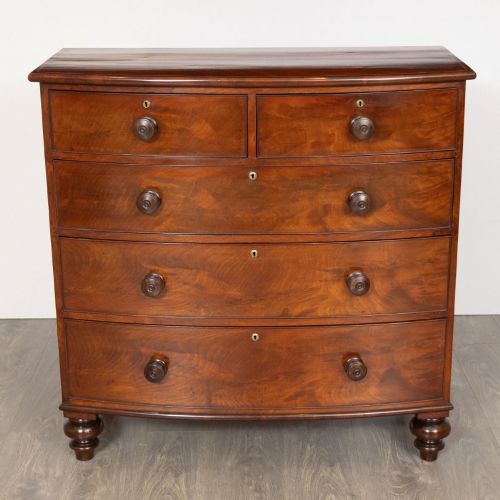
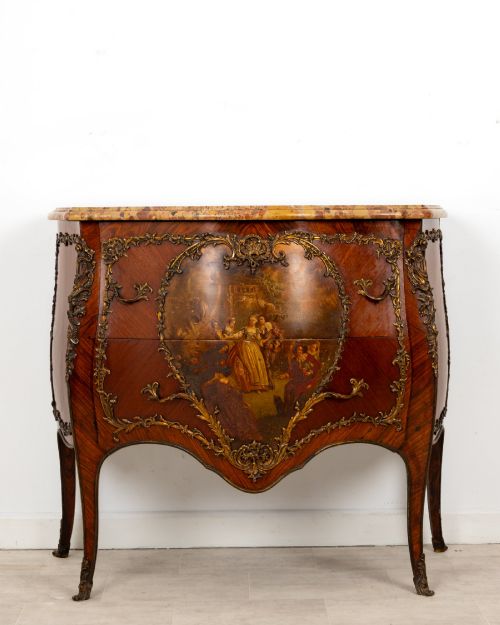
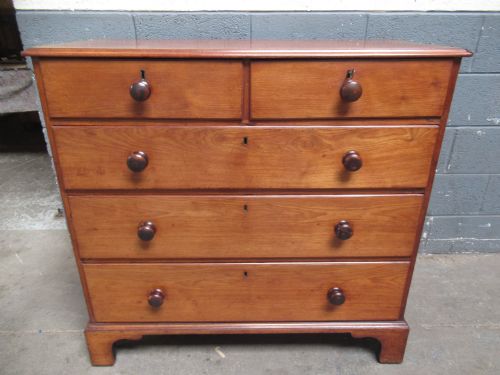
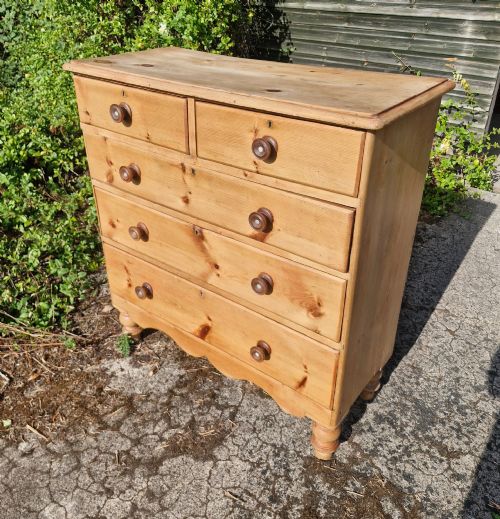
A nineteenth century chest of drawers appears in various configurations, including bow-front, straight-front, tallboy, and compactum formats originating from English, Scottish, French, and Swedish workshops. The primary form met on this page is the Victorian mahogany chest of drawers, alongside Regency and Georgian pieces showing regional cabinetmaking traditions.
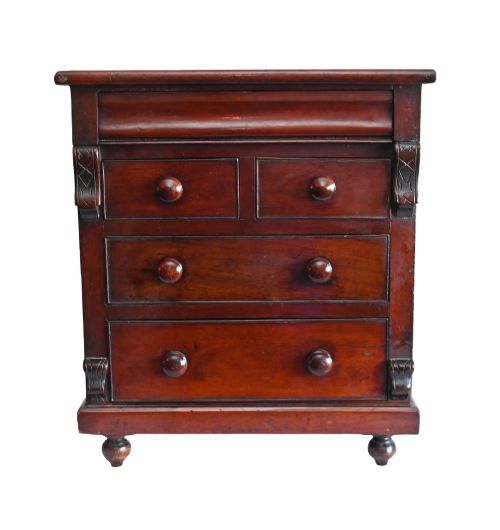
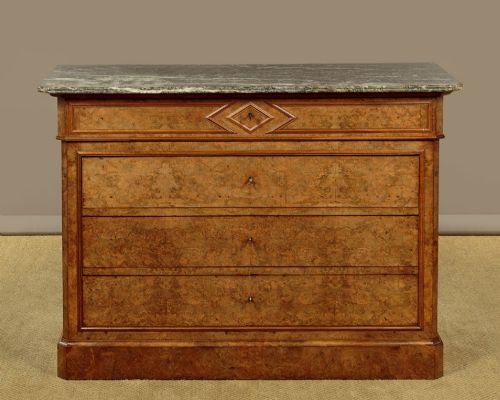
Makers utilised different scales, ranging from large bedroom chests to smaller apprentice pieces, collector's cabinets, and commodes topped with marble. Timber choice shifts between dense native hardwoods and imported veneers like burr walnut, rosewood, and flame mahogany.
Craftsmanship and Proportion
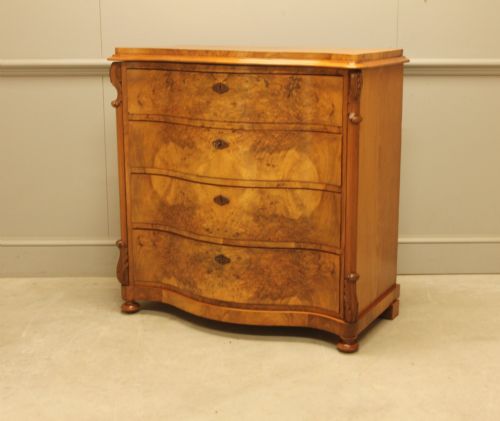
Quality separates through the selection and matching of wood veneers, where symmetrical grain patterns on drawer fronts indicate careful planning by the cabinetmaker. The crispness of hand-cut dovetailing and the retention of original brass or turned wooden knobs also distinguish finer examples.
Proportion and structural integrity define the upper tier of these pieces, seen in drawers that run smoothly within their slips and mouldings that remain sharp and intact. Regional variations, such as Scottish or Swedish interpretations, bring distinct mouldings and timber selections that influence the overall harmony of the design.
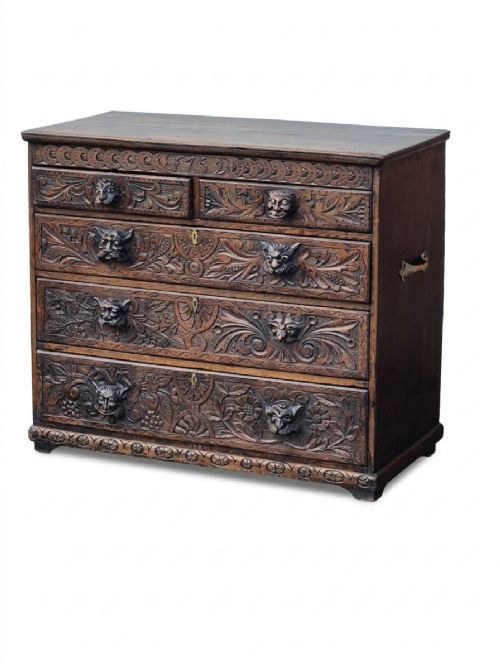
Green Man grotesques glare from Victorian drawer fronts, watching over your socks with ancient, leafy expressions.
Howard and Sons·Gillows
The Nineteenth Century Chest of Drawers Glossary
- Bow-front
- A convex curved cabinet front popular during the Regency and Victorian periods. This shape softens the corners of the room while providing interior depth.
- Flame mahogany
- A veneer cut from the fork of a mahogany tree to produce a flickering, flame-like pattern. Cabinetmakers placed these sheets centrally on drawer fronts for visual impact.
- Tallboy
- A tall chest of drawers, often built as a chest on chest or a single high carcass. These units maximised vertical storage space in bedrooms.
- Dovetail
- An interlocking joint formed by interlocking wedge-shaped fingers. This joint secures drawer corners without metal fasteners.
- Biedermeier
- A Central European style emphasising clean lines and polished veneers over heavy ornamentation. Pieces from this tradition rely on the natural grain of woods like burr walnut.
Nineteenth Century Chest of Drawers: Frequently Asked Questions
What is a Wellington chest?
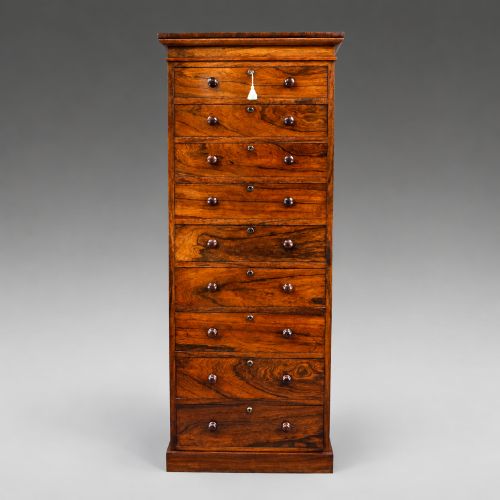
A Wellington chest is a tall, narrow set of drawers secured by a locking hinged side pilaster that fastens over the drawer edges. This design offered secure storage for valuables in nineteenth-century homes.
Most examples stand high and slim against a wall, containing several shallow drawers framed by simple mouldings.
How do I identify a Regency chest?
Regency chests typically exhibit classical proportions, mahogany or rosewood timbers, and decorative elements like satinwood crossbanding or brass inlay. The feet often take the form of bracket feet or turned supports.
Cabinetmakers working in this period focused on symmetry and clean architectural lines rather than heavy carving.
Where were apprentice chests used?
Apprentice chests served as miniature demonstration pieces created by woodworkers to prove their skill to a guild or master. They mirror the construction methods of full-sized furniture on a smaller scale.
These compact chests functioned as tabletop storage or samples for prospective clients.
How do I care for nineteenth-century wood?
Care for antique wood by maintaining stable room humidity away from direct heat sources and sunlight to prevent timber splitting. Dust regularly with a dry cloth and apply occasional wax polish to nourish the surface.
Avoid using silicone sprays or harsh chemical cleaners that can degrade the historic polish.