


Nineteenth Century Brass Light
A nineteenth century brass light brings warmth and period weight to a room, offering genuine metalwork from the Victorian, Regency and earlier eras.
Nineteenth Century Brass Light
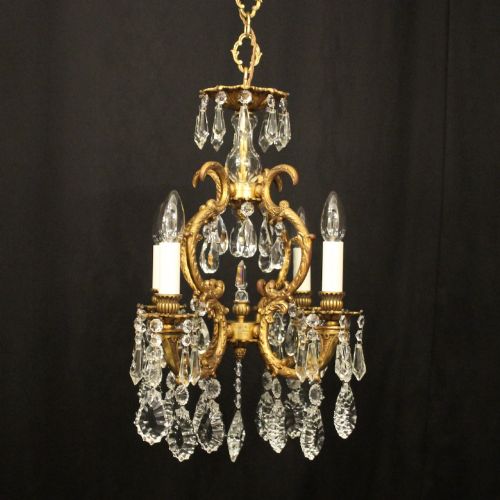
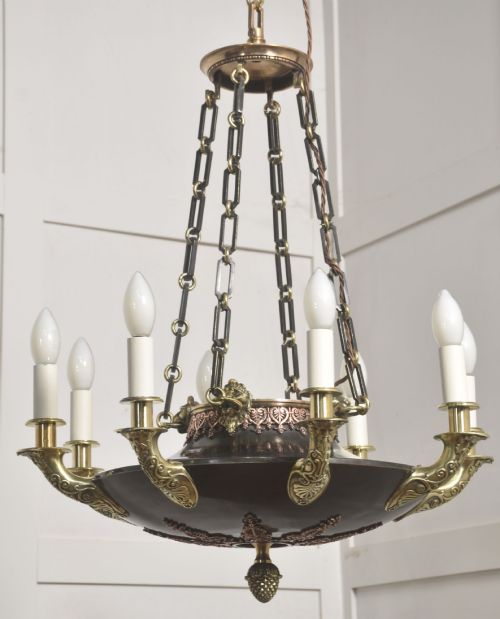
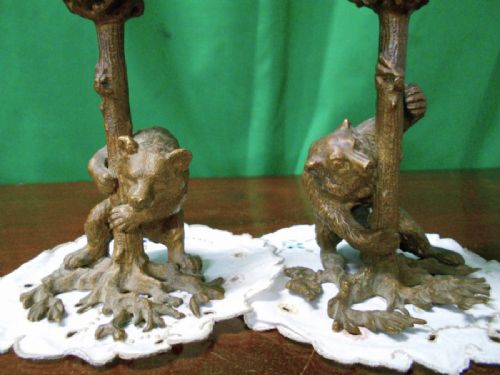
When you search for a nineteenth century brass light, you encounter a diverse array of surviving metalwork designed for domestic illumination. Candlesticks, wall lights, chandeliers and oil lamps form the core of what remains from this industrious hundred-year span.
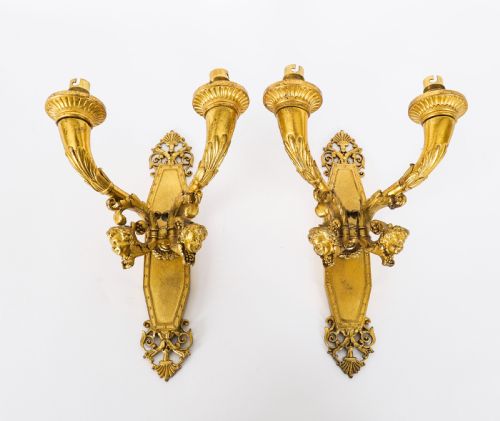
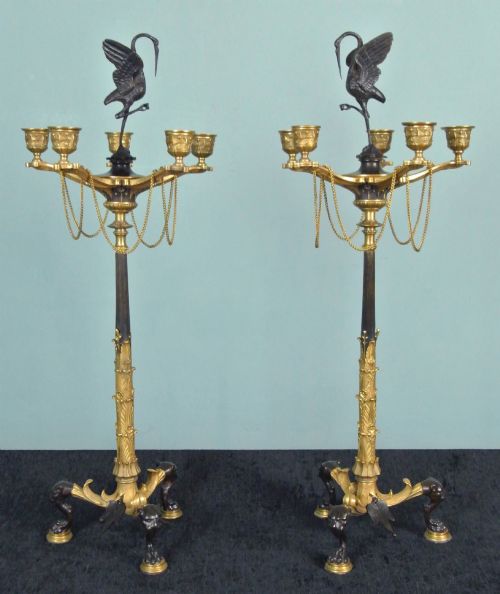
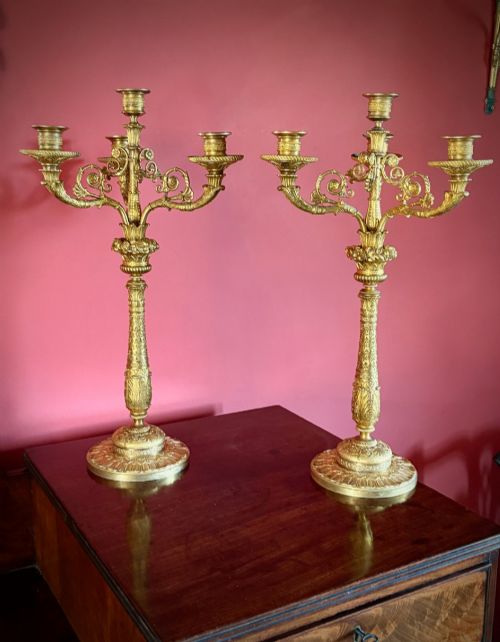
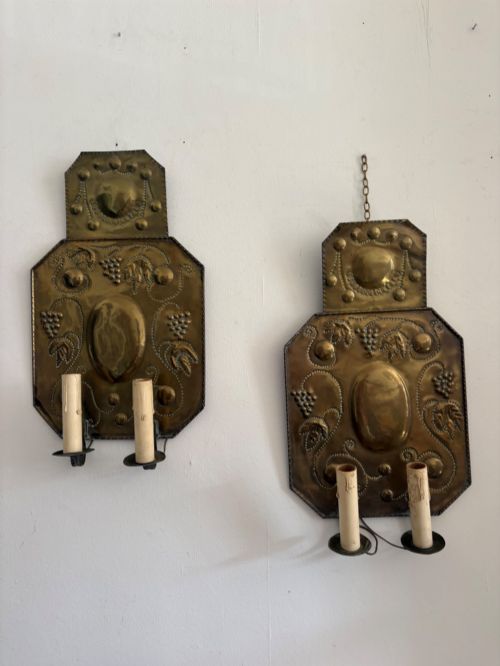
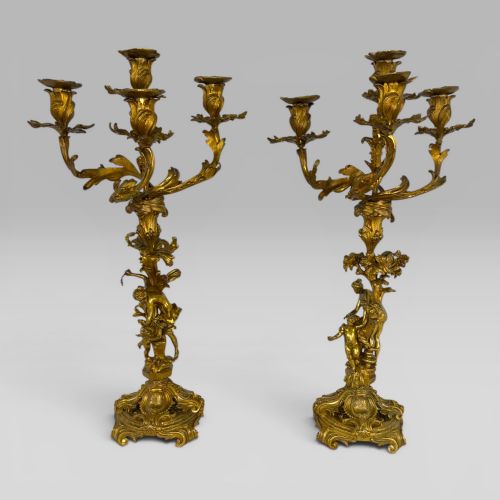
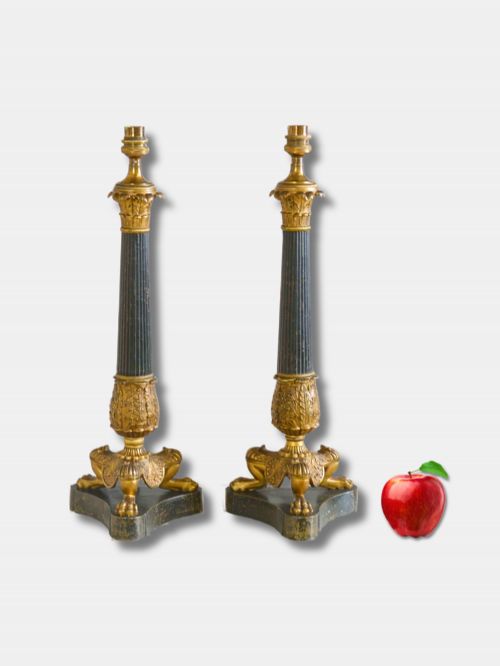
The specimens meeting you on this page lean heavily towards matched pairs of candlesticks and multi-branched wall sconces. French Neoclassical, Rococo Revival and English Victorian domestic hardware dominate the current selection of lighting.
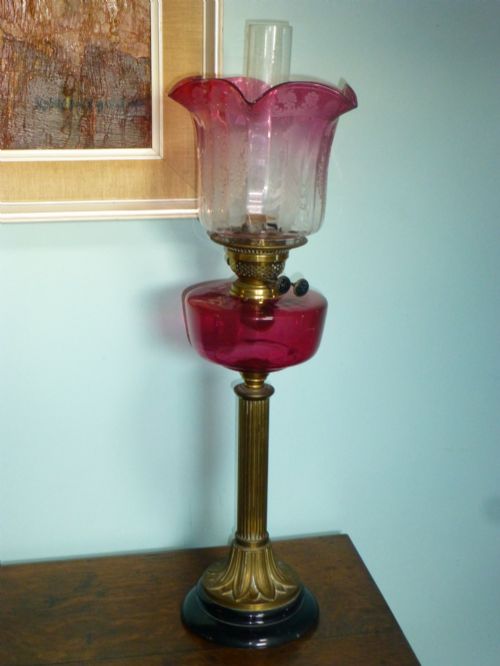
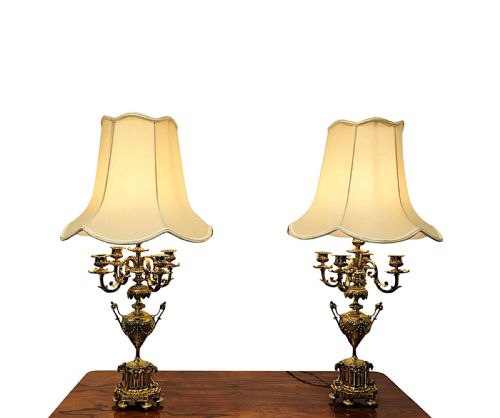
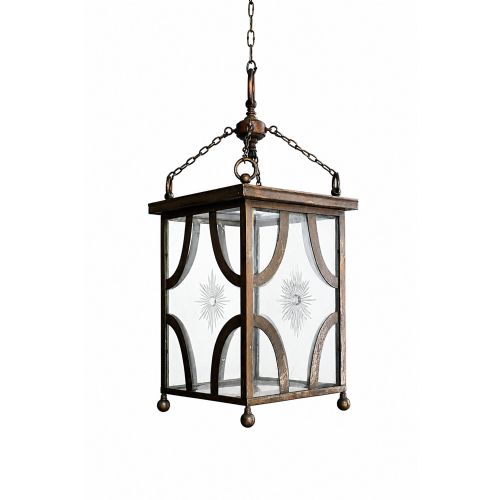
Many of these pieces began life burning tallow, wax or oil before undergoing later adaptation for modern electrical wiring. Buyers find both standing table models and hanging fixtures intended for hallways and principal reception rooms.
How they were made
Foundries cast brass, bronze and ormolu using traditional sand-casting or lost-wax techniques before finishers chased the metal surfaces by hand. Ormolu components received a fine layer of gold amalgam to achieve a bright, enduring lustre.
Makers integrated contrasting materials such as marble columns, porcelain reservoirs, glass crystals and cut crystal drops into the metal framework. Repoussé decoration involved hammering thin sheet brass from the reverse side to raise ornamental patterns in relief.
Listings feature diverse objects from the nineteenth century, including French gilded bronze chandeliers, Dutch repoussé wall sconces and heavy English brass candlesticks.
What varies in quality
The crispness of the casting and the depth of the subsequent hand-chasing separate standard production items from superior workshop output. Sharper leaf motifs and well-defined figural details indicate skilled hands worked the metal after it left the sand mould.
Weight and rigidity also dictate a piece's standing, as heavier gauge brass and substantial bronze mounts ensure stability in large chandeliers and candelabra. The integrity of original gilding and the clean integration of secondary materials like marble or porcelain further elevate an object.
Barbedienne·Daris·Pugin
The Nineteenth Century Brass Light Glossary
- Ormolu
- Gilded bronze, where finely ground gold is applied to a bronze base using a mercury amalgam. This technique creates a rich golden finish characteristic of French decorative arts.
- Repoussé
- A metalworking technique where the artisan hammers sheet metal from the reverse side to form a raised design. It appears frequently on Dutch and English wall sconces.
- Candelabra
- A branched candlestick holding multiple candles or light sources. These fixtures often feature removable branches for conversion or cleaning.
- Pricket
- A candlestick featuring a sharp central spike designed to impale the base of a large wax candle rather than sitting inside a socket.
- Cloisonné
- An ancient technique for decorating metalwork objects with coloured glass paste placed within small metal compartments. Japanese workshops utilised this method on nineteenth-century lamp bases.
Nineteenth Century Brass Light: Frequently Asked Questions
Are these lights wired for electricity?
Many nineteenth-century lamps and chandeliers have undergone conversion for modern electrical wiring during their long histories. Buyers should inspect the specific listing details to confirm the current wiring status.
Original candlesticks often retain their solid sockets without electrical fittings, allowing them to hold traditional taper candles. Converted table lamps and pendant lights generally arrive ready for installation by a qualified electrician.
How do I clean nineteenth-century brass?
Historic metalwork benefits from gentle dusting with a soft dry cloth to prevent the accumulation of surface dirt. Aggressive metal polishes strip away the aged patination that collectors prize.
If cleaning is necessary, use a mild non-abrasive soap solution and dry the metal thoroughly immediately afterwards. Avoid touching ormolu surfaces with harsh chemical cleaners that destroy the historic gold layer.
What is the difference between brass and ormolu?
Brass is an alloy composed primarily of copper and zinc, valued for its warm golden tone and durability. It forms the structural body of many domestic candlesticks and lanterns.
Ormolu refers specifically to gilded bronze. While visually similar in its golden hue, bronze contains copper and tin, and the surface receives an authentic gold mercury finish.