






Neoclassical Wooden Bed
A neoclassical wooden bed brings architectural rigour and rich mahogany, walnut or painted surfaces to a bedroom.
Neoclassical Wooden Bed
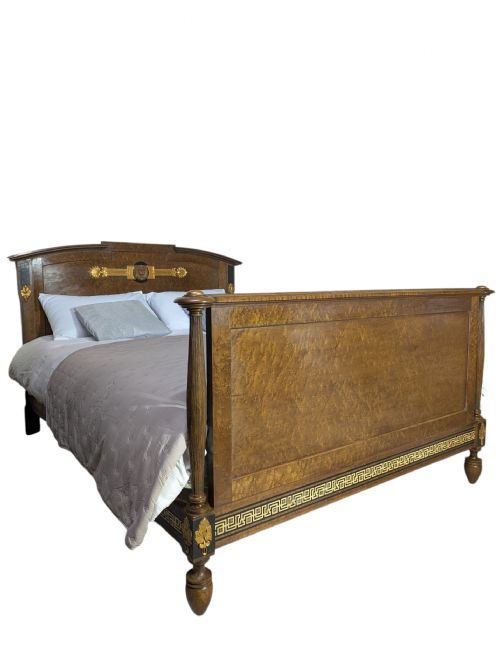
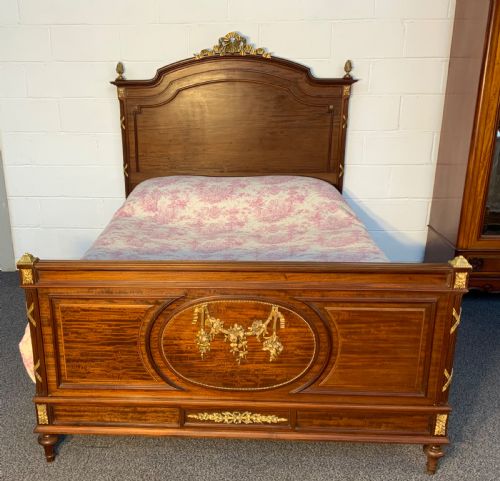
A neoclassical wooden bed combines classical architectural forms with fine cabinet woods, appearing in king size, double and single formats. The listings show a strong French and Italian influence, spanning the nineteenth century and the early twentieth century.
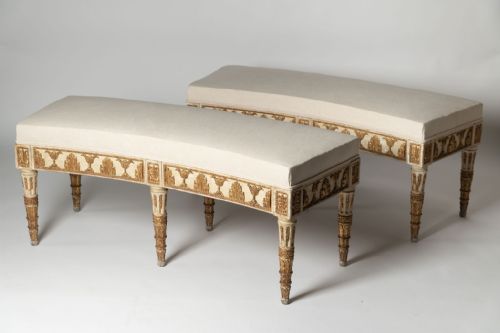
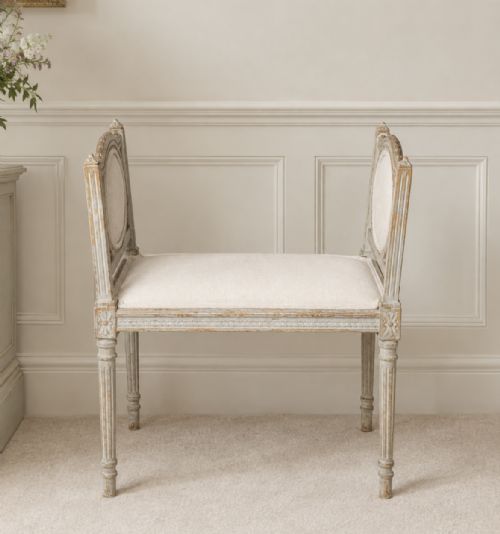
Most examples adopt Louis XVI style, Empire style or general French neoclassical design, featuring clean lines alongside carved details. Alongside full bed frames and bedsteads, related seating such as benches and stools occasionally appear within the broader grouping.
The dominant timbers recorded are mahogany and walnut, frequently accompanied by painted wood finishes, giltwood and brass detailing. These pieces reflect historical revivals from the eighteen-hundreds up to nineteen-twenty.
How they were made
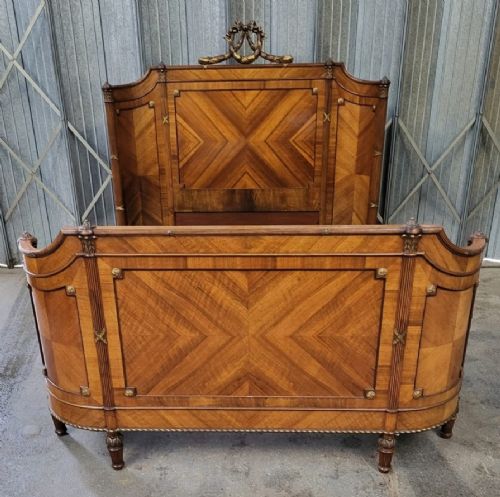
Cabinetmakers constructed these frames using solid hardwoods like mahogany, walnut and fruitwood, often applying decorative parquetry and marquetry veneers. Plump pudding mahogany and painted wood surfaces provide distinct tactile and visual variety across the inventory.
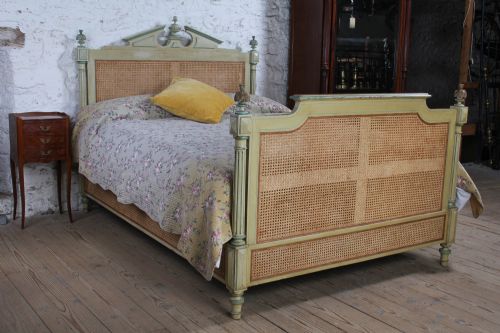
Metal mounts in brass and ormolu add crisp contrast to the timber frames. Caning and upholstered elements also feature, alongside carved wooden ornamentation and giltwood highlights.
Neoclassical Wooden Bed Retail Price Guide 2026
Typical asking prices for neoclassical wooden bed among the pieces listed under this phrase on Sellingantiques today, from the lower quarter to the upper quarter. They describe what is for sale here now, not the wider market.
A discreetly opulent bed frame proves that nineteenth-century makers knew how to whisper luxury rather than shout it.
What varies in quality
Quality rests in the crispness of the carving, the selection of timber grain such as figured mahogany or walnut, and the integration of brass embellishments. Finer examples display meticulous parquetry and balanced proportions true to their stylistic period.
The sophistication of the painted or gilded surfaces and the condition of integrated caning further distinguish superior pieces. Structural integrity and the harmony of the classical motifs dictate the standing of an individual bedstead.
The Neoclassical Wooden Bed Glossary
- Neoclassical
- A style drawing on classical Greek and Roman art, characterised by symmetry, straight lines and restrained ornamentation. It dominates nineteenth-century revival furniture.
- Louis XVI Style
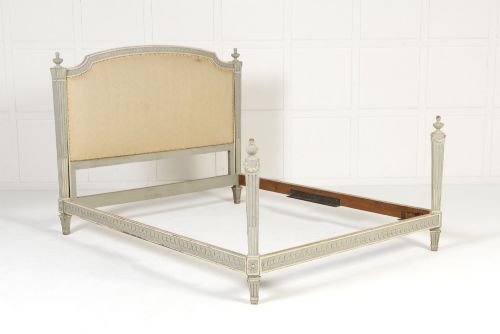
- A French decorative style defined by straight columns, rectilinear forms and classical antiquity motifs. It forms a major subset of the beds listed here.
- Parquetry
- A geometric mosaic of wood pieces used for decorative surfaces on furniture. It frequently enhances mahogany and walnut bed panels.
- Ormolu
- Gilded bronze applications mounted onto wooden furniture frames. It provides metallic contrast on Empire and neoclassical pieces.
- Caning
- Woven rattan material used for bed panels and seating. It offers a lighter textural element against solid timber.
Neoclassical Wooden Bed: Frequently Asked Questions
What periods do these wooden beds come from?
The listings span from eighteen-hundred through the nineteenth century and into the early decades of the twentieth century, specifically covering periods such as eighteen-ninety and nineteen-twenty.
These dates capture both nineteenth-century craftsmanship and subsequent revival movements inspired by French and Italian design.
Which woods are most common?
Mahogany and walnut appear frequently as the primary solid timbers, supplemented by fruitwood and painted wood surfaces.
Plump pudding mahogany and parquetry veneers also feature prominently among the cabinet woods recorded.
Are these beds standard modern sizes?
The listings include king size, double, super king size and single bed frames. Historical dimensions often differ slightly from contemporary standard mattress sizes.
Buyers should verify exact internal dimensions before sourcing a mattress for these antique frames.
How do Louis XVI and Empire styles differ?
Louis XVI style focuses on lighter, rectilinear classical proportions with restrained carving and fluted columns. Empire style leans toward heavier, more imposing classical references often associated with military and imperial themes.
Both styles utilise mahogany and walnut but express neoclassical ideals through distinct visual weight.