



Neoclassical Vitrine
A neoclassical vitrine holds your finest objects behind glass, bringing architectural order and polished display into a room.
Neoclassical Vitrine
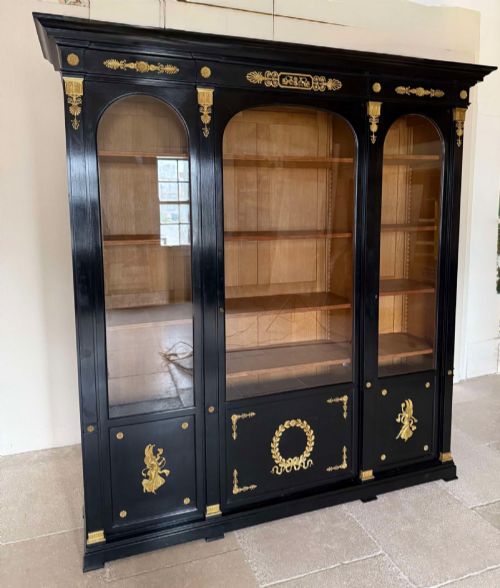
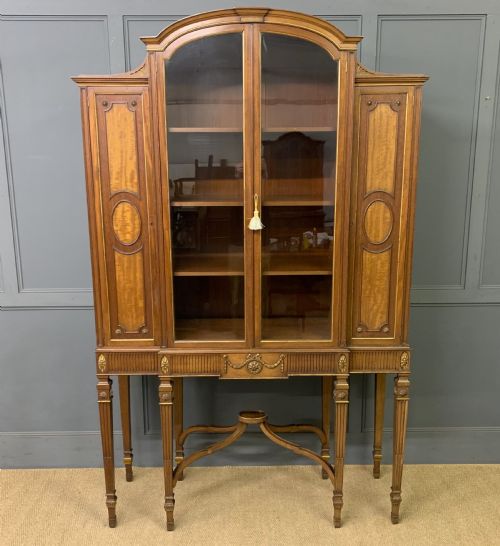
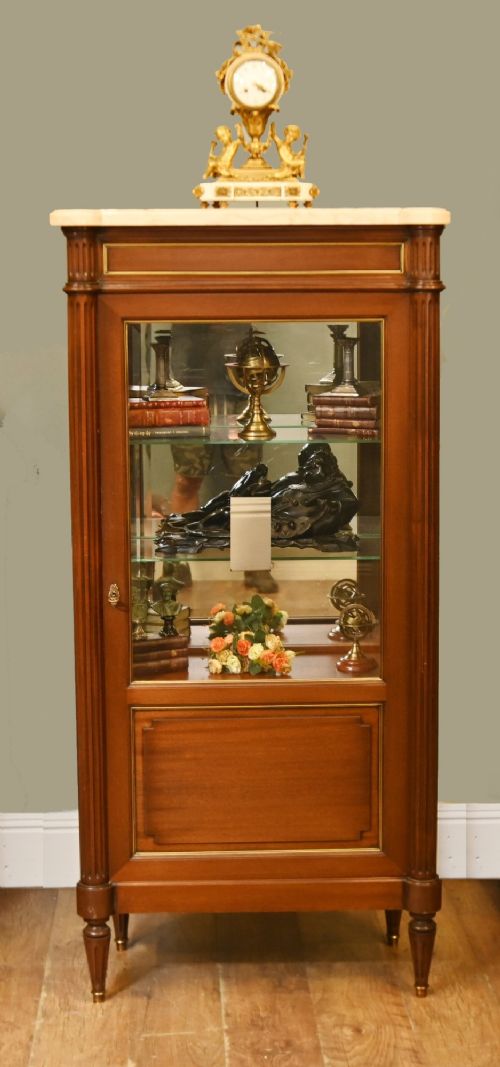
A neoclassical vitrine is a piece of display furniture designed to showcase ceramics, glass and small treasures behind glazed doors or panels. These cabinets draw on classical architectural vocabulary, often featuring symmetrical proportions, column supports and restrained ornamentation.
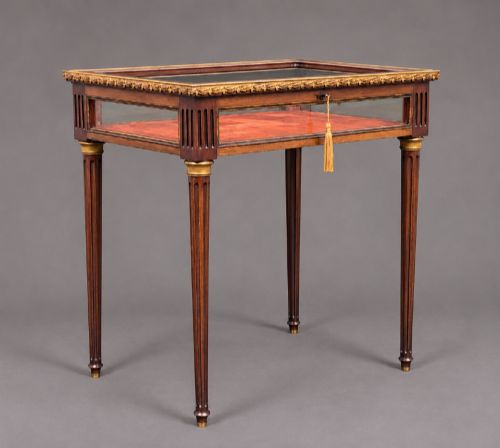
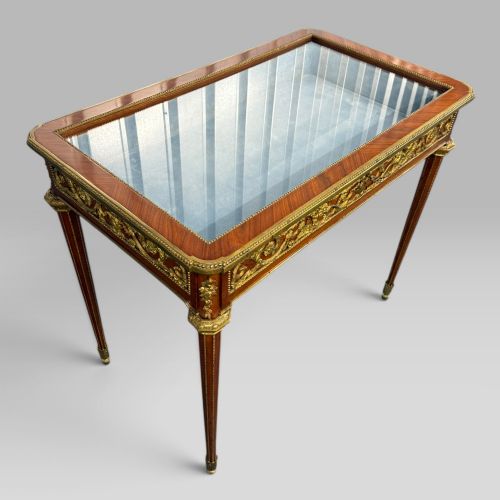
The versions most commonly met on this page date from the nineteenth century into the Edwardian era, spanning revivals such as Louis XVI, Sheraton, and Directoire styles. Makers applied these classical idioms to freestanding display cabinets, corner units, and low bijouterie tables with glass tops.
How they were made
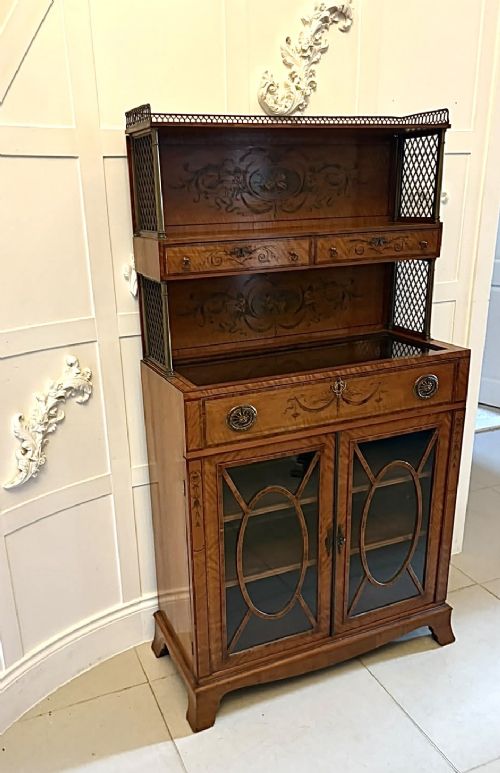
Cabinet makers built these pieces using foundational timbers like mahogany, satinwood, and walnut, frequently applying intricate marquetry inlays to create contrasting geometric or floral patterns. Carcass construction demanded steady joinery to support heavy glass doors and mirrored or fabric-lined interiors.
Metal mounts in brass and ormolu were cast and chased to accentuate corners, aprons, and cornices, echoing French cabinet-making traditions. Marble tops appeared on select commodes and tables, providing a solid, cool surface above the timber framework.
Neoclassical Vitrine Retail Price Guide 2026
Typical asking prices for neoclassical vitrine among the pieces listed under this phrase on Sellingantiques today, from the lower quarter to the upper quarter. They describe what is for sale here now, not the wider market.
Object forms span corner cabinets, tall display cases, and low glass-topped salon tables designed in revival styles.
What varies in quality
Quality reveals itself in the precision of the timber selection and the crispness of the secondary decoration, such as hand-cut marquetry and finely chased ormolu. Finer examples display meticulous attention to interior details, including fitted velvet linings and accurately matched veneer grains.
Attribution to documented workshops or retail firms elevates certain pieces above standard production models of the period. The weight and integration of the cast bronze mounts relative to the timber carcass distinguish standard cabinet work from exhibition-grade creations.
Waring and Gillow·François Linke·James Hicks·Jewell of Holborn·Paul Sormani·Edwards and Roberts·C Hindley and Sons
The Neoclassical Vitrine Glossary
- Vitrine
- A glass-fronted cabinet designed for the display of curiosities and porcelain. The form prioritises visibility from multiple angles.
- Ormolu
- Gilded bronze used for decorative mounts and feet. The technique involves applying a gold amalgam to cast brass or bronze.
- Marquetry
- Inlaid patterns of wood veneers applied to a furniture carcass. Artisans assemble contrasting timbers to form pictorial or geometric designs.
- Bijouterie table
- A shallow glass-topped display table intended for jewellery and small ornaments. These pieces often feature hinged lids for easy access.
- Satinwood
- A lustrous, yellowish timber native to India and Ceylon, prized for fine cabinet-making. It takes a high polish and contrasts sharply with darker woods.
Neoclassical Vitrine: Frequently Asked Questions
What is a neoclassical vitrine used for?
These cabinets serve to display prized collections of ceramics, glassware, and small antiques safely behind glass doors or panels.
They protect delicate items from dust while allowing full visibility within a reception room or drawing room.
How do I date a neoclassical vitrine?
Dating relies on identifying timber types, construction methods, and stylistic revivals such as Louis XVI or Sheraton Revival.
Most examples on this page belong to the nineteenth and early twentieth centuries, drawing on earlier neoclassical design principles.
Where should I place a vitrine in a room?
A vitrine sits well against a solid wall in a drawing room, dining room, or hallway where natural or artificial light strikes the glass panels.
Corner models fit neatly into unused angles, while glass-topped bijouterie tables work effectively as centre tables or beside seating.
How are glass top display tables constructed?
These tables combine a wooden frame of mahogany or satinwood with a hinged or fixed glazed top that opens to reveal a velvet-lined interior well.
Ormolu mounts and tapered legs provide structural support while maintaining the slender neoclassical silhouette.