
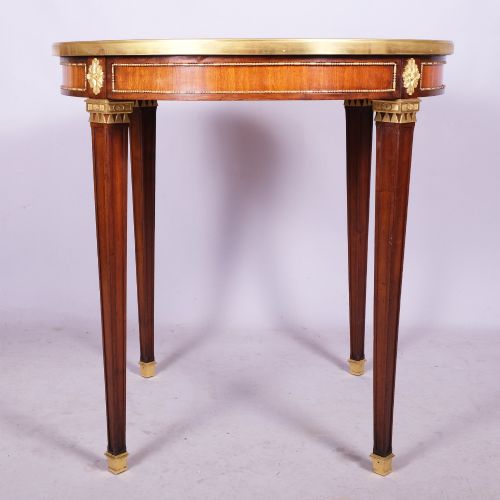


Neoclassical Round Side Table
These neoclassical round side table examples bring symmetrical balance and classical restraint to a room.
How they were made
Cabinetmakers utilised dense timbers such as mahogany, walnut, satinwood, and ebony, often applying intricate veneers or specimen wood inlay to circular surfaces. Painted finishes on wood also appear, providing softer decorative schemes across various pieces.
Structural embellishments rely on cast or chased ormolu and bronze mounts, detailing rams' heads, swans, and flower mouldings. Insets of white or black marble and onyx form smooth, heavy tops supported by gilt wood or brass elements.
What varies in quality
The standard of carving and metalwork dictates the distinction between ordinary production and superior work. Crisp casting in the ormolu mounts and refined detailing in wood inlays signal higher craftsmanship.
Choice of materials also determines the character of each piece, from simple painted wood to figured burr elm, mahogany, and heavy inset marble or onyx slabs.
Tables occasionally feature cast brass swans gazing out from beneath the tabletop.
Pietro Ferrario
The Neoclassical Round Side Table Glossary
- Guéridon
- A small circular table on a central pillar or tripod base, originating in seventeenth-century France. These pieces serve as versatile lamp or side tables.
- Bouillotte table
- A small circular card or occasional table featuring a raised brass gallery around the edge to prevent items from sliding off. They frequently incorporate marble tops and candleholders or small drawers.
- Ormolu
- Gilt bronze ornamentation applied to furniture, cast and finished by hand to produce sharp classical details. This technique defines much of the French Empire aesthetic.
- Gilt wood
- Wood coated with a thin layer of gold leaf or gesso, used to highlight classical mouldings and column supports. It provides a bright decorative contrast to dark timbers.
Neoclassical Round Side Table: Frequently Asked Questions
How do I identify French Empire style?
French Empire style pieces display heavy classical proportions, dark mahogany timbers, and prominent cast ormolu mounts. Common motifs include swans, rams' heads, and architectural columns.
Such tables convey a formal and imposing presence, contrasting with the lighter painted satinwood finishes of the later neoclassical revivals.
Are marble tops original to these tables?
Many nineteenth and early twentieth century circular tables incorporate white, black, or onyx marble slabs as a primary surface. These heavy tops resist heat and liquid, making them practical for daily use.
When examining a piece, look for consistent ageing between the stone top and the wooden frame beneath it.
Where should I place a round side table?
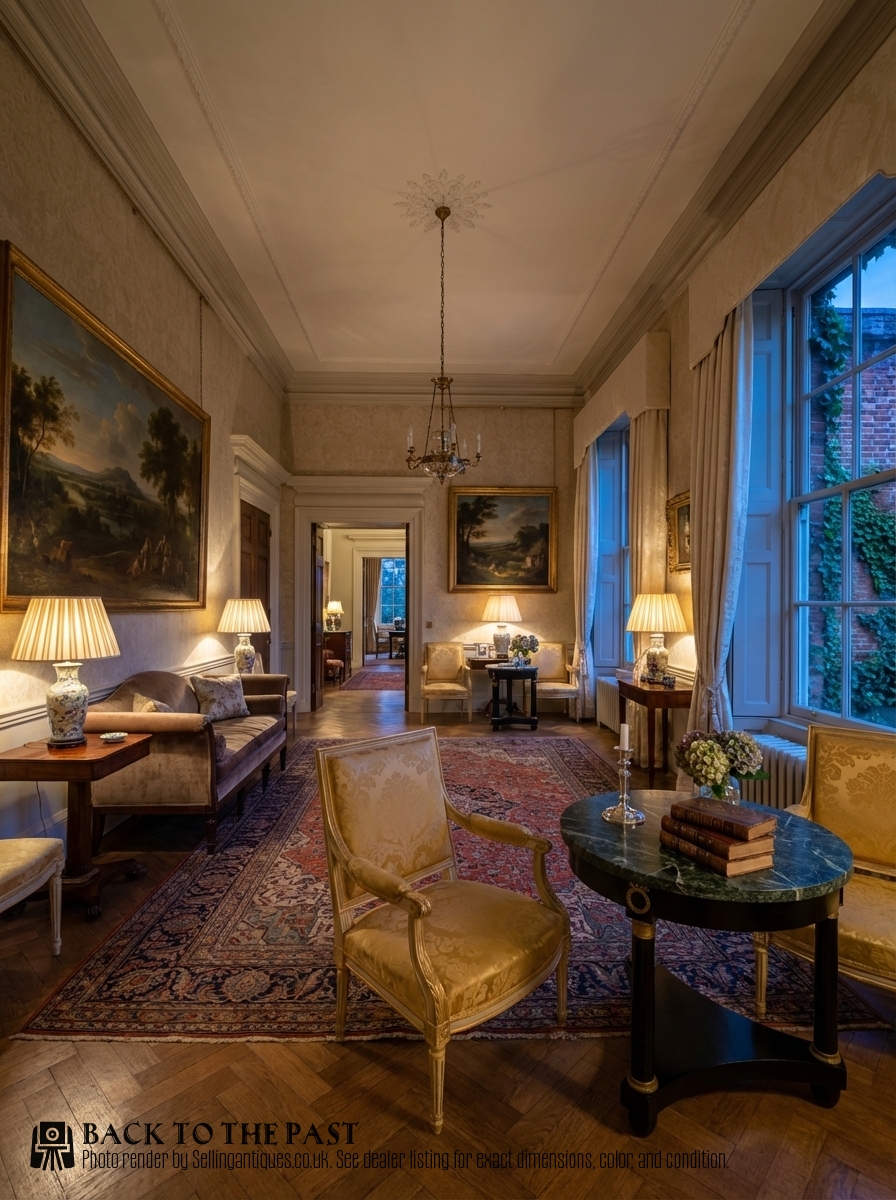
A circular table fits easily beside armchairs, between two seats, or in the centre of a room as a guéridon. Its lack of sharp corners softens the circulation space of an interior.
Smaller examples function effectively as lamp tables or occasional surfaces for displaying decorative objects.