

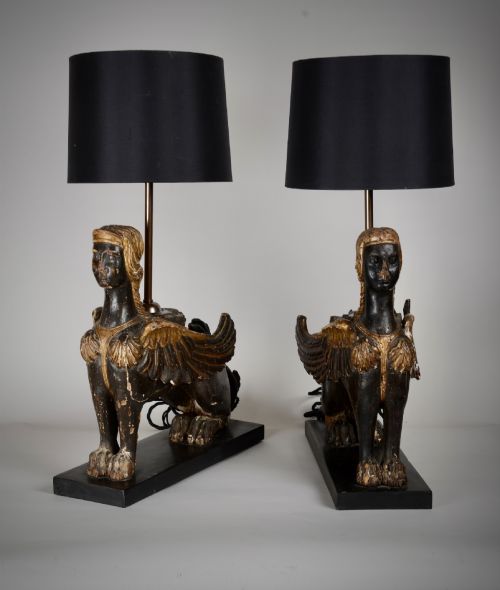
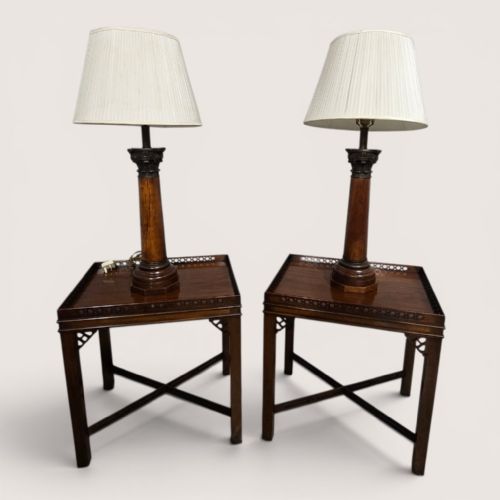
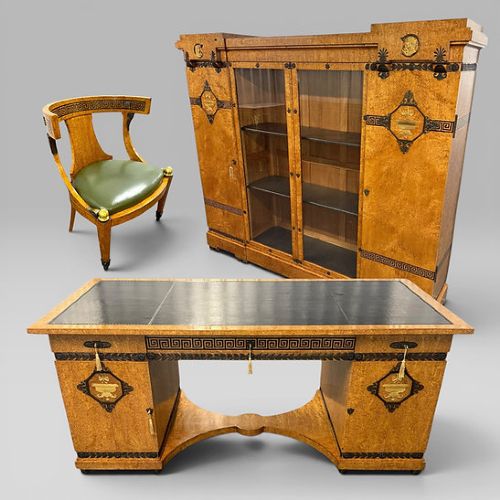
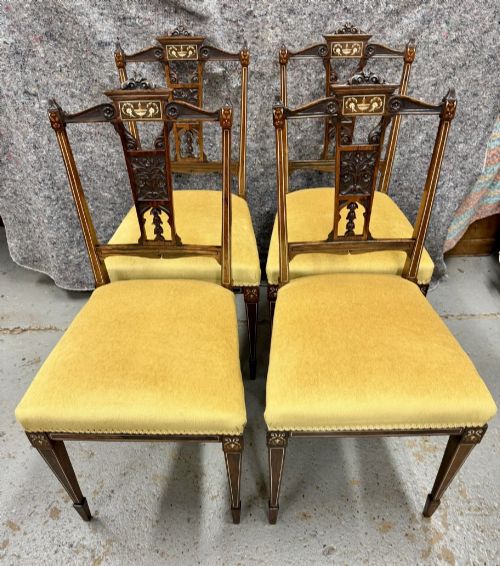
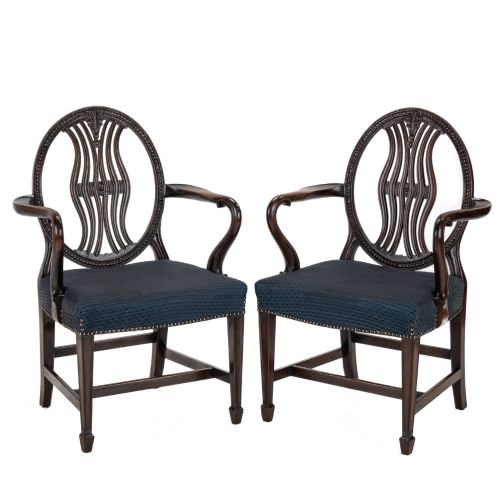
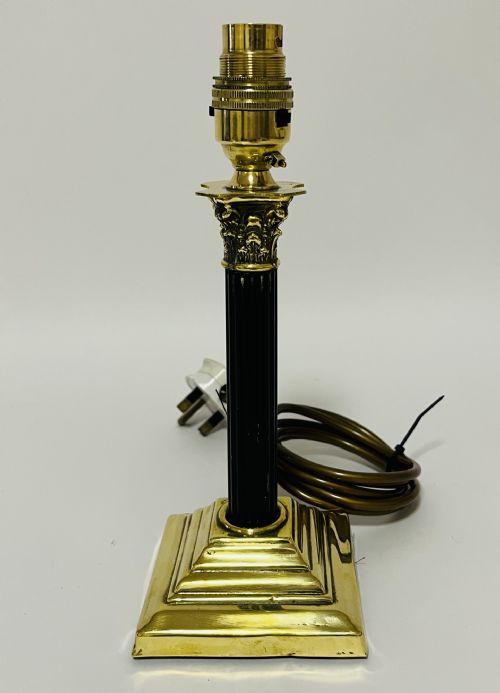
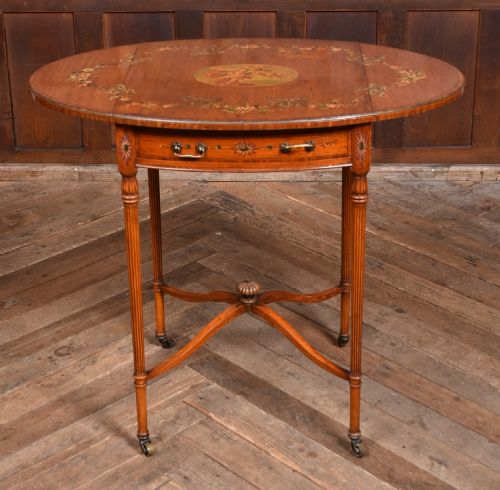



Neoclassical Revival Desk
These neoclassical revival desk pieces bring classical symmetry and refined proportions into a modern study, offering workspace utility combined with historical design lineage.
Neoclassical Revival Desk
A neoclassical revival desk is a piece of furniture drawing on eighteenth-century classical forms, architectural motifs, and symmetrical layouts. When searching this phrase, buyers encounter furniture dating primarily from the nineteenth century through the early twentieth century, spanning Victorian, Edwardian, and later revival periods.
The desks appearing here encompass forms such as pedestal writing tables and satinwood bureaus. Makers during these periods often utilised imported timbers like mahogany alongside lighter contrasting woods to execute traditional inlay and classical borders.
These items sit alongside related revival forms including office sets and side tables, reflecting the broader interior tastes of the era. Buyers find both English interpretations and continental examples, particularly French Empire and Swedish pieces featuring formal mounts and pedestals.
Materials and construction
Cabinetmakers constructed these desks using a solid timber frame, predominantly mahogany, birch, or satinwood, often applied as fine veneers over stable secondary woods. Surface decoration relied heavily on detailed wood inlay, contrasting banding, and applied ormolu or brass mounts.
Hardware details such as brass handles and cast bronze or ormolu mounts secure the classical vocabulary of the piece. Where leather writing surfaces occur, they are typically tooled in gold, completing the traditional desk top specification seen in period workshop production.
Neoclassical Revival Desk Retail Price Guide 2026
Typical asking prices for neoclassical revival desk among the pieces listed under this phrase on Sellingantiques today, from the lower quarter to the upper quarter. They describe what is for sale here now, not the wider market.
The listings show desk forms in mahogany, satinwood, and birch, originating across English, French, and Swedish workshops from the Victorian and Edwardian periods.
Judging quality in revival desks
Quality rests upon the precision of the cabinetwork, the choice of timber figure, and the crispness of any applied bronze or ormolu mounts. Finer examples display tightly grained mahogany or carefully selected satinwood with balanced, symmetrical inlay rather than printed decoration.
Structural integrity in the drawers, leg joinery, and the retention of original brass hardware and mounts distinguish superior workshop output from simpler commercial production of the period.
Mercier Frères·Harrison Brothers & Howson
The Neoclassical Revival Desk Glossary
- Ormolu
- Gilded bronze used for decorative mounts on furniture and lamps. This technique gives metallic enrichment to classical furniture forms.
- Satinwood
- A light-coloured tropical hardwood prized for its reflective sheen. It was frequently used for veneers and inlay work on late nineteenth-century desks.
- Pedestal desk
- A form comprising two freestanding pedestals of drawers supporting a single flat writing top. This configuration provides substantial storage space.
- Inlay
- The technique of embedding contrasting strips of wood into a solid surface to form patterns. It defines much of the revival cabinetwork.
- Empire Revival
- A nineteenth-century design movement replicating the heavy, monumental classical style of the early French Empire. It utilises architectural symmetry and metal mounts.
Neoclassical Revival Desk: Frequently Asked Questions
What materials were used on these desks?
Cabinetmakers primarily utilised mahogany and satinwood, often enhanced with birch or ebonised details. Ormolu, brass, and tooled leather inserts complete the traditional material palette.
These selections mirror the luxury furniture styles of earlier centuries while employing the advanced woodworking techniques available in Victorian and Edwardian workshops.
How do I care for a satinwood surface?
Keep the wood away from direct sunlight and excessive heat sources to prevent the delicate satinwood veneer from fading or drying out. Dust regularly with a dry, soft cloth.
Apply a microcrystalline wax occasionally to protect the finish without building up heavy residues that obscure the natural grain pattern.
Are these desks suitable for daily work?
Many of these pieces function well as modern workspaces, providing practical drawer storage and a stable writing surface. Ensure the desk height matches your seating requirements.
Protect the leather writing insert with a blotter if you use fountain pens or place electronic equipment on the desktop to preserve the historical surface.