
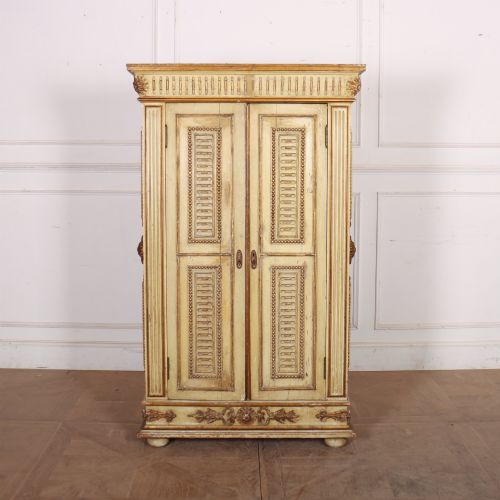
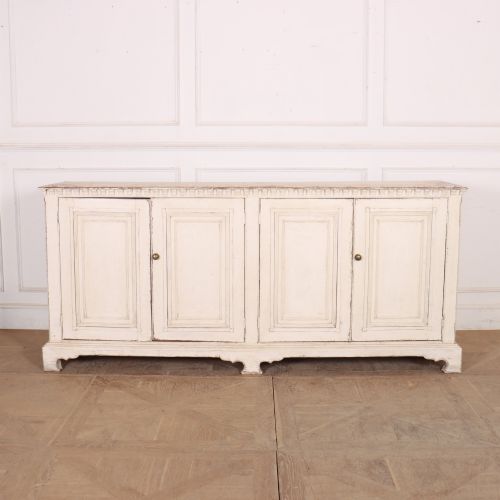


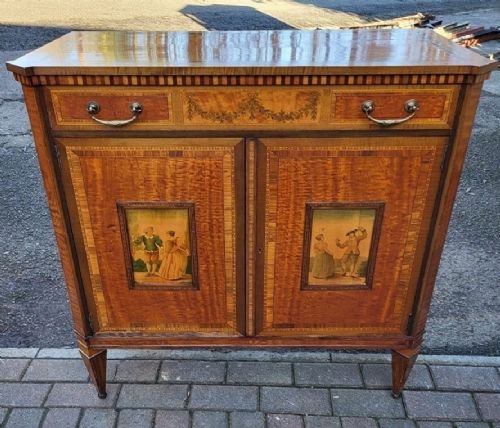


Neoclassical Painted Cupboard
A neoclassical painted cupboard brings architectural symmetry and muted colour to a room, combining classic proportions with decorative painted surfaces.
Neoclassical Painted Cupboard
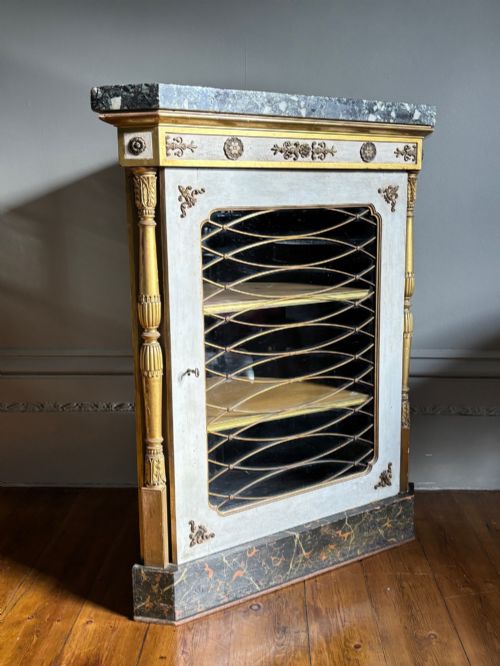
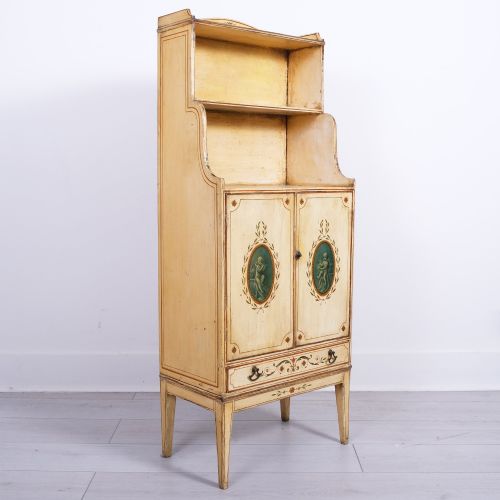
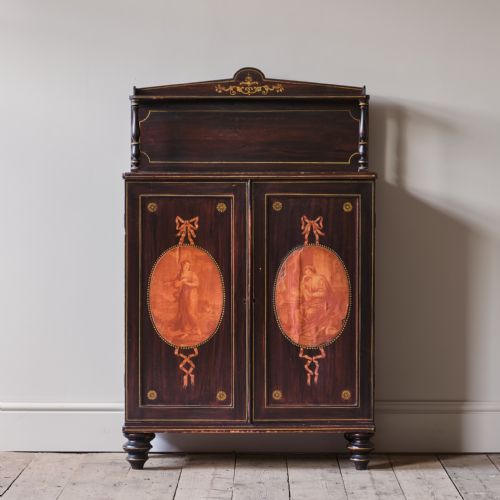
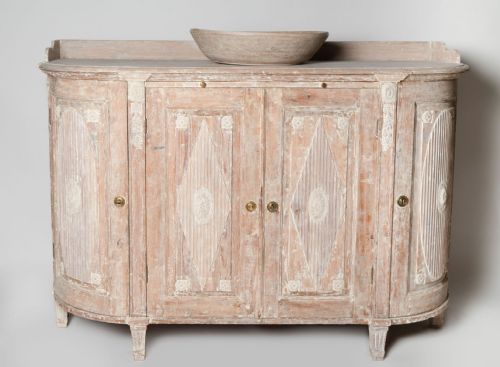
A neoclassical painted cupboard gathers diverse forms from the eighteenth, nineteenth, and early twentieth centuries, ranging from compact bedside tables and corner cupboards to expansive breakfront bookcases, side cabinets, and commodes. These pieces originate across Europe, with notable examples stemming from British revivals, Swedish workshops, and Italian centres.
The version most commonly met on this page is the satinwood side cabinet or commode executed in the Sheraton or Adam revival styles, alongside painted pine or softwood cupboards from Swedish and Italian traditions. These objects serve as functional storage units that double as decorative centrepieces through their painted finishes.
Assessing Quality
Quality rests upon the crispness of the painted decoration and the precision of the underlying woodwork, distinguishing standard production from exceptional craftsmanship. Pieces bearing attributed work from established firms or featuring original painted decoration command greater attention.
The choice of primary timber also dictates standing, with finely figured satinwood and carefully handled pine or maple showing different tiers of ambition in the original workshop.
Swedish workshops occasionally applied simple paint finishes to humble pine to mimic exotic hardwoods for provincial homes.
Jewell of Holborn·Maple and Co·Kaufman
The Neoclassical Painted Cupboard Glossary
- Satinwood
- A dense, lustrous timber native to the tropics, prized for its pale yellow colour and natural sheen. It served as a favoured canvas for painted neoclassical furniture.
- Demi-lune
- A half-moon shape characteristic of commodes and side cabinets designed to sit flush against a wall. This profile softens room angles while offering surface display space.
- Breakfront
- A cabinet configuration where the central section projects forward from the flanking wings. This architectural arrangement creates depth and visual rhythm on large bookcases and side cabinets.
- Enfilade
- A suite of rooms or a long piece of furniture designed with a continuous line of cabinets. In this context, it describes an extended sideboard or low cupboard.
- Serpentine
- A gently undulating front curve that sweeps inward at the centre and outward at the sides. This contour requires skilled carpentry and adds dynamic movement to commodes.
Neoclassical Painted Cupboard: Frequently Asked Questions
Where should I place a painted cupboard?
These cabinets suit dining rooms, hallways, and drawing rooms where their decorative surfaces and storage capacity can be appreciated.
Their restrained proportions allow them to anchor an empty wall without dominating the space.
How do I care for painted wood surfaces?
Keep painted furniture away from direct sunlight and dramatic humidity changes to protect the finish from cracking.
Dust gently with a dry, soft cloth and avoid chemical polishes that might lift historical paint.
Are these pieces from the eighteenth century?
While some examples date to the eighteenth century, the majority originate from nineteenth-century revival periods such as the Sheraton and Adam revivals.
Later Victorian and Edwardian interpretations replicate earlier classical lines using contemporary workshop methods.
What is the difference between a commode and a side cabinet?
A commode traditionally refers to a low chest of drawers or a cupboard with doors, often with a decorative top surface.
Side cabinets encompass a broader category that includes shelving, glass doors, and breakfront configurations.