
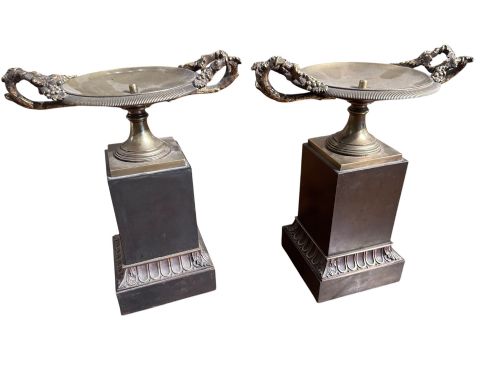
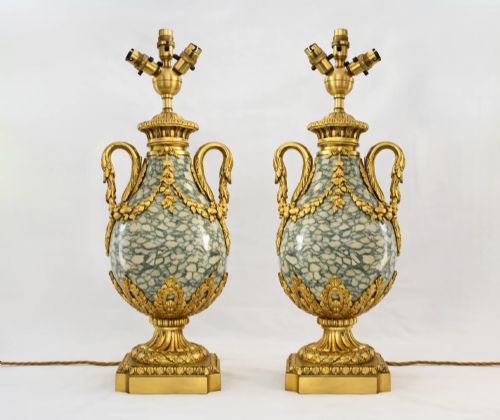


Neoclassical Ormolu Urn
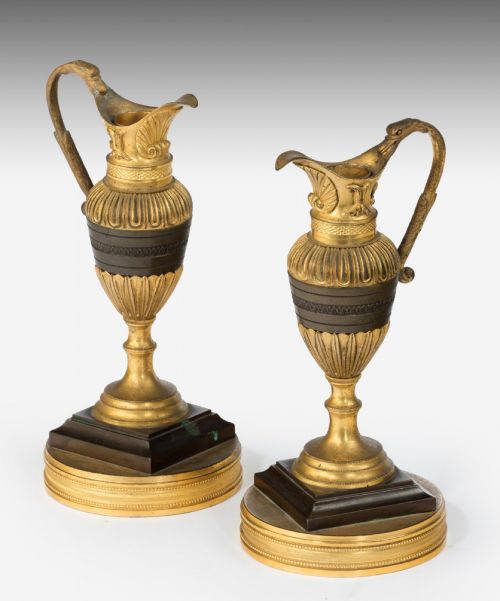
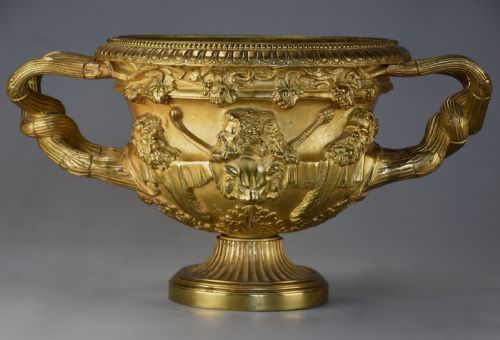
These pieces unite cast bronze and mercury gilding into a neoclassical ormolu urn, bringing classical form and bright metallic warmth to a room.
Neoclassical Ormolu Urn
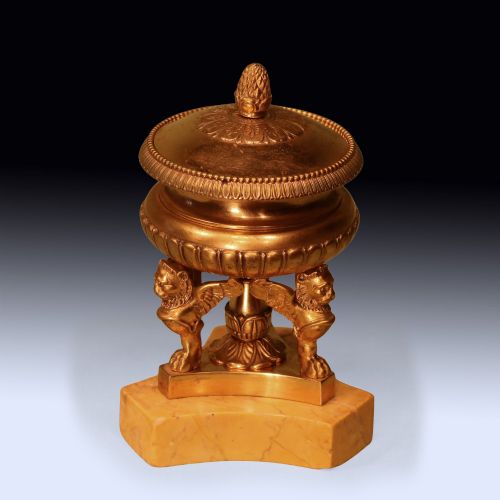
A neoclassical ormolu urn draws on classical antiquity, French Empire design, and Louis XVI style revival, appearing frequently as decorative vessels, mounted lamps, or cassolettes. Makers shaped these objects across the nineteenth century, utilising bronze, gilt metal, and porcelain alongside marble bases in white, green, and rouge.
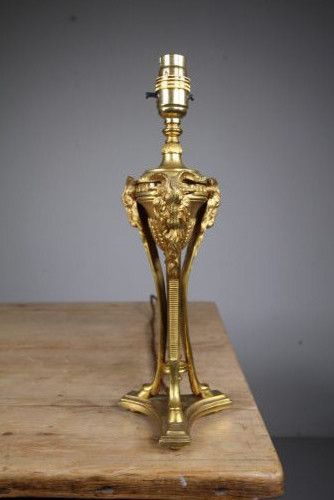
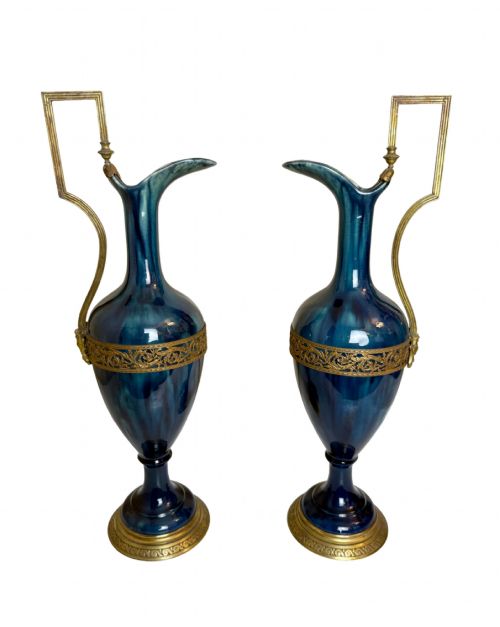
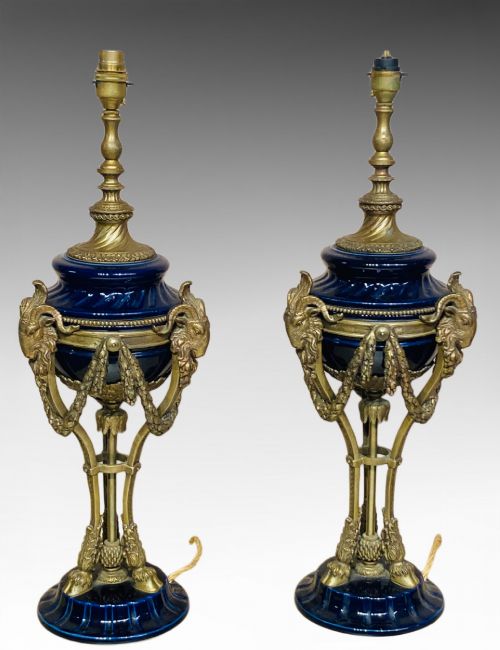
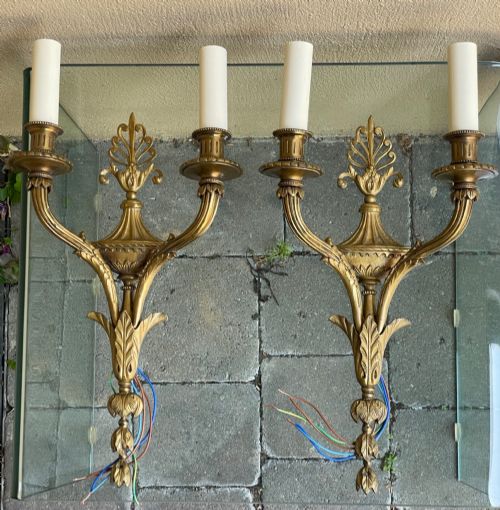
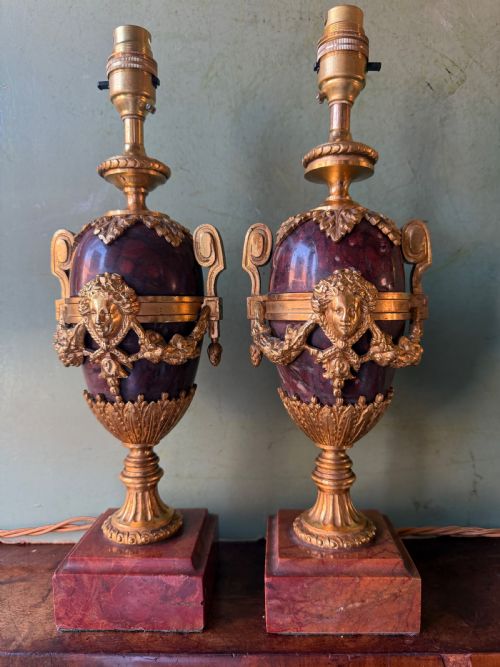
The category spans decorative urns, mantel clocks, table lamps, ewers, and wall lights carrying classical motifs such as ram's head masks and campana shapes. French workshops produced many of these items, while English makers also contributed pieces like ram's head table lamps during the nineteenth century.
How They Were Made
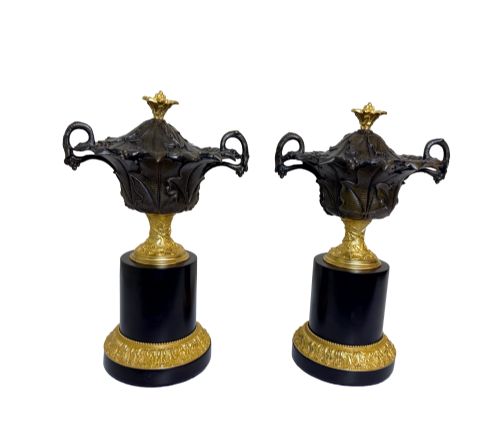
Craftsmen cast bronze and brass into classical vessel shapes, applying mercury gilding to produce the distinctive ormolu surface finish. Mounts, handles, and trim were chased by hand to sharpen the leaf and scroll details before assembly.
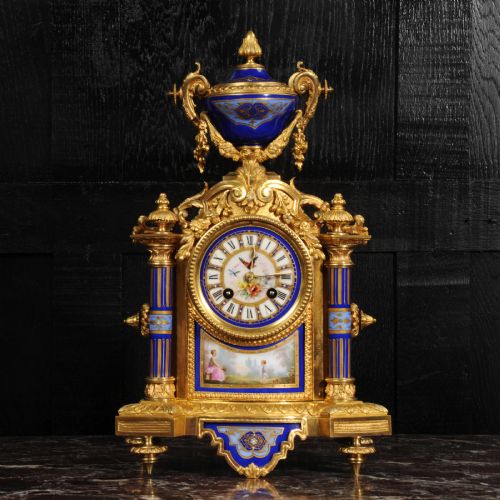
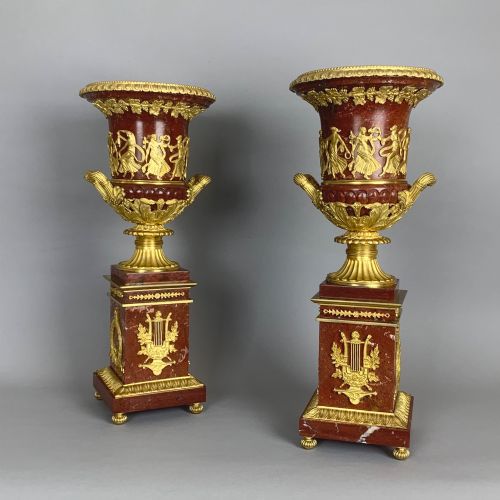
Stonemasons turned marble into pedestals, bases, and body sections, incorporating rouge, Sienna, or white marble to contrast with the bright gilded metal components. Porcelains from Sevres were also integrated into the bronze and ormolu framework.
Ram's heads peer out from numerous mounts, keeping a watchful, classical eye on every mantelpiece they grace.
What Varies in Quality
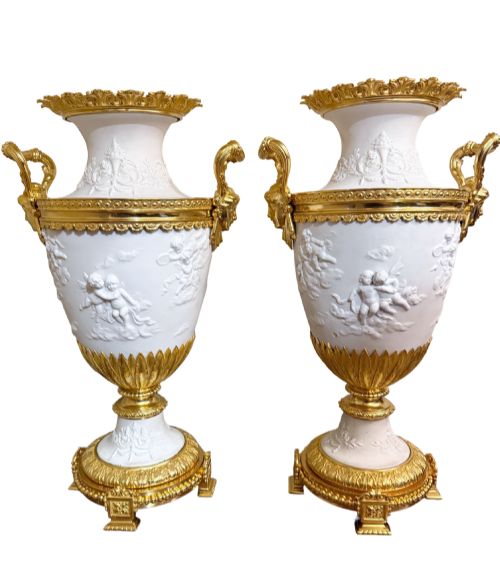
The precision of the metal chasing separates standard production from finer work, as sharp definition in acanthus leaves and animal masks reveals the hand of a skilled artisan. Heavier cast bronze bodies and substantial marble plinths demonstrate superior material selection.
Integration between the stone and metal components dictates the visual success of the piece, with tight mounts and balanced proportions marking the upper range of nineteenth-century French and English output.
Japy Freres·Louis Goret
The Neoclassical Ormolu Urn Glossary
- Ormolu
- Gilt bronze produced by applying a mercury and gold amalgam to a bronze base and heating it. This technique creates a durable, bright golden surface.
- Cassolette
- A decorative vase or urn with a reversible lid that functions as a perfume burner or candle holder. These objects often incorporate marble and ormolu mounts.
- Campana
- An inverted bell shape typical of classical pottery and metalwork. Such profiles appear frequently on classical urns.
- Tazza
- A shallow cup or vase set upon a stem and a footed base. These pieces frequently rest on marble pedestals.
- Grand Tour
- Travel undertaken by nineteenth-century collectors across Europe to acquire classical antiquities and reductions. Workshops produced miniature bronze vases to satisfy this demand.
Neoclassical Ormolu Urn: Frequently Asked Questions
What is an ormolu urn?
An ormolu urn is a decorative vessel made from cast bronze with a gilded finish, taking inspiration from classical antiquity and French eighteenth-century design. These pieces often feature marble bases and intricate metal mounts.
Such items served primarily as decorative ornaments on mantelpieces and side tables during the nineteenth century, though many later adapted into table lamps.
How do you style them at home?
These pieces suit placement on mantelpieces, sideboards, or large console tables where their metallic finish catches the light. They anchor traditional interiors and bring classical proportion to eclectic spaces.
Pairing them with wooden furniture allows the rouge or white marble and gilt bronze to stand out effectively.
Are these pieces French or English?
The majority of these items originate from French workshops following Louis XVI and Empire styles, featuring characteristic gilt bronze mounts and Sevres porcelain elements. English makers also produced comparable designs, including table lamps with ram's head details.
Both traditions drew heavily on classical motifs inspired by excavations and the Grand Tour.
What periods do these objects date to?
Most examples date across the nineteenth century, spanning the Victorian era and later revival periods influenced by Louis XVI aesthetics. Production extended into the early twentieth century with similar classical forms.
Stylistic cues include French Empire proportions and late nineteenth-century interpretations of earlier French court designs.