
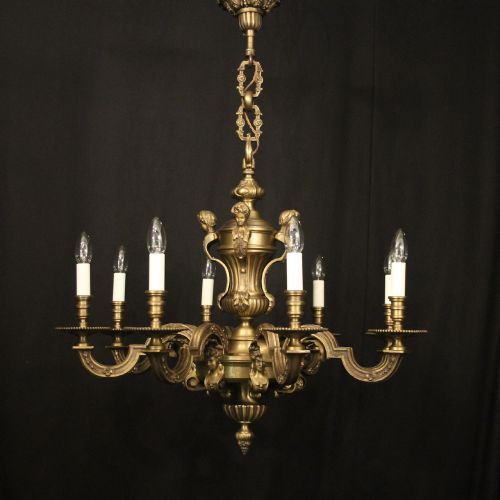
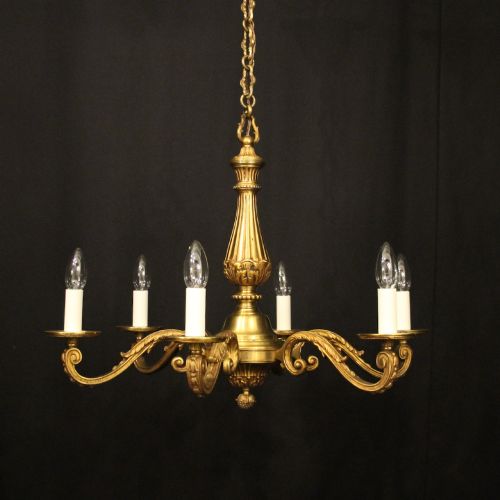
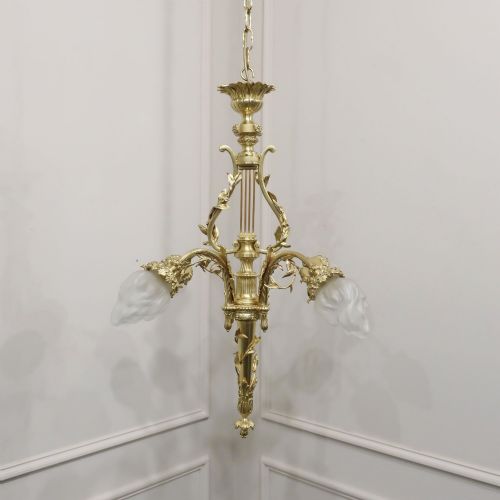



Neoclassical Ormolu Lamps
Neoclassical ormolu lamps bring formal architectural dignity and brilliant gilded metalwork into a room.
Neoclassical Ormolu Lamps
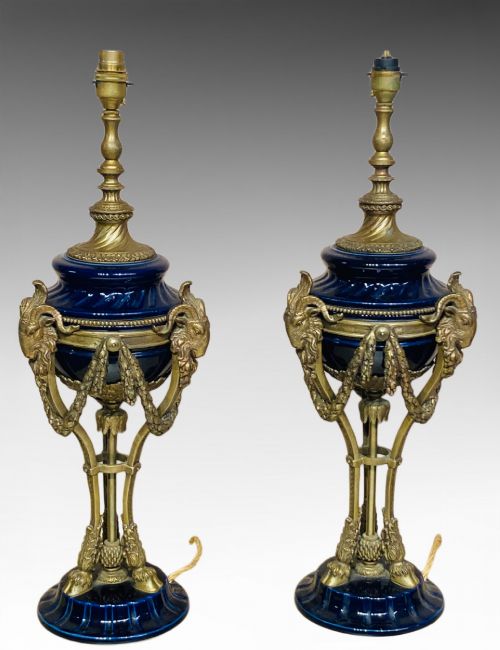
When you search for neoclassical ormolu lamps, you enter a field defined by rigorous classical symmetry, urns, columns, and mounts cast in brilliant gilt bronze. These pieces draw heavily on ancient Greek and Roman motifs revived through French and English decorative arts.
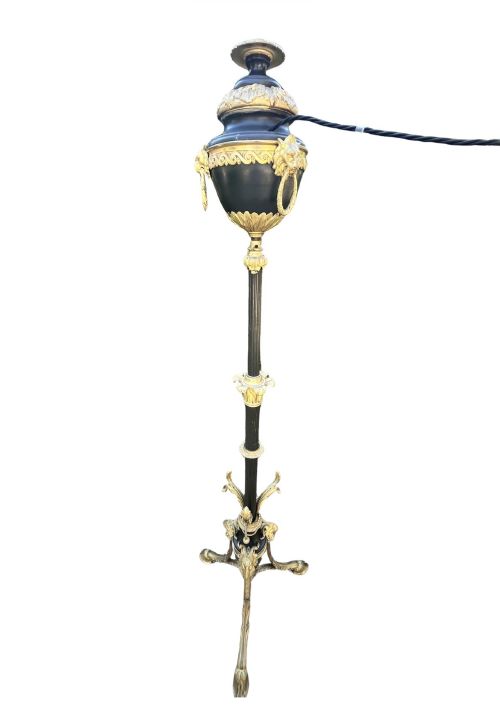
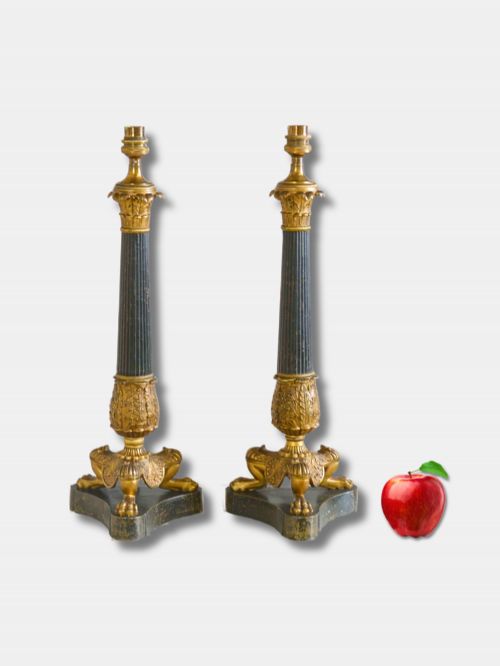
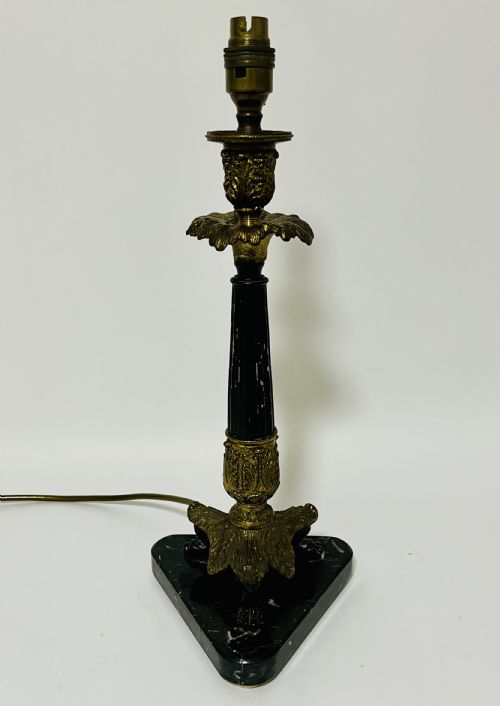
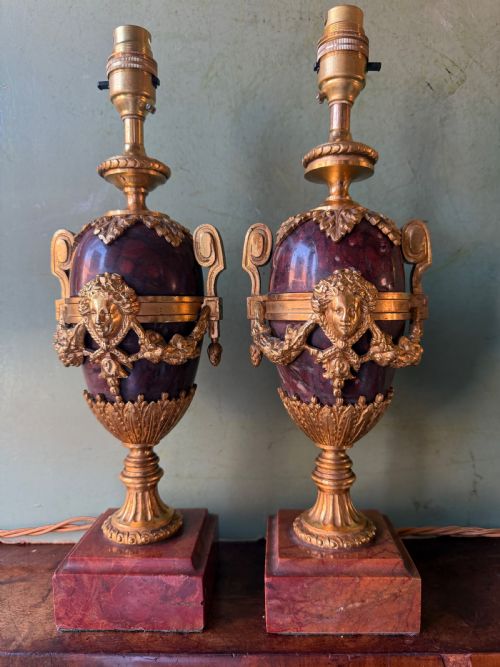
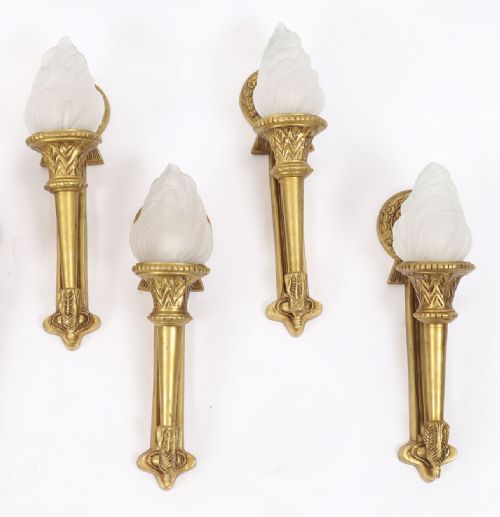
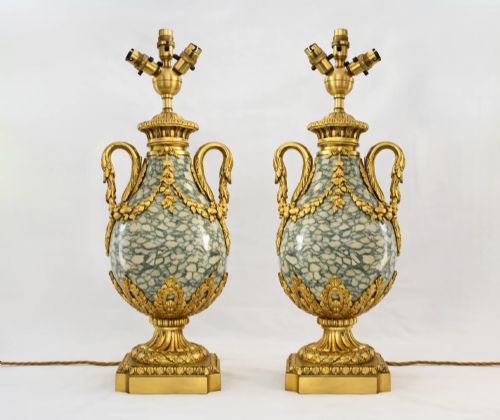
The most common versions on this page are table lamps and cassolettes converted for electrical use, frequently paired with marble bodies in white, pink, or rouge. You also encounter standard floor lights and wall sconces sharing the same vocabulary of rams heads, lion paws, and flaming torches.
Origins cluster predominantly around French workshops working in the Louis XVI and Empire styles, alongside English Regency pieces that share the same devotion to classical proportion.
Materials and construction
The foundation of these pieces relies on cast bronze, brass, and carved marble, combined with mercurial gilding that gives ormolu its distinctive warm lustre. Foundational bodies frequently incorporate patinated bronze or crystal to contrast against the polished gilt metal mounts.
Mounts and decorative elements such as lyres, acanthus leaves, and caryatids were cast individually, chased by hand to sharpen the detail, and then pinned or screwed to the marble or wooden core.
The listings here span the Regency period through the 1940s, combining French Empire designs with English neoclassical interpretations in marble and gilt bronze.
Judging the work
The selection of the underlying stone also dictates standing; dense, richly coloured marbles with complex natural veining elevate an object far above simple cast metal columns or plain timber bases.
Jean-Démosthène Dugourc
The Neoclassical Ormolu Lamps Glossary
- Ormolu
- Gilded bronze produced by applying a mixture of gold amalgam to a bronze base and heating it to vaporise the mercury. This technique creates a durable, luminous golden finish characteristic of fine antique metalwork.
- Cassolette
- A decorative vessel shaped like a perfume burner, often featuring a reversible lid that transforms the object from a decorative vase into a candlestick or lamp base. They appear frequently in pairs mounted on marble plinths.
- Empire Style
- A design movement spanning the late 18th and early 19th centuries drawing directly on Roman, Greek, and Egyptian military triumphs. It favours heavy symmetry, military trophies, and dark patinated bronze offset by bright ormolu.
- Louis XVI Style
- A lighter, more restrained neoclassical aesthetic marked by straight tapered legs, fluted columns, and classical ribbons or swags. It forms the basis for many French table lamps and candelabra conversions.
- Patinated Bronze
- Bronze treated with chemical solutions to produce a dark brown, green, or near-black surface colour. It provides a moody, dark contrast to the bright flash of adjacent ormolu mounts.
Neoclassical Ormolu Lamps: Frequently Asked Questions
What is an ormolu lamp?
An ormolu lamp is a lighting fixture constructed using gilded bronze mounts, often combined with marble, crystal, or porcelain bodies. These pieces typically originate from 19th-century or early 20th-century revivals of classical design.
Many examples start life as decorative candlesticks, cassolettes, or vases before receiving professional conversion for modern electrical wiring.
How do I date a neoclassical lamp?
Dating relies on examining the weight of the metal, the type of marble, and the method of construction in the base and electrical fittings. Earlier pieces from the Regency and early 19th century display hand-cut threads and heavy cast bronze components.
Later interpretations from the 1920s often utilise machine-turned brass and standardised fittings alongside older stylistic vocabulary.
Were these always lamps?
Many items listed as lamps began as oil burners, candlesticks, or decorative garniture vases before being adapted for electricity. This conversion process is standard practice for antique lighting to allow functional use in contemporary interiors.
Signs of alteration are normal and form part of the practical history of surviving decorative metalwork.
How do I style an ormolu lamp?
These lamps suit formal sitting rooms, libraries, and traditional dining spaces where their gilded surfaces catch and reflect ambient light. Placing them on dark mahogany side tables or marble console surfaces creates a balanced classical contrast.
Pairing them with simple fabric shades allows the intricate bronze and marble bases to remain the primary visual focus.