



Neoclassical Metal Figure
These neoclassical metal figure works bring classical mythology and antiquity into interior spaces through enduring cast forms.
Neoclassical Metal Figure
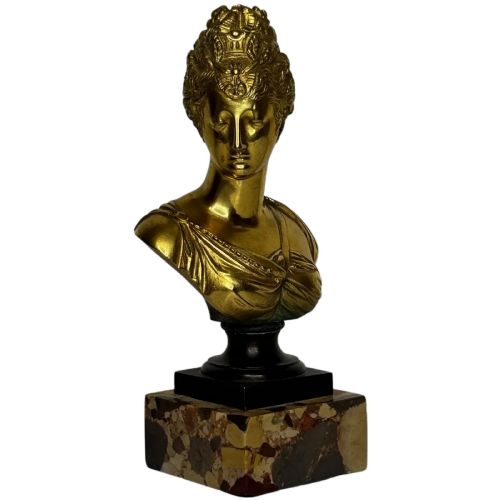
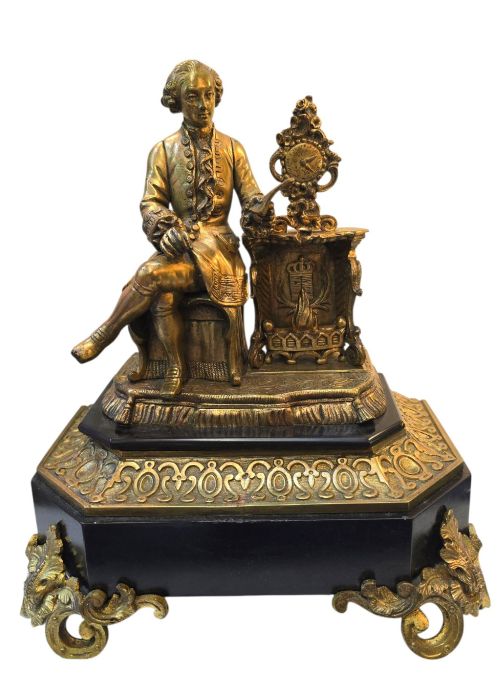
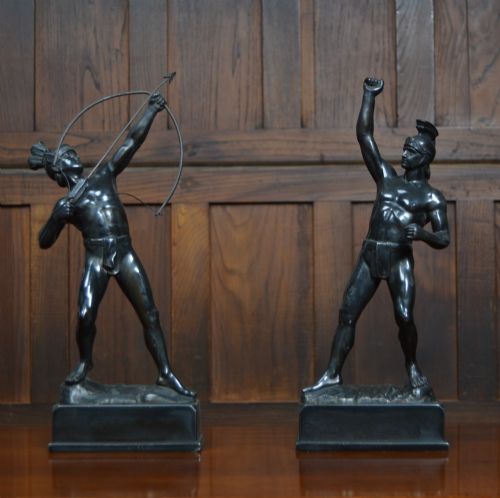
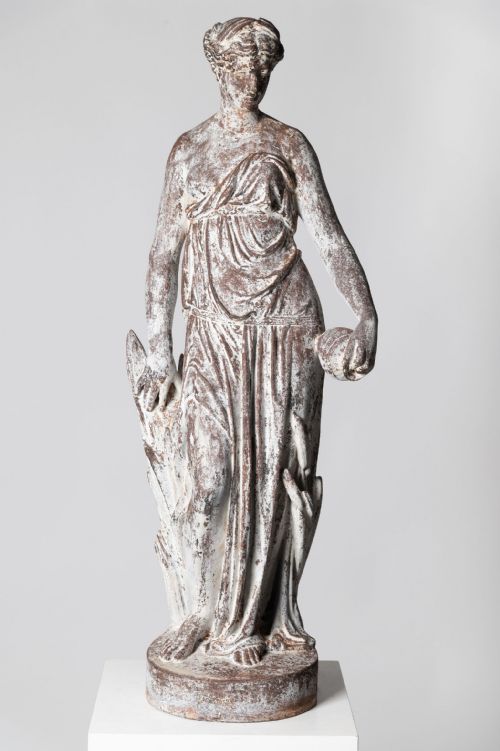
A neoclassical metal figure draws directly from ancient Greek and Roman sculpture, capturing mythological deities, classical heroes, and literary subjects in enduring materials. These pieces range from grand tour souvenirs and portrait busts to functional items like candelabra, wall lights, and mantel clocks surmounted by figural work.
The nineteenth century yields the highest concentration of these objects, particularly through French ateliers and Italian workshops catering to travellers on the Grand Tour. Buyers most frequently encounter bronze casts mounted on marble or wood bases, alongside spelter and cast iron alternatives produced during the Victorian era and the early twentieth century.
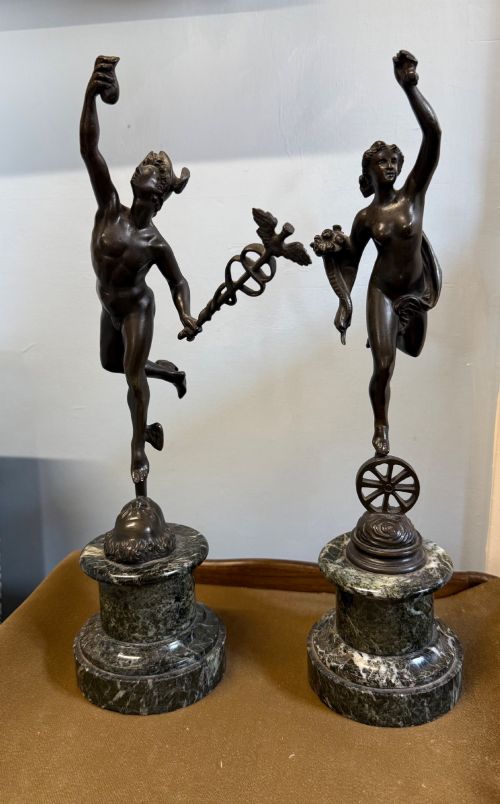
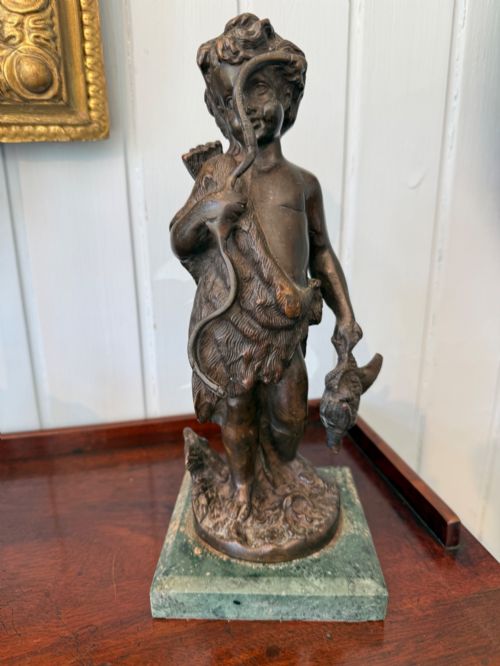
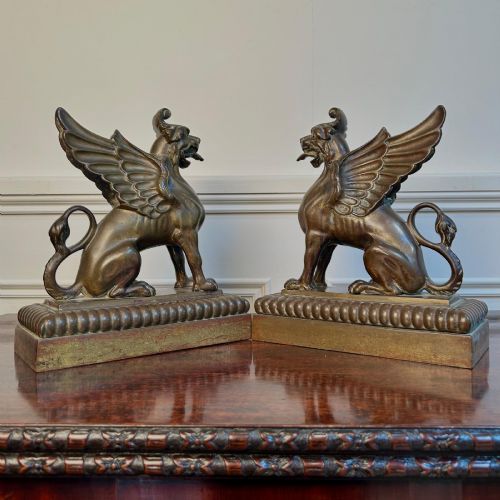
Forms vary widely from single statuettes of cherubs, dancers, and scholars to balanced pairs of lions, horses, and mythological figures. Whether executed as small cabinet sculptures or taller lamp bases, each item reflects a sustained European fascination with classical proportions and antique art.
Materials and casting methods
Foundries utilised traditional metalcasting techniques, predominantly working in bronze, brass, spelter, and cast iron. Molten metal poured into moulds captured intricate details of drapery, hair, and musculature, which artisans then refined through chasing and finishing work.
Surface treatments define the visual character of these pieces, employing fire gilding, ormolu, bronzing, and chemical patination to achieve deep green, brown, or metallic tones. Many figures were subsequently mounted onto contrasting natural materials such as white or coloured marble, slate, olive wood, and gilt metal bases.
Listings feature periods spanning the Victorian era, the nineteenth century, and the early twentieth century up to nineteen thirty.
Distinctions in execution
Quality rests primarily on the crispness of the casting and the sensitivity of the hand-finishing work visible in facial expressions, hair texture, and the folds of garments. Superior pieces retain sharp underlying details without blurring, whereas lesser examples show softness from worn moulds or hasty cleanup.
The choice of base materials and the application of surface finishes further divide the range. Heavy, stable mountings in genuine marble or slate paired with deep, multi-layered patination or rich gilding mark out the more accomplished works from simpler production runs.
Val d’Osne foundry·Coalbrookdale·Leonhard Posch·Jean Jacques Pradier·Pierre-Augustin Caron de Beaumarchais
The Neoclassical Metal Figure Glossary
- Grand Tour
- A traditional trip through Europe undertaken by upper-class young men to study classical art and antiquities. Souvenirs purchased on these journeys often included small bronze reductions of famous ancient statues.
- Ormolu
- Finely ground high-carat gold applied to a bronze base using a mercury amalgamation process. This technique creates a durable, luminous golden surface seen on many French decorative objects.
- Spelter
- A zinc alloy utilised as a cheaper, more malleable alternative to bronze during the nineteenth and early twentieth centuries. It is frequently painted or electroplated to imitate bronze or gilt metal.
- Patination
- The natural or chemically induced surface coloration developed on metal over time or through workshop treatment. Skilled patination enhances the depth and three-dimensional quality of sculptural details.
- Cast iron
- An iron-carbon alloy poured into moulds to create robust figures and architectural plaques. Foundries such as Coalbrookdale excelled in producing highly detailed sculptural ironwork during the Victorian period.
Neoclassical Metal Figure: Frequently Asked Questions
What is a Grand Tour bronze?
A Grand Tour bronze is a small-scale nineteenth-century souvenir cast after famous ancient Greek or Roman statues discovered during European travels. These pieces allowed collectors to display classical sculpture within domestic interiors.
They typically stand on marble bases and reflect the academic interest in antiquity that defined nineteenth-century interior decoration.
How do I tell bronze from spelter?
Bronze is heavier, colder to the touch, and rings with a clear tone when struck, while spelter is softer and more brittle. Examining the underside often reveals the lighter, greyish metal beneath a worn bronze-coloured finish on spelter pieces.
Spelter figures also tend to show smoother, less resilient surfaces where fine details may have been polished away during cleaning.
Where were these figures displayed?
These figures were traditionally placed on mantelpieces, library tables, and credenzas as part of formal nineteenth-century interior schemes. Many doubled as functional items, serving as clock mounts, candelabra, or lamp bases.
Their classical subjects made them suitable for studies, drawing rooms, and entrance halls where education and taste were displayed.
How should I clean a metal figure?
Dusting gently with a soft, dry brush is the safest way to maintain the surface without disturbing the original patination or gilding. Avoid using abrasive cloths, metal polishes, or chemical cleaners which can strip away historic finishes.
Keeping these pieces away from direct sunlight and excessive moisture helps preserve both the metal and any associated marble or wood bases.