



Neoclassical Marquetry Chest
A neoclassical marquetry chest brings sophisticated floral and geometric wood inlay together with classical symmetry for refined storage.
Neoclassical Marquetry Chest
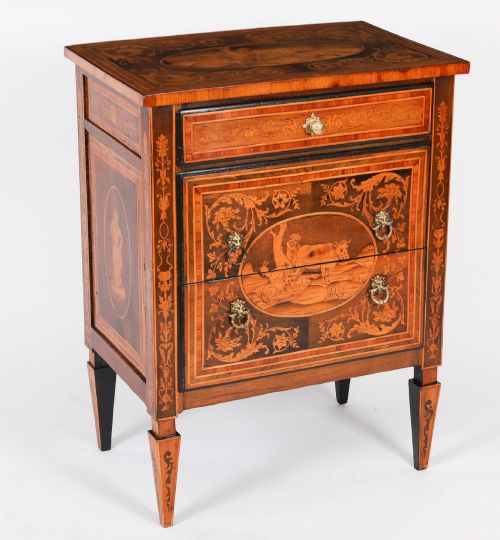
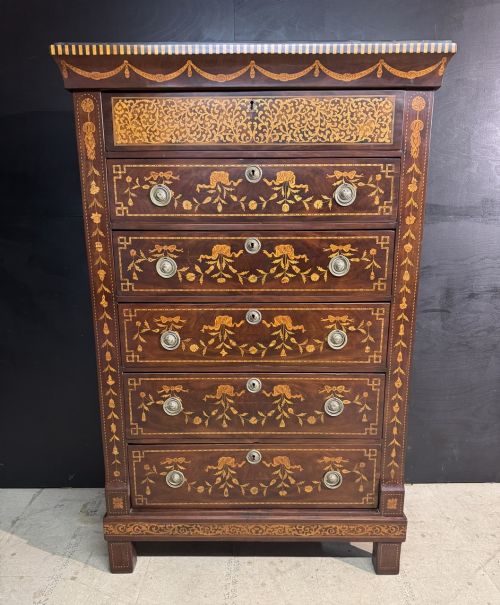
A neoclassical marquetry chest represents a sophisticated form of storage, bringing together refined wood veneers and classical architectural balance. These pieces span centuries of craftsmanship, appearing frequently as commodes, tall chests of drawers, and secretaire chests from the eighteenth and nineteenth centuries.
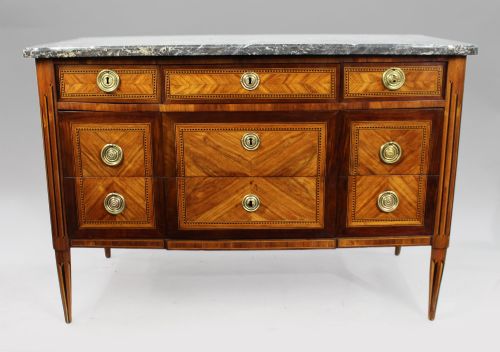
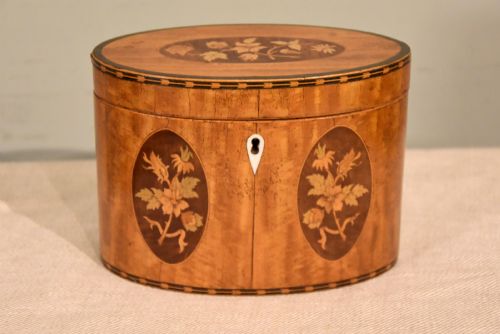
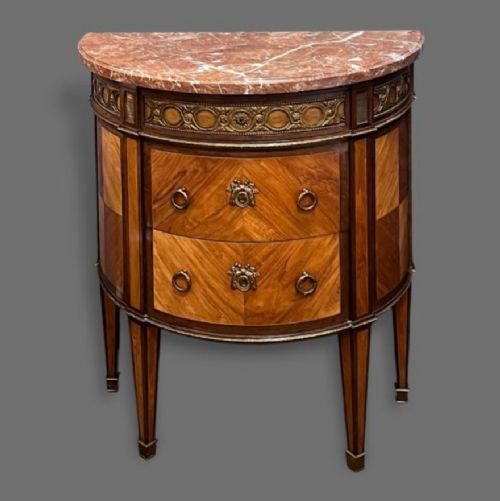
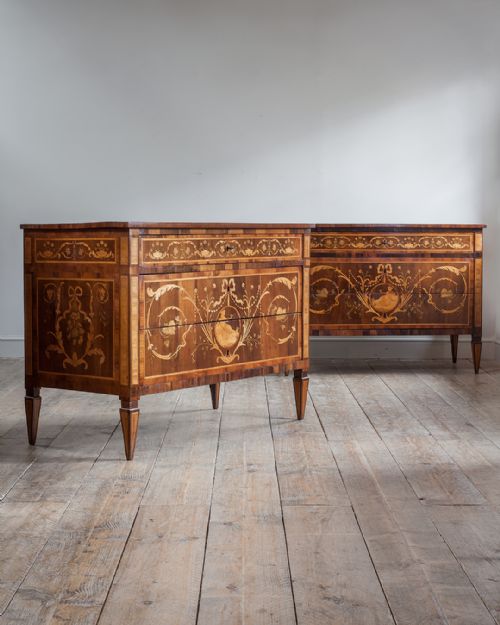
The regional variety is wide, ranging from Dutch and Italian examples with elaborate floral patterns to French Louis XVI pieces featuring marble tops and ormolu mounts. Alongside larger case furniture, smaller decorative items like tea caddies and boxes also display the same distinct inlay work.
Originating in periods such as the Georgian and Louis XVI eras, these items draw on European design traditions that favour crisp lines and balanced proportions. Buyers encounter everything from grand breakfront commodes to smaller serpentine chests finished in rich walnut or satinwood.
Evaluating Quality
Quality rests primarily on the precision of the timber inlay and the crispness of the overall carving and veneering work. Finer examples display seamless grain matching and intricate pictorial or geometric compositions that remain tight over time.
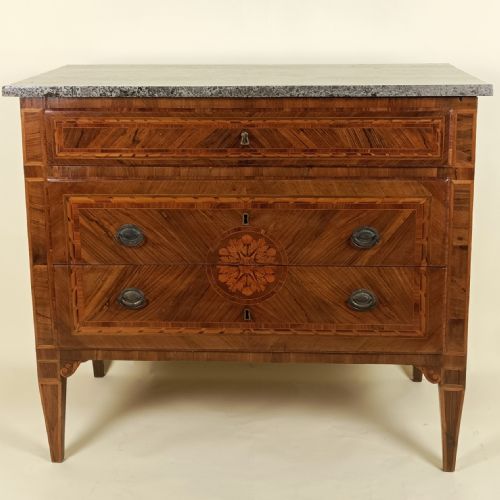
The choice of secondary materials, such as heavy white or grey marble slabs and finely chased ormolu mounts, elevates the standing of a commode. Structural integrity, including the smooth movement of dovetailed drawers and the stability of the timber carcase, separates standard pieces from the finest survivors.
Some nineteenth-century makers packed their tea caddies with the same intricate marquetry found on full-sized commodes.
The Neoclassical Marquetry Chest Glossary
- Marquetry
- A decorative technique of applying veneer pieces to a structure to form pictorial or geometric designs. It differs from parquetry through its use of curved and floral motifs rather than strict geometric grids.
- Commode
- A low chest of drawers or cabinet developed in France during the eighteenth century. These pieces often feature marble tops and sophisticated veneer work designed for formal reception rooms.
- Ormolu
- Gilt bronze ornamentation applied to furniture and decorative objects. This material provides metallic contrast against dark walnut or bright satinwood surfaces.
- Parquetry
- A geometric mosaic of wood veneer used to cover floors or furniture surfaces. It creates orderly repeating patterns like cubes or chevrons.
- Serpentine
- A curved furniture front or top shaped like a sweeping letter S. This contour requires skilled carpentry to shape both the wooden carcase and the matching drawer fronts.
Neoclassical Marquetry Chest: Frequently Asked Questions
What is a neoclassical marquetry chest?
A neoclassical marquetry chest is a storage piece decorated with contrasting wood veneers arranged in geometric or floral patterns, reflecting classical design principles. These items include commodes, tall drawers, and secretaire chests.
Originating largely in the eighteenth and nineteenth centuries across Britain, France, Italy, and the Netherlands, they serve both functional storage and high decorative display.
Where were these chests made?
These pieces were produced across various European workshops, with distinct regional characteristics defining their appearance. French and Italian makers often incorporated marble tops and ormolu, while Dutch workshops focused on dense floral marquetry.
English makers during the Georgian period utilised satinwood and mahogany with restrained classical stringing and inlay.
How do I care for a veneered antique?
Maintain stable room humidity and temperature to prevent the underlying timber and delicate veneers from warping or cracking. Avoid placing antique chests in direct sunlight or near heat sources.
Dust gently with a dry cloth and apply specialist wax sparingly when the wood appears dry, avoiding modern liquid polishes.
How do I distinguish eighteenth century pieces?
Eighteenth-century examples typically display hand-cut dovetails, older secondary woods in the drawer linings, and natural ageing of the veneer. The marquetry often uses genuine fruitwoods and boxwood that have mellowed organically over time.
Later nineteenth-century interpretations may show machine-sawn elements, different construction markers, or revivals of earlier Louis XVI styles.