





Neoclassical Marble Top Chest
A neoclassical marble top chest brings architectural restraint and fine stone to a room, offering both surface utility and formal presence.
Neoclassical Marble Top Chest
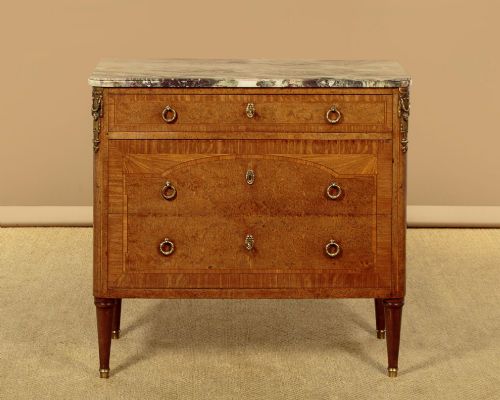
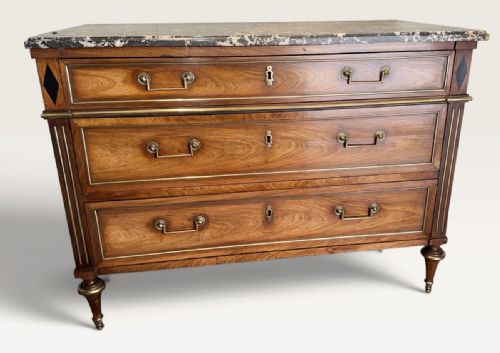
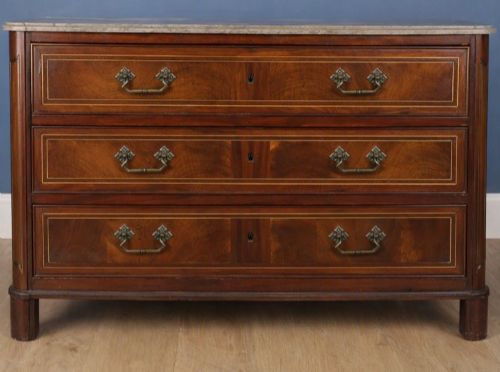
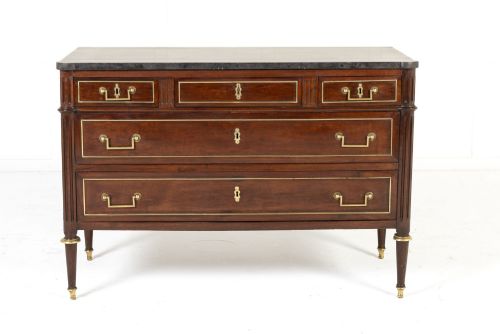
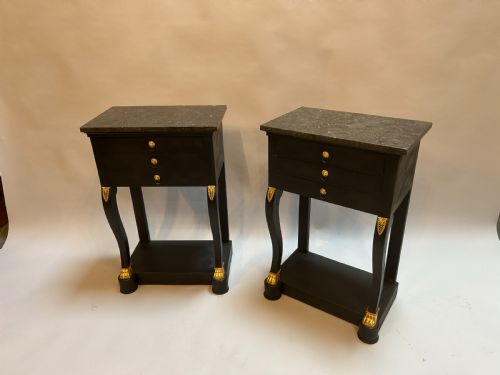
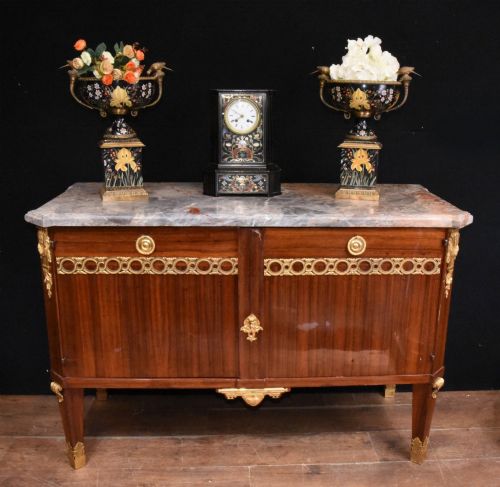
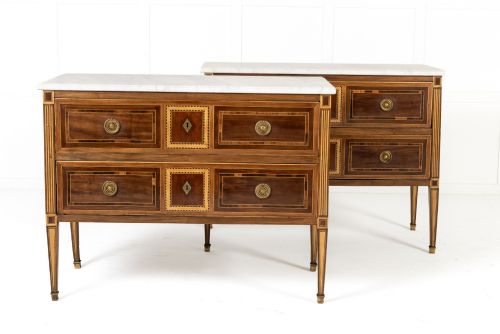
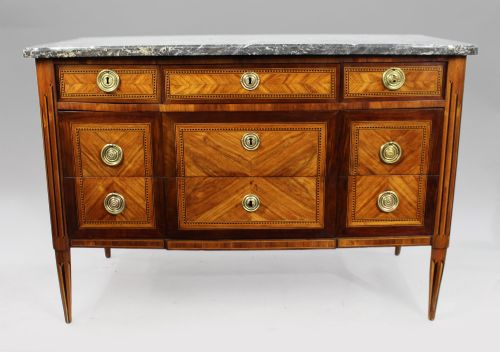
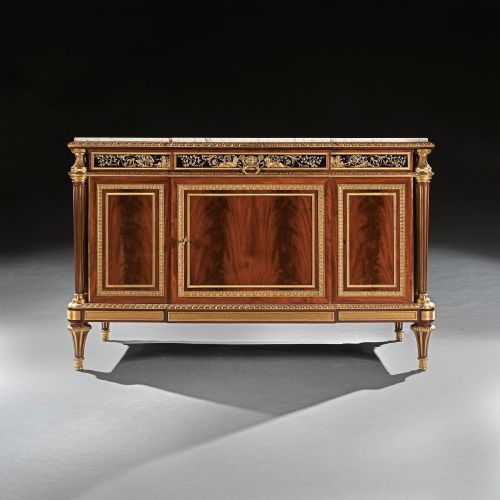
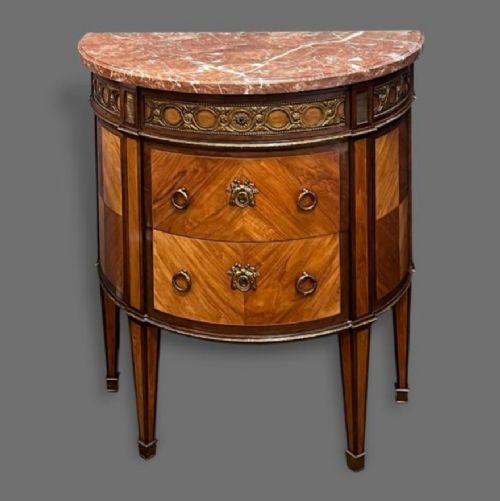
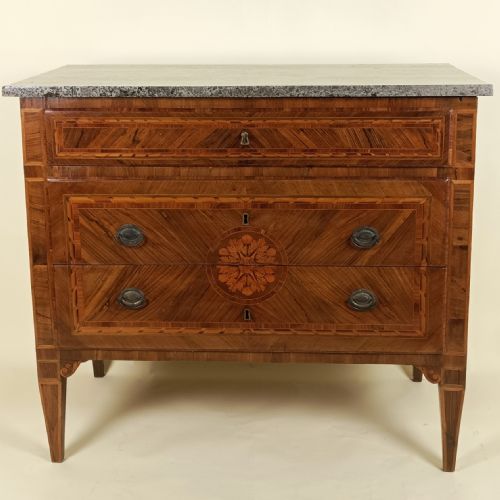
When you search for a neoclassical marble top chest, you encounter formal storage pieces spanning the eighteenth century through to the early twentieth century, including commodes, bedside tables, and secretaire chests. The most common forms on this page are French and Italian commodes featuring fitted stone surfaces above banks of drawers.
These items originate from distinct regional centres such as France, Italy, and the Netherlands, taking shape under styles like Louis XVI, French Empire, and Italian Neoclassical. Makers produced them in formats ranging from grand breakfronts to paired bedside cabinets, uniting classical proportions with practical domestic storage.
How They Were Made
Cabinetmakers constructed carcass frames from timbers such as mahogany, walnut, satinwood, fruitwood, and burr elm, frequently applying intricate parquetry and marquetry veneers. They surfaced the upper section with fitted marble slabs, which provided a cool, durable working top.
Metal ornamentation played a structural and decorative role, with workshops mounting the timber frames in brass, ormolu, and gilt bronze. These cast and chased metal mounts delineated the architectural lines characteristic of the neoclassical aesthetic.
Neoclassical Marble Top Chest Retail Price Guide 2026
Typical asking prices for neoclassical marble top chest among the pieces listed under this phrase on Sellingantiques today, from the lower quarter to the upper quarter. They describe what is for sale here now, not the wider market.
Some nineteenth-century makers liked to sign their work on the timber carcass, ensuring future admirers found their signatures hidden beneath the drawers.
What Varies in Quality
The division between standard production and exceptional work rests on the precision of the timber marquetry, the complexity of the parquetry patterns, and the crispness of the cast bronze or ormolu mounts. Finer pieces demonstrate seamless veneer matching and sophisticated architectural detailing.
Quality also shows in the integration of the stone top and the secondary timbers used within the drawer linings. Master workshops ensured the marble was correctly profiled to the carcass, while lesser pieces rely on simpler construction methods and plainer veneers.
Henry Dasson·Mon Krieger
The Neoclassical Marble Top Chest Glossary
- Commode
- A low chest of drawers, often highly decorative, which served as principal bedroom or reception room furniture in continental Europe.
- Ormolu
- Gilt bronze mounts applied to furniture. This technique involved amalgamating gold with mercury to coat bronze fittings.
- Parquetry
- Geometric wood inlay patterns forming designs like cubes or chequers. Cabinetmakers arranged contrasting timbers to create these optical effects.
- Marquetry
- Pictorial wood veneer work depicting floral, landscape, or classical motifs. Artisans cut various coloured woods and assembled them like puzzles.
- Demi Lune
- Half moon shape in furniture design. Commodes of this curved profile fitted neatly against flat walls.
Neoclassical Marble Top Chest: Frequently Asked Questions
How do I identify a neoclassical chest?
Look for straight lines, symmetrical proportions, and classical architectural motifs such as fluting and friezes. These elements separate neoclassical designs from earlier, more curvaceous baroque or rococo forms.
The inclusion of a fitted marble top alongside polished mahogany, walnut, or parquetry veneer further confirms the stylistic period.
Where were these chests used?
Owners placed commodes and chests in principal bedchambers, formal dressing rooms, and elegant reception spaces. The stone surface offered a practical, wipe-clean area for washing equipment or displaying ornaments.
Smaller versions functioned beside beds as decorative cabinets for personal items.
How do I care for the marble top?
Clean the stone surface regularly with a soft, damp cloth using plain water or a mild, pH-neutral soap. Avoid acidic liquids like vinegar or citrus juice, which etch polished marble surfaces.
Protect the stone from heavy impacts and thermal shock to preserve the original finish.
What is the difference between Louis XVI and Empire styles?
Louis XVI pieces display restrained classical geometry, lighter fruitwood or mahogany veneers, and delicate ormolu mounts. They reflect a graceful return to ancient Roman proportions.
Empire items, by contrast, project imperial authority with heavier mahogany construction, bolder bronzes, and military or classical symbols.