
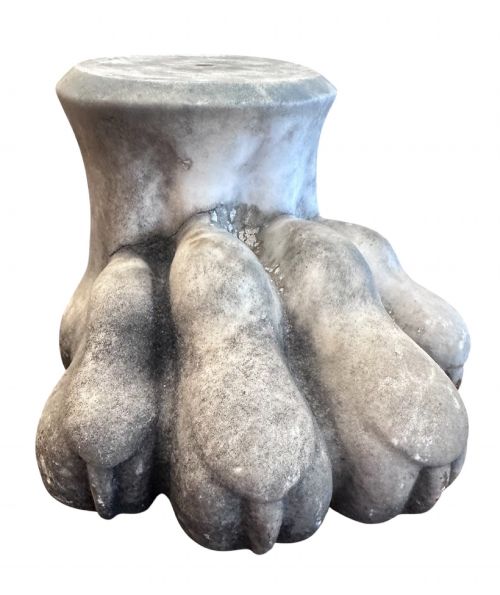


Neoclassical Marble Foot
These neoclassical marble foot pieces are sculptural supports and decorative fragments that bring classical weight and proportion to interiors.
Neoclassical Marble Foot
A neoclassical marble foot takes the form of a carved lion paw or animal support, often appearing as architectural salvage, architectural elements, or integrated into decorative objects. These items emerge from periods spanning the eighteenth century through to the early twentieth century, reflecting revivals such as Regency, French Empire, and Etruscan.
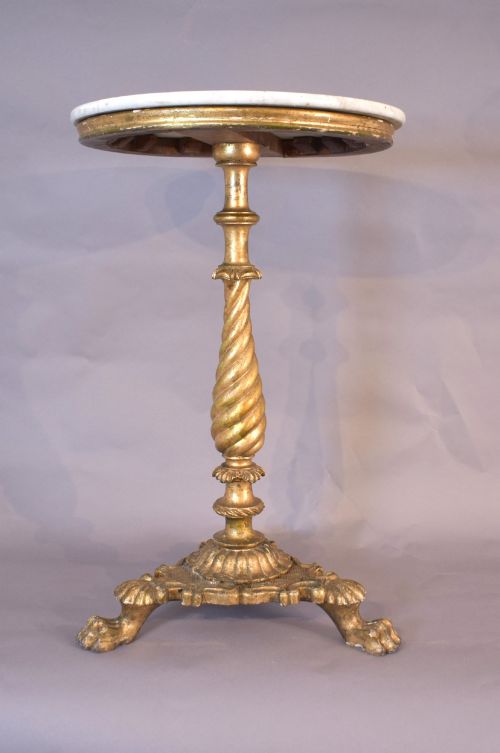
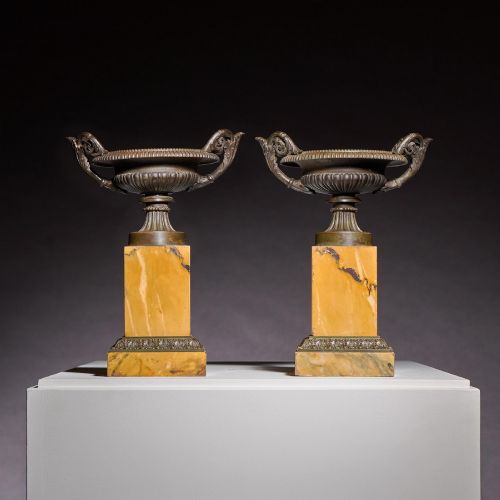
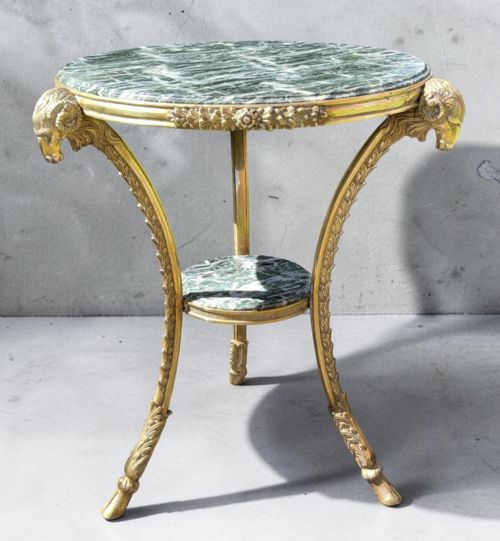
The objects catalogued under neoclassical marble foot frequently manifest as distinct sculptural fragments like the Carrara marble lions paw, or as structural elements beneath guéridon tables, side tables, lamps, and tazzas. Italian and French workshops dominate these origins, producing items carved from white marble, Siena marble, and Antico Rosso.
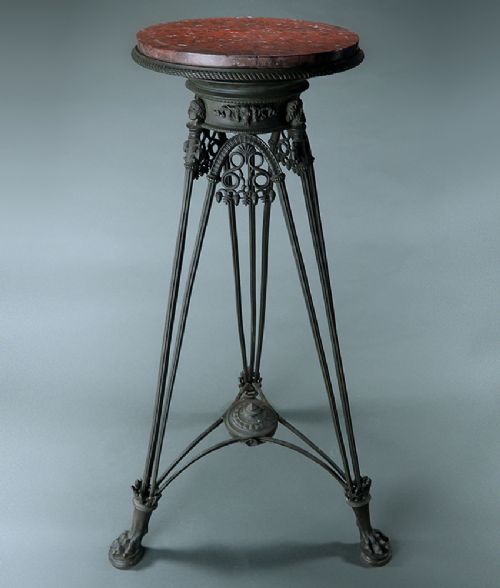
Buyers seeking this phrase encounter both standalone fragments and complete furnishings where the paw or foot serves as the primary decorative anchor. The selection ranges from nineteenth century Grand Tour souvenirs to robustly cast tables and obelisks supported on bronze or brass claws.
How they were made
The physical construction of these pieces relies on the union of dense stone and cast metal, primarily utilising marble paired with bronze, gilt bronze, or brass. Craftsmen shaped solid blocks of Carrara, Siena, and Antico Rosso marble through chiselling and polishing to achieve realistic animalistic contours.
Metal components such as mounts, capitals, and paw feet were produced via lost-wax casting or sand casting in bronze and brass, then frequently gilt or chased for textural contrast. Giltwood and mahogany additionally appear in the supporting frames of tables and plinths, demonstrating joinery and carving traditional to French and Italian ateliers.
Some nineteenth century artisans ensured even domestic table lamps required the protective stance of cast bronze lions paws.
What varies in quality
Quality in a neoclassical marble foot rests upon the anatomical precision of the carving and the mineral selection of the stone itself. Superior examples display crisp articulation in the sinews, claws, and fur of the carved paw, avoiding the soft edges typical of hurried production.
The choice of marble dictates the visual depth of the object, with variegated Siena, porphyry, and rich Antico Rosso commanding greater presence than plain white limestone substitutes. Furthermore, the integration between the marble element and its bronze or gilt mounts reveals the competency of the workshop, distinguishing refined Grand Tour and Empire pieces from later revival items.
The Neoclassical Marble Foot Glossary
- Guéridon
- A small circular table supported on one or three pillars, frequently topped with marble and resting on sculptural feet.
- Grand Tour
- A traditional trip through Europe undertaken by upper-class young European men of means in the eighteenth and nineteenth centuries, yielding classical souvenirs.
- Siena marble
- A yellow decorative marble from Italy featuring deep brownish-grey veining, highly favoured for neoclassical pedestals and tazzas.
- Tazza
- A shallow bowl or cup on a stem and foot, often carved from marble or cast in bronze during the neoclassical period.
- Carrara marble
- A type of white or blue-grey marble from the city of Carrara in Tuscany, widely used in classical sculpture and architectural ornaments.
Neoclassical Marble Foot: Frequently Asked Questions
Are these marble feet antique?
The pieces span the eighteenth century through to the early twentieth century, encompassing periods like the nineteenth century and the 1920s.
Items originate from diverse revivals including Regency, Empire, and Etruscan styles.
How do I use a marble foot in interior design?
Standalone fragments serve as sculptural desk objects or decorative shelf pieces that add historical weight to a room.
Table lamps and small guéridon tables integrate directly into living spaces as functional furniture.
What is the difference between Carrara and Siena marble?
Carrara marble is recognised by its white or blue-grey ground with subtle linear grey veining.
Siena marble provides a striking yellow background punctuated by dark brown and purple veins.
What is a Grand Tour object?
Grand Tour pieces are works acquired by travellers in Italy and France during the eighteenth and nineteenth centuries as cultural mementos.
These items frequently replicate classical antiquities in bronze and various marbles.