



Neoclassical Library Desk
A neoclassical library desk anchors a serious room with restrained architectural lines, disciplined symmetry and centuries of formal scholarly poise.
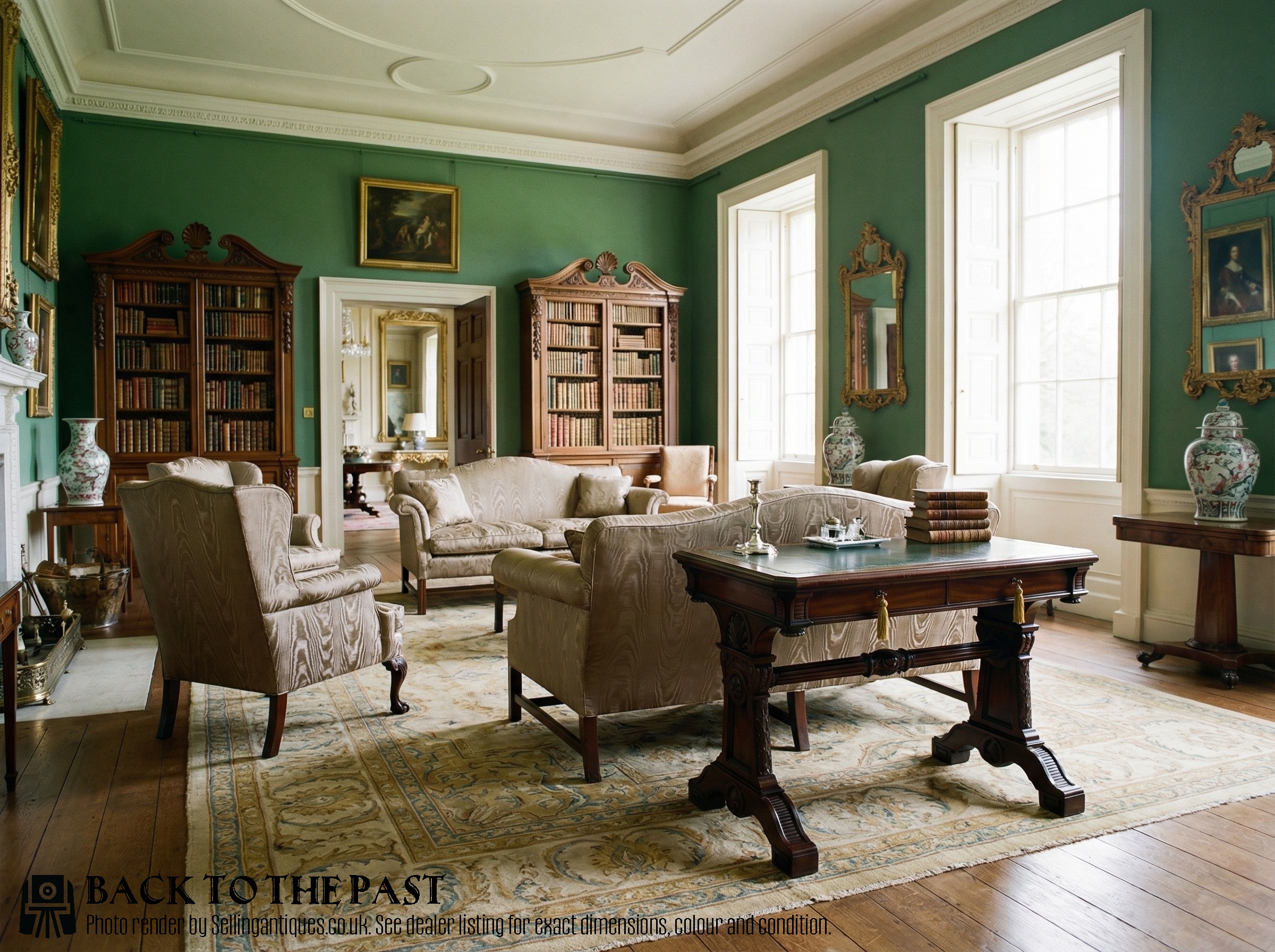
Neoclassical Library Desk
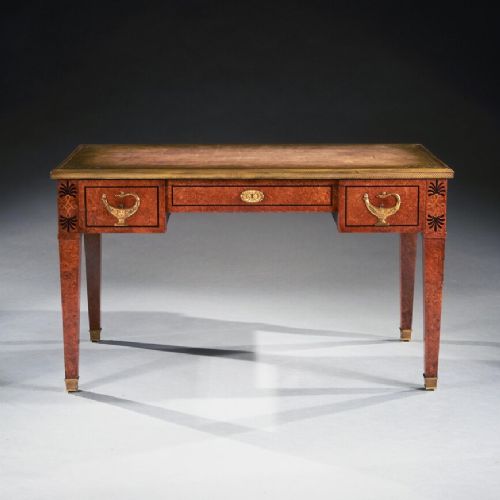
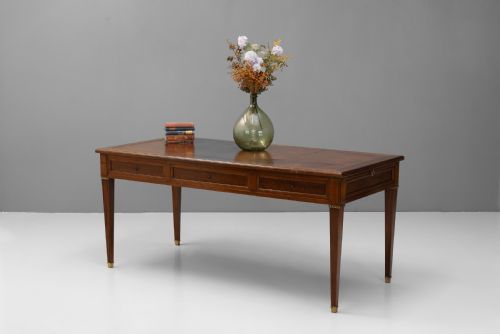
A neoclassical library desk serves as a substantial writing surface defined by classical proportions, straight tapering legs, and disciplined ornamental restraint drawn from ancient Greece and Rome. These pieces span periods from the Regency era through late nineteenth century French and English revivals, reflecting enduring tastes for order and proportion.
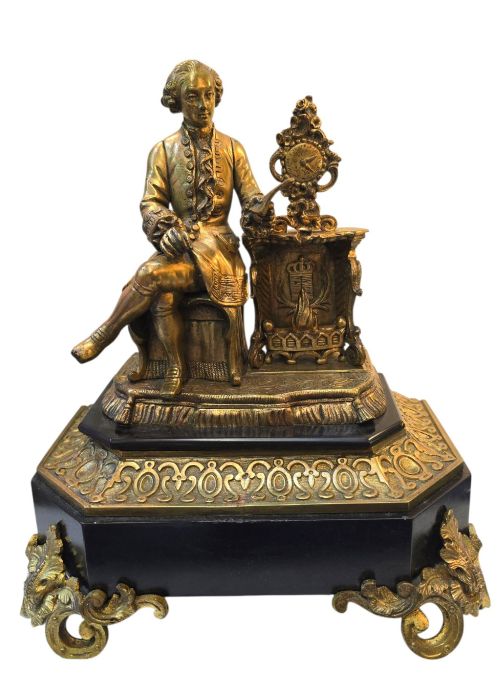
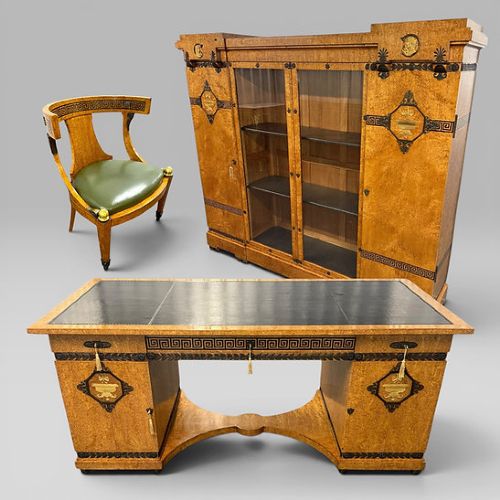
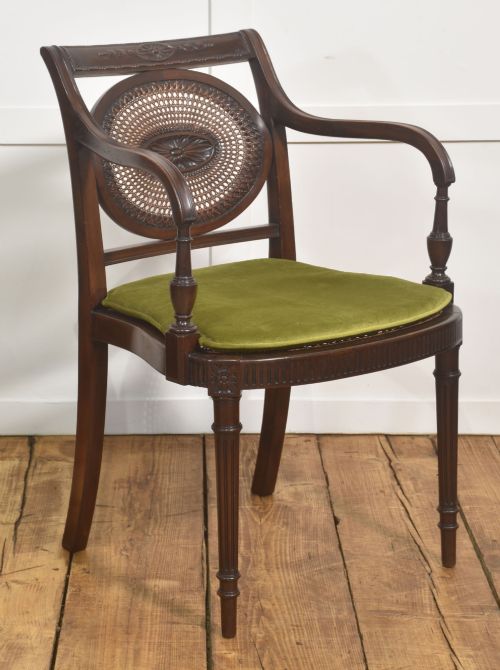
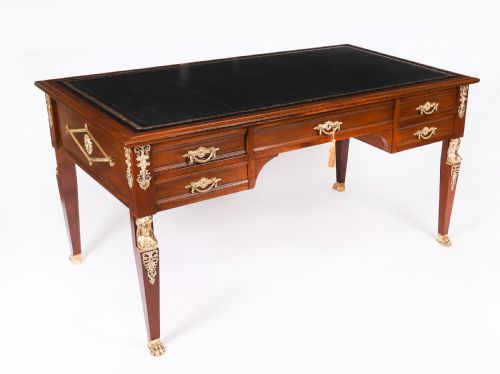
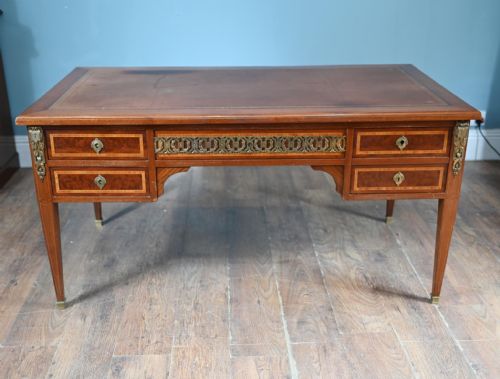
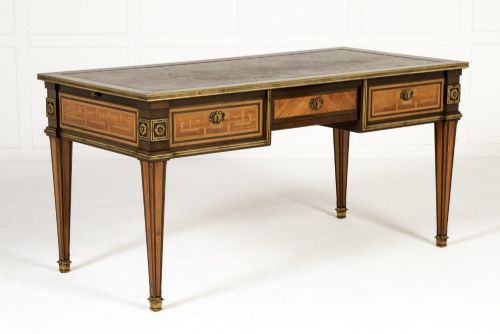
The versions most commonly met on this page take the form of the bureau plat, a freestanding writing table with a wide rectangular top, inset leather writing surfaces, and restrained gilt bronze or ormolu mounts. Alongside these desks, the selection includes related library seating, centre tables, and occasional bronze sculptures that complete a formal study.
Origins cluster predominantly around nineteenth century French workshops and English cabinet makers utilising traditional hardwood timbers. Whether styled after Louis XVI, Empire, or Directoire aesthetics, each piece prioritises functional writing space combined with formal architectural dignity.
Materials and construction
Makers constructed the primary carcases using dense timbers such as mahogany, walnut, and satinwood, frequently selecting figured veneers to create subtle grain patterns across wide desktop surfaces. Solid mahogany and ebonised woods provided the structural integrity required for heavy freestanding library furniture.
Surfaces were commonly completed with inset tooled leather writing panels, while decorative enrichment relied upon cast ormolu, brass mounts, and bronze appliqués. These metal elements were fastened securely to frame corners and drawer friezes, framing the linear geometry of the neoclassical style.
Neoclassical Library Desk Retail Price Guide 2026
Typical asking prices for neoclassical library desk among the pieces listed under this phrase on Sellingantiques today, from the lower quarter to the upper quarter. They describe what is for sale here now, not the wider market.
A plaster bust of Homer watches silently over centuries of correspondence, lending ancient scholarly authority to modern desk work.
Evaluating quality and execution
Quality separates ordinary utilitarian furniture from exceptional cabinet work through the precision of the bronze casting and the crispness of the gilt mounts. Superior pieces display sharply chased ormolu details that fit flush against the wood without excess gap or clumsy pinning.
Timber selection and secondary wood usage also dictate standard, where finer examples employ matched veneers and cleanly dovetailed drawer linings throughout. The weight and stability of the frame, paired with balanced proportions, distinguish master workshop production from later commercial revivals.
Mercier Frères·Henry Dasson·Diehl Paris
The Neoclassical Library Desk Glossary
- Bureau plat
- A double-sided freestanding writing table typically fitted with frieze drawers and an inset leather top. This form served as the standard executive desk in formal nineteenth century libraries.
- Ormolu
- Gilded bronze ornamentation applied to furniture mounts and decorative objects. The technique involves coating cast bronze with a mercury and gold amalgam before heating.
- Directoire style
- A transitional French design period bridging Louis XVI and Empire aesthetics. It relies on minimalist classical motifs and austere geometric lines.
- Bouillotte lamp
- An adjustable multi-branch desk lamp featuring a central metal shade. These lamps were traditionally utilised during card games and late night study.
- Frieze
- The horizontal band situated immediately beneath the desk top. This section frequently houses writing drawers and supports decorative ormolu mounts.
Neoclassical Library Desk: Frequently Asked Questions
What is a bureau plat desk?
A bureau plat is a freestanding writing table designed to sit away from the wall, finished on all sides with a spacious top inset with leather.
These tables typically feature one or more drawers built into the frieze beneath the writing surface and are accented with brass or ormolu mounts.
How do I style a library desk?
Pair the desk with a matching nineteenth century armchair or fauteuil de bureau to maintain the formal architectural proportions of the room.
Keep the desktop uncluttered, using only a period bouillotte lamp or classic bronze sculpture to complement the clean lines of the wood and leather.
Are these desks double sided?
Many nineteenth century bureau plat designs are finished on both sides, featuring faux drawers on the reverse to allow placement in the centre of a room.
This freestanding capability made them essential furniture pieces for large private libraries and studies where the desk stood visible from all angles.
What wood was used for these desks?
Cabinet makers primarily relied on dense tropical hardwoods such as mahogany and walnut, frequently selecting figured grains for top surfaces.
Some examples incorporate satinwood or ebonised finishes, complemented by contrasting brass stringing and gilt bronze mounts.