



Neoclassical Intaglios
Neoclassical intaglios are miniature carved gems and plaster casts that capture ancient myth, bringing Grand Tour elegance straight to your study wall.
Neoclassical Intaglios
Neoclassical intaglios span wall art, framed panels, and rings from the eighteenth and nineteenth centuries. These pieces reflect the Classical Revival taste that swept Britain and Europe during the period of the Grand Tour.
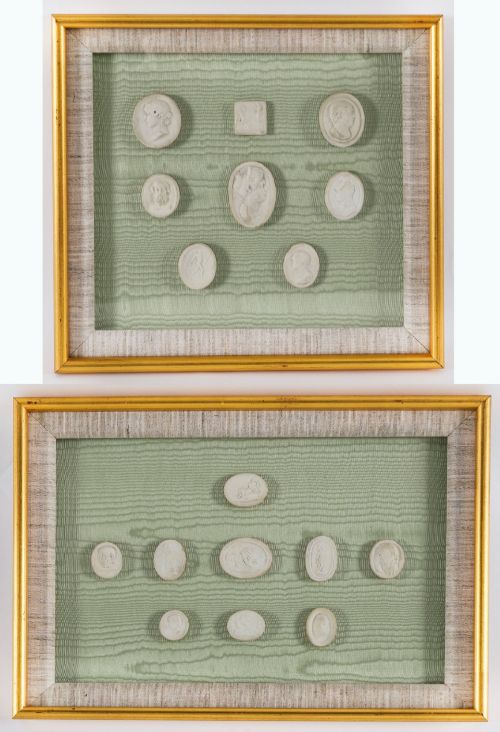
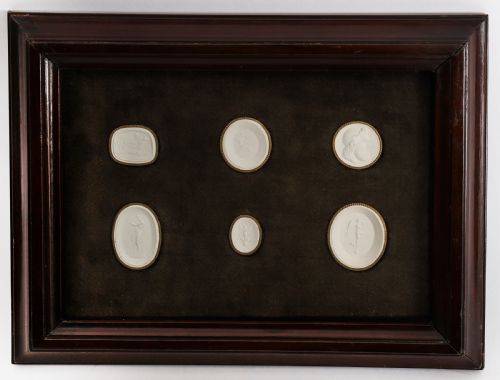
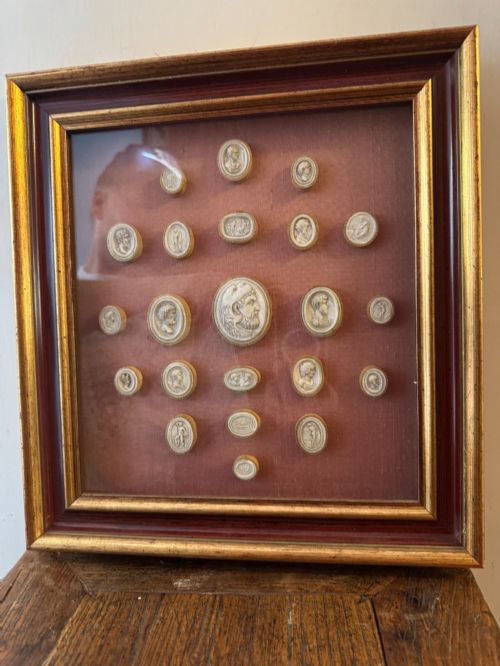
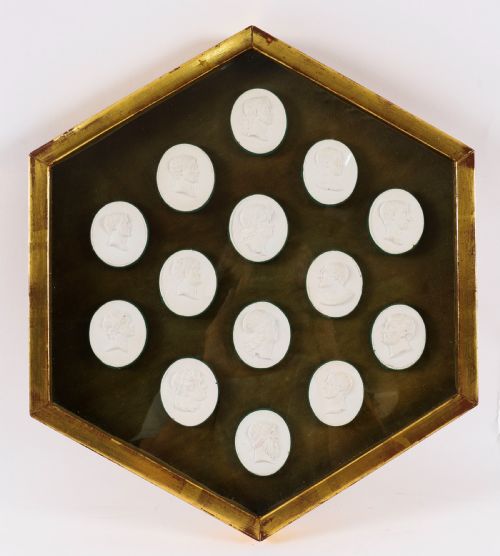
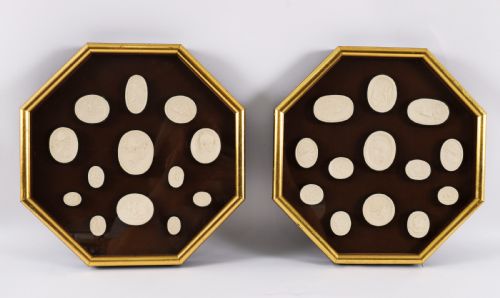
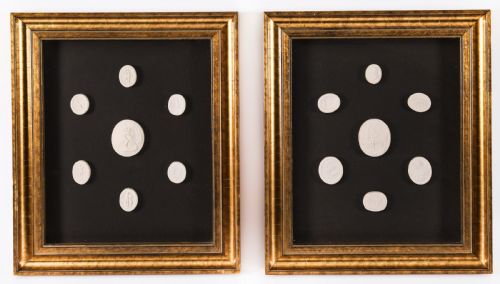
Framed collections of plaster casts and gypsum medallions dominate the current selection alongside gold rings set with hardstone and carnelian. Buyers frequently encounter sets arranged in giltwood frames or velvet-lined boxes.
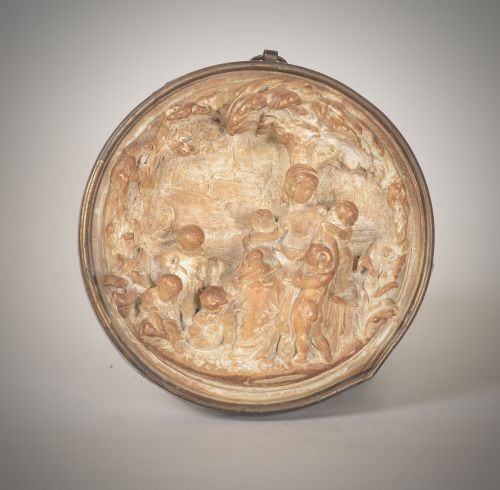
The objects record classical figures, mythological scenes, and antique profiles carved into stone or cast in crisp white plaster. They serve as tangible links to the scholarly travels undertaken by collectors of the Georgian and Victorian eras.
Materials and methods
Plaster and gypsum provide the crisp white medium for relief panels, housed within gilt wood frames and fabric backings. Carvers and casters captured minute anatomical details from ancient originals.
Gold mounts and rings secure hardstones such as carnelian and agate. Goldsmiths shaped eighteen-carat yellow gold to hold these carved gems as rings and fob pendants.
Neoclassical Intaglios Retail Price Guide 2026
Typical asking prices for neoclassical intaglios among the pieces listed under this phrase on Sellingantiques today, from the lower quarter to the upper quarter. They describe what is for sale here now, not the wider market.
Travellers brought home dozens of plaster casts in velvet boxes, turning their luggage into portable museums of ancient Rome.
Assessing quality
The crispness of the cast or the sharpness of the stone carving dictates the standard of the piece. Finer examples retain every line of the classical profile without blurring or surface wear.
The arrangement and framing elevate the presentation, particularly in multi-piece collections where uniform colour and careful mounting create a harmonious visual balance.
Giovanni Liberotti
The Neoclassical Intaglios Glossary
- Intaglio
- A gem or medallion carved into the surface so that the design sits below the plane. This technique produces a raised impression when pressed into sealing wax.
- Grand Tour
- A traditional trip through Europe undertaken by young upper-class Europeans during the eighteenth and nineteenth centuries to study classical art. Travellers collected plaster casts and intaglios as souvenirs of their journey.
- Gypsum
- A soft sulphate mineral used to create crisp white plaster casts of classical gems. It takes fine detail readily.
- Fob pendant
- A small ornament attached to a pocket watch ribbon or chain, frequently set with a carved intaglio stone. These often doubled as personal seals for correspondence.
- Hardstone
- A semi-precious stone such as carnelian, agate, or jasper used for carving intaglios. These materials resist wear and take a high polish.
Neoclassical Intaglios: Frequently Asked Questions
What are neoclassical intaglios?
Neoclassical intaglios are carved gemstones or plaster impressions reproducing ancient Greek and Roman art. They date primarily from the eighteenth and nineteenth centuries.
Collectors prize them for their miniature scale and mythological subjects. They reflect the classical education and aesthetic interests of their original owners.
How were framed intaglios displayed?
Framed intaglios were traditionally hung in studies, libraries, or cabinets of curiosity. The groupings allowed scholars to study multiple classical motifs at once.
Gilt wood frames and velvet backings protected the plaster casts while displaying them as wall art. Many sets remain in their original nineteenth-century mounts.
Can intaglio rings still be worn?
Intaglio rings set in gold can be worn with appropriate care for antique jewellery. Hardstone intaglios in gold settings are durable enough for daily use.
Owners should remove rings before manual work or swimming to protect the ancient stones and precious metal mountings. Regular checks by a jeweller ensure the stone remains secure in its setting.
How do I date a Grand Tour collection?
Dating relies on the materials of the frame, the backing fabrics, and the style of the mounting. Early examples often feature hand-carved giltwood frames from the Georgian period.
Paper labels on the reverse or the signature of a publisher like Giovanni Liberotti help narrow the decade. Stylistic clues in the arrangement also point to late eighteenth or nineteenth-century origins.