




Neoclassical Inlaid Cabinet
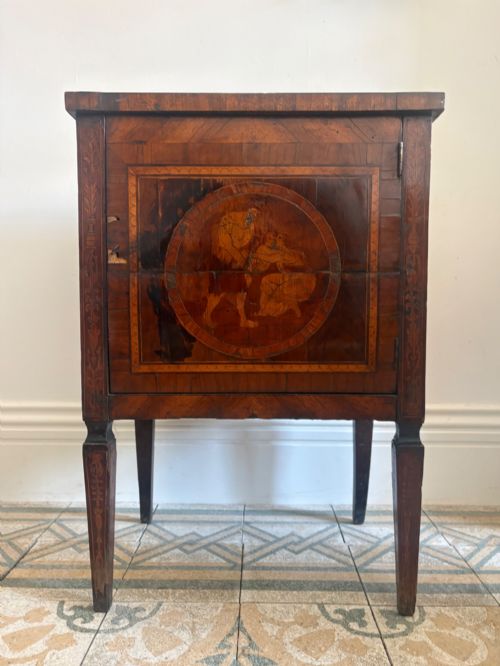
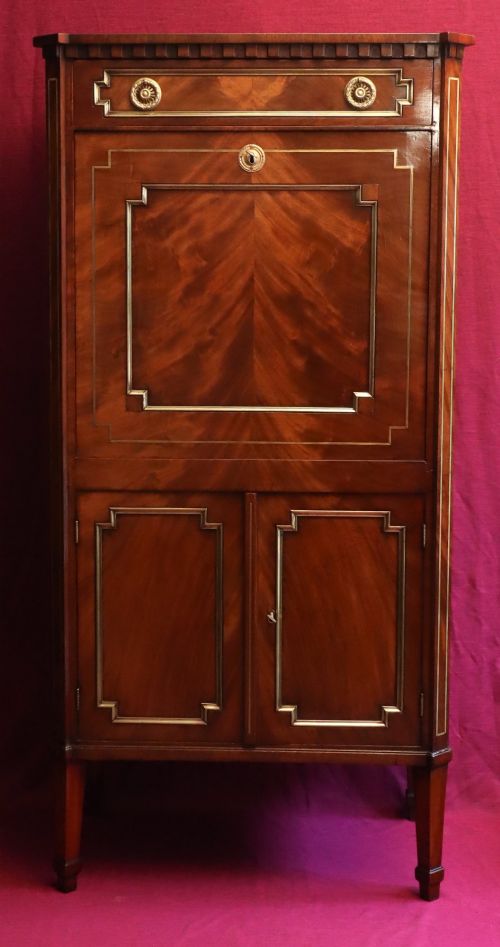
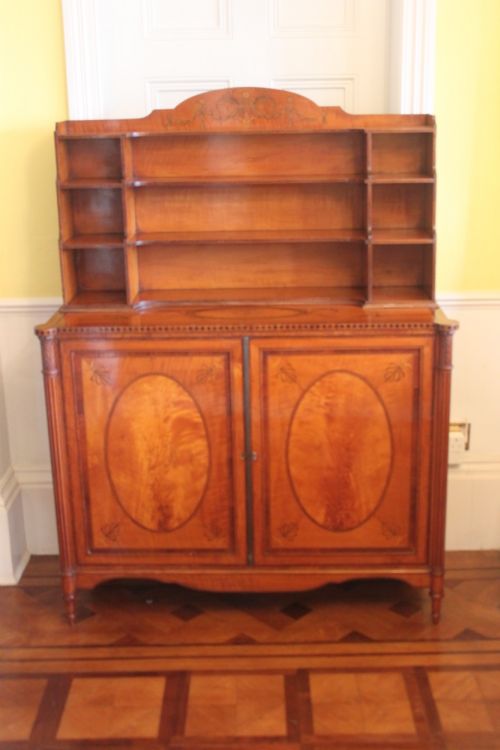
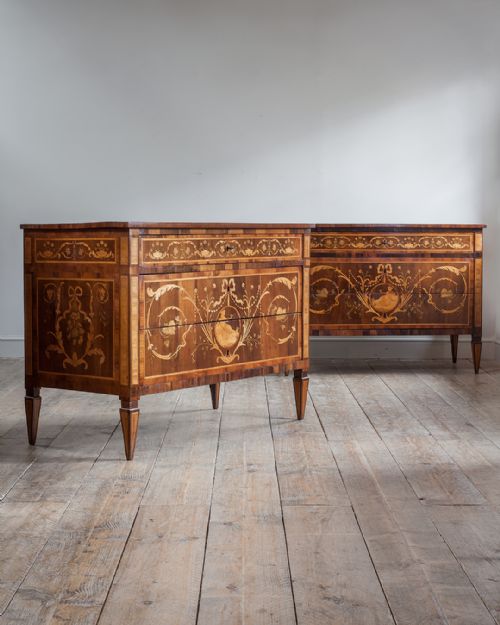
A neoclassical inlaid cabinet brings balance, geometric marquetry and refined timber to a room, drawing the eye with precise architectural detail.
Neoclassical Inlaid Cabinet
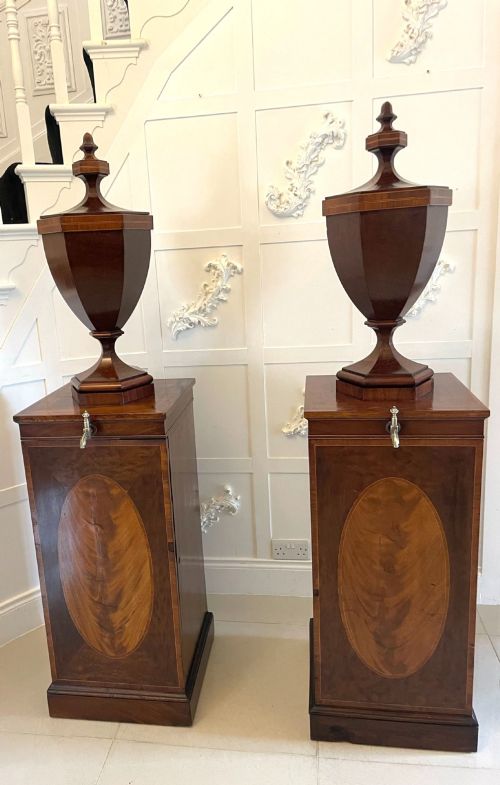
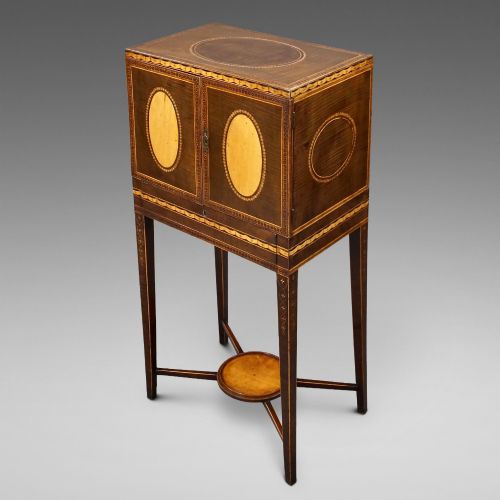
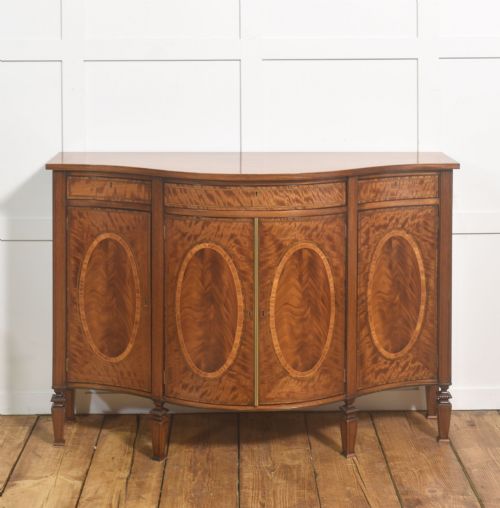
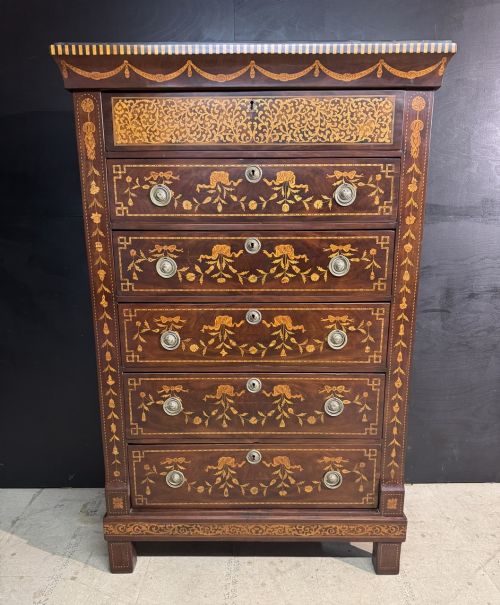
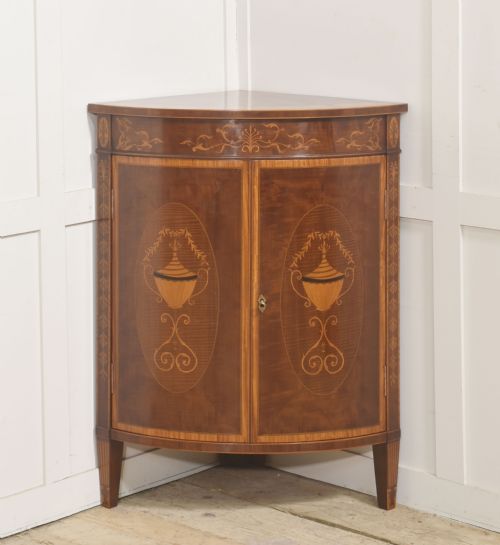
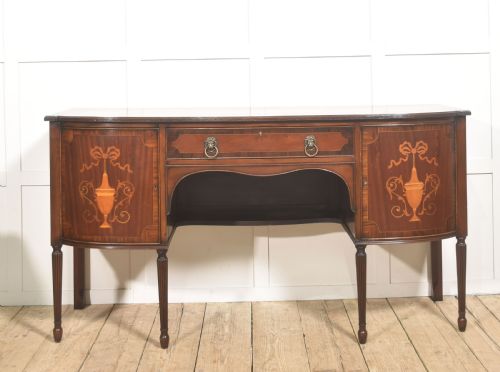
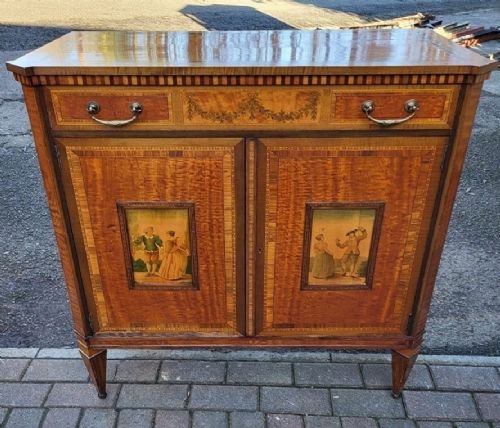
A neoclassical inlaid cabinet encompasses side cabinets, display pieces, commodes and writing furniture originating from the eighteenth century onwards. Buyers frequently encounter Sheraton Revival and George III pieces alongside Dutch, French and Italian examples from the nineteenth and early twentieth centuries.
The selection ranges from bow-front sideboards and corner units to demi-lune cabinets and tall chests of drawers. Woods such as mahogany, satinwood and walnut form the primary carcases, decorated with contrasting stringing and pictorial marquetry.
Dated items stretch from Georgian workshops through Victorian interpretations to later revival pieces created up to the nineteen-thirties. Each form reflects the enduring symmetry and classical restraint characteristic of the neoclassical vocabulary.
Materials and Technique
Cabinetmakers constructed carcases from solid timbers including mahogany, walnut and maple, applying fine veneers of satinwood, harewood and kingwood over the surface. Boxwood and brass provided bright linear contrast through stringing and inlay.
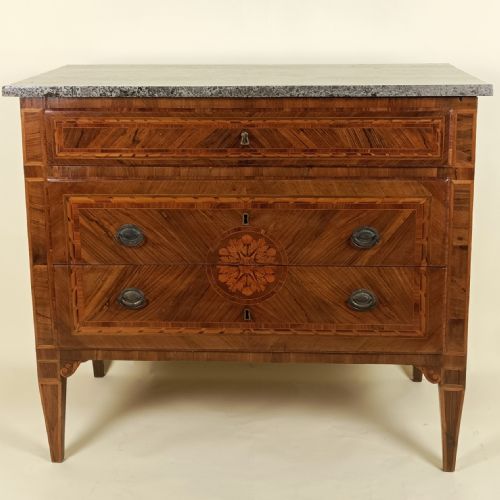
Marquetry panels utilised contrasting woods to build pictorial and geometric motifs, often set into shaped reserves on commodes and side cabinets. Ormolu mounts, marble tops and brass hardware completed the construction of high-status pieces.
Listings feature mahogany, satinwood and walnut as the primary structural and decorative timbers across eighteenth and nineteenth-century pieces.
Design and Execution
Quality rests in the precision of the cabinetwork, from the tightness of the timber joints to the complexity and crispness of the marquetry. Superior examples display meticulously matched veneers and harmonious proportions that adhere strictly to neoclassical principles.
The choice of secondary woods, the depth of the hand-carved or gilded details, and the integration of original hardware distinguish workshop output. Pieces by documented makers exhibit a higher standard of individual execution than standard commercial production.
James Hicks·Maple and Co.·Waring and Gillow·Pietro Ferrario·Edwards and Roberts
The Neoclassical Inlaid Cabinet Glossary
- Marquetry
- Decorative patterns formed by fitting together thin slices of various woods, shells or ivories onto a structural panel. This technique creates pictorial scenes or geometric designs across drawer fronts and cabinet doors.
- Satinwood
- A pale, lustrous timber native to India and Ceylon, highly prized for its golden sheen and smooth grain. It frequently serves as the primary veneer on late eighteenth-century and revival furniture.
- Ormolu
- Gilded bronze used for furniture mounts, feet and decorative hardware. The process involves applying a mixture of gold and mercury to cast bronze.
- Commode
- A low chest of drawers or cabinet with doors, developed in France during the seventeenth century. These pieces often feature marble tops and sophisticated marquetry decoration.
- Stringing
- Thin lines of contrasting wood or light-coloured timber inlaid into grooves on a cabinet surface. It creates delicate borders around panels and drawer fronts.
Neoclassical Inlaid Cabinet: Frequently Asked Questions
How do I date a neoclassical inlaid cabinet?
Dating relies on examining the construction methods, timber choices and secondary woods used inside the carcase. Georgian pieces typically show hand-cut dovetails and native woods, whereas revival pieces from the late nineteenth and early twentieth centuries often incorporate standardised machine-sawn elements and modern fasteners.
Style nuances also help establish age. Sheraton Revival and Louis XVI style items from nineteen-hundred to nineteen-thirty frequently combine lighter satinwood veneers with crisply stamped brass hardware, reflecting the taste of their specific manufacturing era.
Where should I place a side cabinet?
These cabinets suit dining rooms, hallways or drawing rooms where their shallow profiles and decorative fronts can be viewed without obstructing traffic. Demi-lune and bow-front shapes work particularly well against flat walls or in alcoves.
Consider the lighting in the room to protect delicate satinwood and marquetry from direct sunlight, which can fade natural wood colours over time. Placing them away from direct heat sources also prevents timber movement.
What is the difference between a commode and a side cabinet?
A commode traditionally refers to a low chest of drawers or a cupboard enclosed by doors, frequently finished with a marble top. Side cabinets encompass a broader category of storage furniture designed to stand against a wall, including display pieces and open shelving units.
In neoclassical design, both forms often feature similar marquetry and veneering techniques. The distinction usually lies in the internal configuration and the presence of drawers versus enclosed cupboard space.