

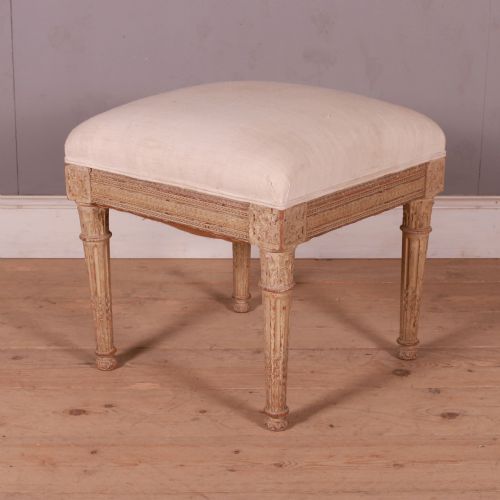


Neoclassical Footstool
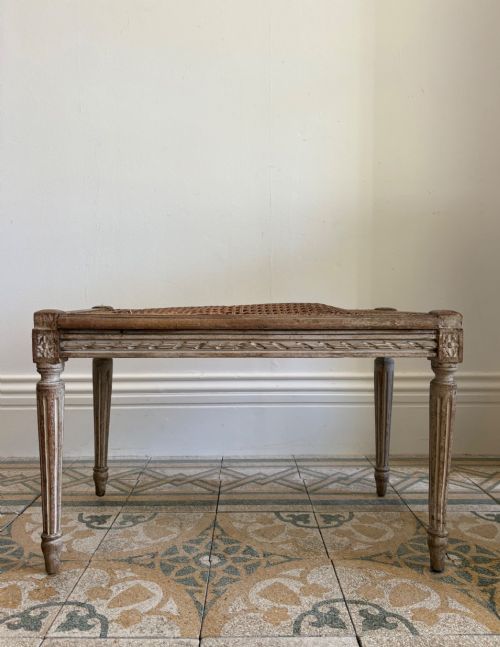
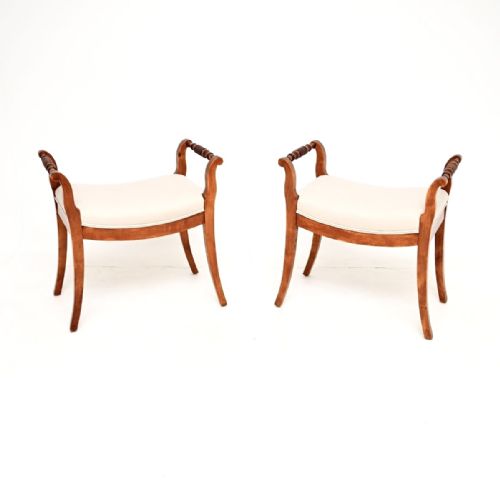
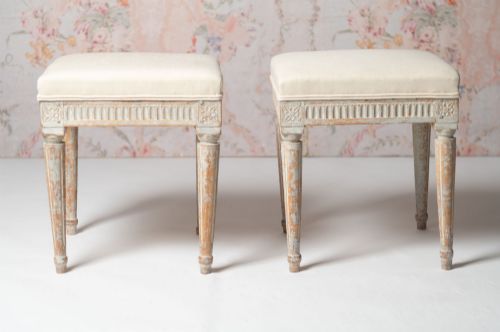
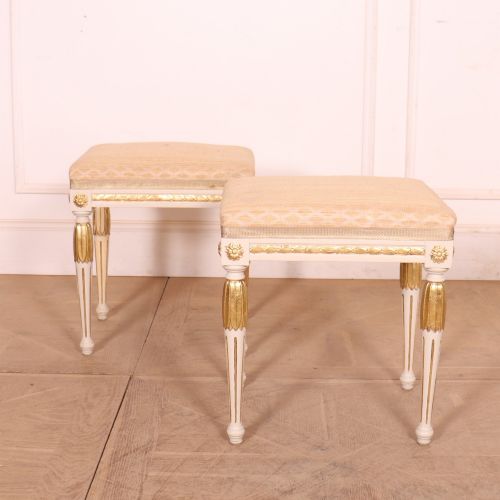
These neoclassical footstool examples bring disciplined symmetry and antique elegance to a room, offering compact forms rooted in classical antiquity.
Neoclassical Footstool
A neoclassical footstool encompasses low seating forms influenced by classical design, spanning periods from the eighteenth century through the end of the nineteenth century. Buyers encounter forms ranging from square frames to curved X-frame supports.
The pieces listed on this page frequently originate from Swedish workshops in Gustavian styles, alongside English Georgian mahogany pieces and French Louis XVI revival examples. Painted wood finishes and carved details dominate the selection.
Stools appear individually or as pairs, sometimes functioning alongside matching chairs or as window seats. Upholstery ranges from plain linen and textile to patterned damask and needlework.
Materials and construction
Cabinetmakers constructed these frames using solid timbers such as mahogany, satin birch, and oak, often applying white paint or gold leaf to the surfaces. Wood carving defines the ornamentation, utilising geometric restraint rather than excessive flourish.
Upholstery techniques involve traditional stuffing secured beneath fabrics like linen, damask, and needlework. Some examples survive as un-upholstered projects awaiting restoration.
Neoclassical Footstool Retail Price Guide 2026
Typical asking prices for neoclassical footstool among the pieces listed under this phrase on Sellingantiques today, from the lower quarter to the upper quarter. They describe what is for sale here now, not the wider market.
The listings feature painted wood, mahogany, satin birch, and oak, alongside upholstery materials including linen, damask, and needlework.
Distinctions in quality
Proportions and drawing separate simpler pieces from finer works, particularly in the line of square tapering legs and the crispness of carved wooden details. Well-drawn frames possess balanced proportions that anchor the seating visually.
Original surface treatments, such as aged paint or patinated mahogany, preserve the historical integrity of the piece. The choice of covering material, from simple linen to intricate needlework or damask, also influences the character of the stool.
The Neoclassical Footstool Glossary
- Gustavian
- The Swedish interpretation of French neoclassical design, characterised by restrained carving, pale painted finishes, and functional elegance. This style emerged during the reign of Gustav III.
- X-Frame
- A cross-legged structural support drawing on ancient Roman curule forms. It creates a sturdy, folding-style silhouette adapted for stationary stools.
- Damask
- A reversible figured fabric traditionally woven on a jacquard loom with patterns formed by contrasting warps and wefts. It provides a formal upholstery surface for period seating.
- Satin Birch
- A dense timber with a lustrous, light-coloured grain utilised extensively in nineteenth-century Scandinavian furniture. It takes a smooth polish without heavy staining.
Neoclassical Footstool: Frequently Asked Questions
Where should I place a neoclassical footstool?
These compact seats fit easily beside a fireplace, beneath a window as a low seat, or paired at the foot of a bed.
Their restrained proportions allow them to integrate into both traditional rooms and modern interiors without dominating the floor space.
How do I care for antique painted wood?
Dust the painted surfaces regularly with a soft, dry cloth to prevent dirt accumulation.
Avoid liquid cleaners and harsh chemicals, which can strip aged paint layers or degrade historic finishes.
Are these stools comfortable for daily sitting?
Many of these pieces function primarily as decorative footstools or occasional seats rather than deep lounge furniture.
Upholstery padding varies depending on whether the piece retains its historic stuffing or requires new webbing and support.
How do I identify a Gustavian piece?
Gustavian pieces typically display pale painted finishes, such as white or soft grey, paired with understated neoclassical carvings.
Swedish makers favored clean lines and functional forms derived from French styling adapted to Nordic sensibilities.