


Neoclassical Carved Side Chairs
Neoclassical carved side chairs bring architectural rigour and balanced proportion to a room, drawing on classical antiquity through crisp timber carving and upright forms.
Neoclassical Carved Side Chairs
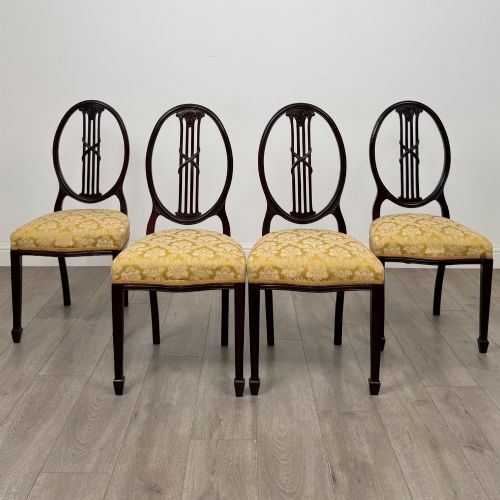
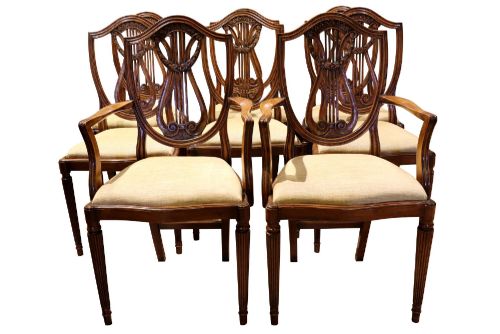
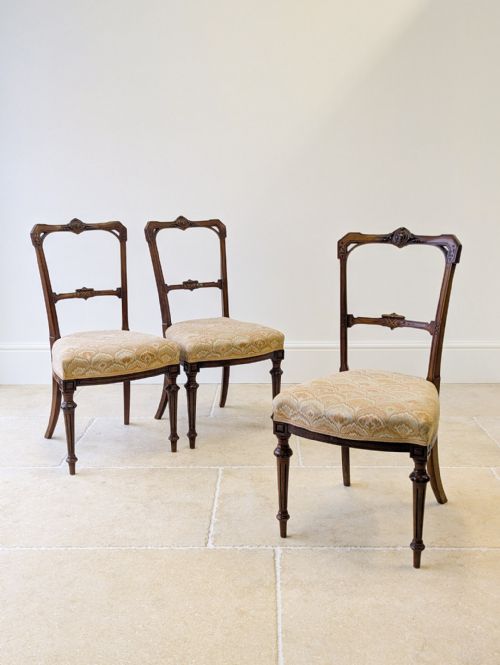
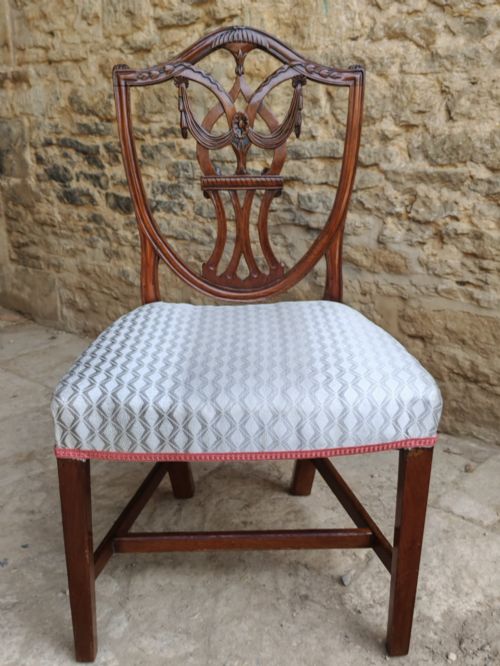
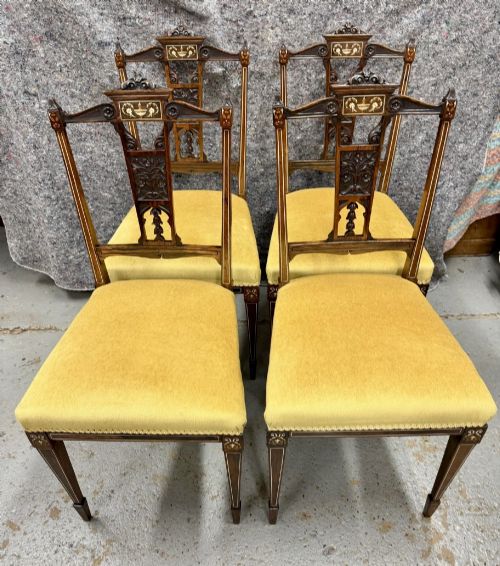
Neoclassical carved side chairs appear across multiple periods including the Georgian era, the 19th century, and the early 20th century, reflecting sustained revivals of classical design. These forms encompass shield backs, lyre backs, and klismos profiles intended for dining rooms, salons, and halls.
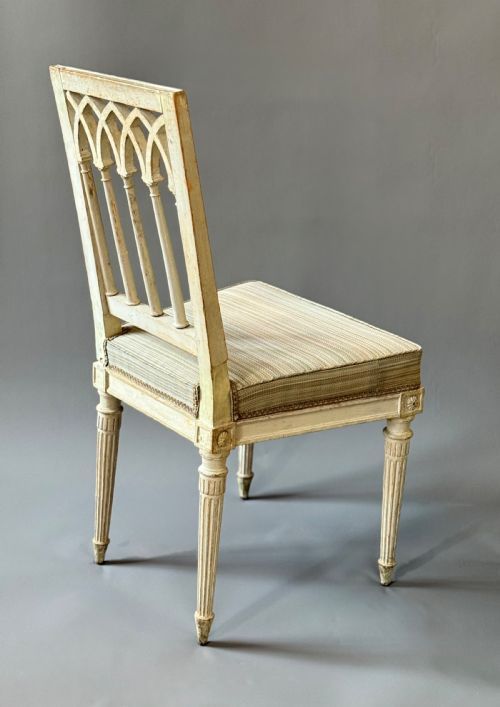
The most common examples encountered in this selection include mahogany and painted wood frames, often referencing French Louis XVI, Hepplewhite, and Regency styles. They range from single pieces and pairs to larger sets suitable for formal dining arrangements.
Materials and construction
Construction relies heavily on dense timbers such as mahogany, walnut, and fruitwood, alongside painted and giltwood surfaces that articulate the carved classical motifs. Workshops utilised traditional joinery to support slender uprights, shield backs, and open arm or side chair configurations.
Seating areas incorporate a variety of materials depending on the period and style, ranging from cane and wood to upholstered pads finished in fabric, velvet, or wool work. Carving is applied directly to the timber framework to define paterae, fluting, and scrollwork.
Listings feature neoclassical side chairs spanning the 18th, 19th, and 20th centuries, executed in mahogany, walnut, fruitwood, satinwood, and painted or giltwood surfaces.
Distinctions in quality
Quality rests upon the crispness and depth of the carved ornament, where master workshops achieved sharp definition in swags, flutes, and classical leaves. Timber selection also dictates the tier, with finely grained mahogany and satinwood outperforming simpler utility woods.
The integrity of the frame construction and the retention of original surface treatments, whether giltwood, painted finishes, or polished grain, separate standard production pieces from finer examples designed for prominent salons and dining rooms.
The Neoclassical Carved Side Chairs Glossary
- Klismos
- An ancient Greek chair form characterised by curved, outwardly splaying legs and a concave backrest designed to follow the human spine. This silhouette was revived during the neoclassical period.
- Shield back
- A chair back shaped in the outline of a heraldic shield, popularised by designers such as Hepplewhite during the Georgian era. It often contains carved splats featuring drapery or urns.
- Giltwood
- Timber treated with a thin layer of gold leaf applied over a prepared gesso ground. It appears on high-status salon chairs and decorative seating.
- Caning
- Woven rattan material used to form light, porous seat panels or backrests. It is frequently seen on French Louis XVI style and 19th-century seating.
- Gustavian
- The Swedish interpretation of French neoclassical design, characterised by lighter proportions, restrained carving, and pale painted finishes.
Neoclassical Carved Side Chairs: Frequently Asked Questions
How do I identify a neoclassical side chair?
Look for symmetrical designs, straight tapered legs, fluting, and classical motifs such as urns, husks, and paterae derived from ancient Rome and Greece. The overall silhouette prioritises geometric balance over curving baroque excess.
Check the backrest and leg junctions, where classical geometry informs the structural layout. Even revival pieces from the Victorian or Edwardian periods adhere to these strict proportional rules.
Were these chairs used only for dining?
While many examples function as dining chairs, the form spans multiple domestic uses including salon chairs, hall seats, and bedroom chairs. Lighter frames were easily moved around formal entertaining spaces.
Pairs and larger sets often served specific rooms like drawing rooms or reception halls. Their decorative backs made them effective placed against perimeter walls when not seated at a table.
How should I care for antique wood and painted finishes?
Maintain stable indoor humidity levels and keep wooden and painted frames away from direct sunlight and heat sources. Dust gently with a dry, soft cloth rather than using silicone-based polishes.
Painted and giltwood surfaces require particular care to prevent flaking or abrasion. Professional conservation ensures delicate carved details and original finishes remain stable over time.
How do I distinguish 18th-century chairs from later revivals?
Examine the timber patination, tool marks, and construction joints beneath the seat rail. Eighteenth-century pieces exhibit hand-cut joinery and wear patterns consistent with extended use.
Revival pieces from the 19th and 20th centuries often utilise machine-sawn components and standardised dimensions while accurately copying earlier Georgian or Louis XVI styles.