




Neoclassical Cameo Frame
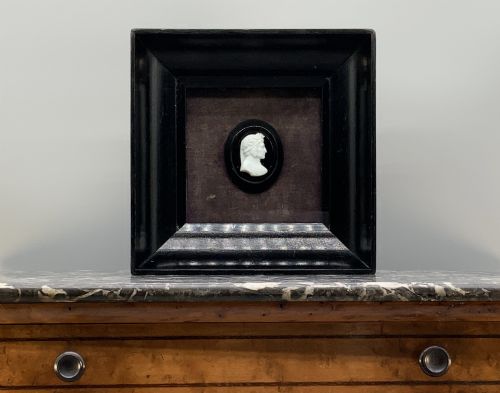
A neoclassical cameo frame houses classical profile reliefs and intaglios, offering a glimpse into centuries of European travel and classical taste.
Neoclassical Cameo Frame
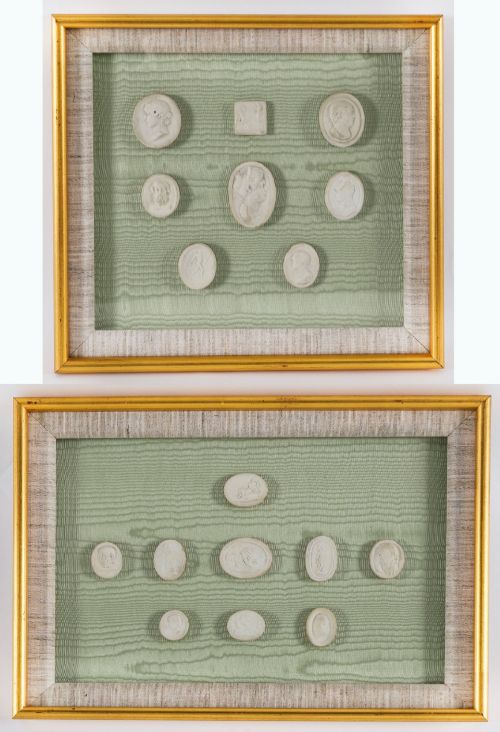
When you search for a neoclassical cameo frame, you encounter wall plaques, framed artworks, and collections of intaglios that celebrate classical antiquity. These pieces originate from the eighteenth and nineteenth centuries, often taking the form of Grand Tour souvenirs collected by travellers in Italy.
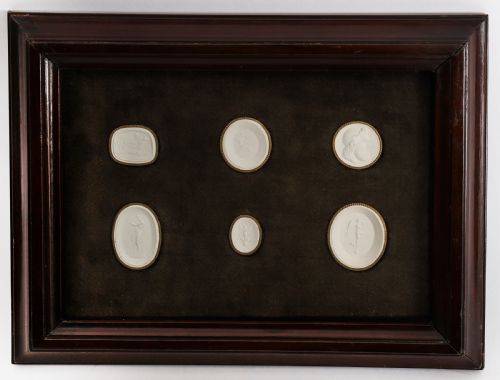
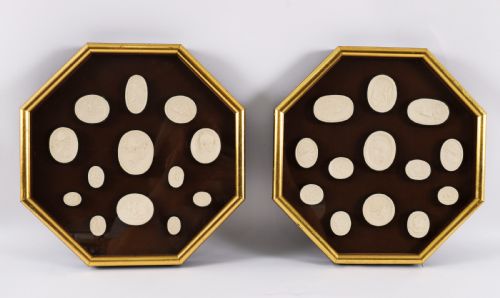
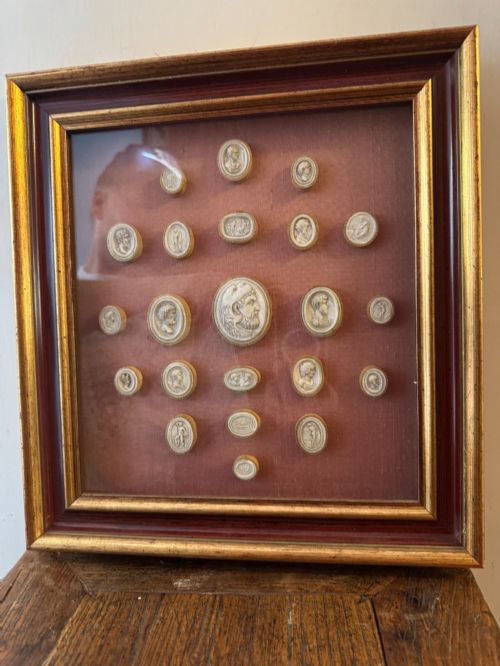
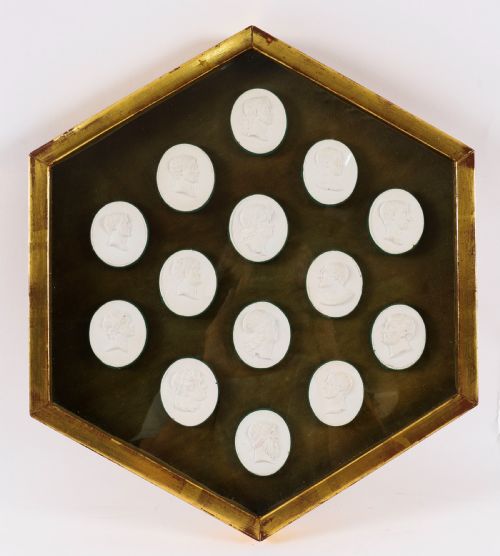
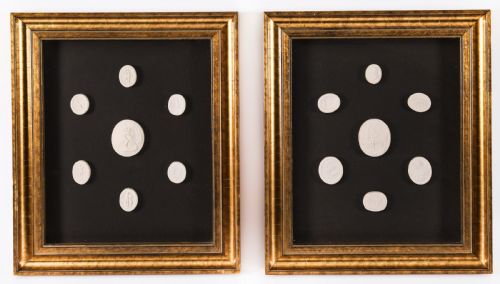
The selections on this page span several distinct formats, from single carved marble portraits of Roman emperors to large framed sets of plaster and gypsum casts. You will find octagonal giltwood frames holding white relief profiles against dark velvet or textile backgrounds, alongside individual shell cameo brooches.
The overarching aesthetic draws heavily on French neoclassical and Georgian design principles, favouring symmetrical arrangements and crisp classical profiles. Plaster, glass, and wood form the structural and decorative basis for these wall-mounted displays.
How they were made
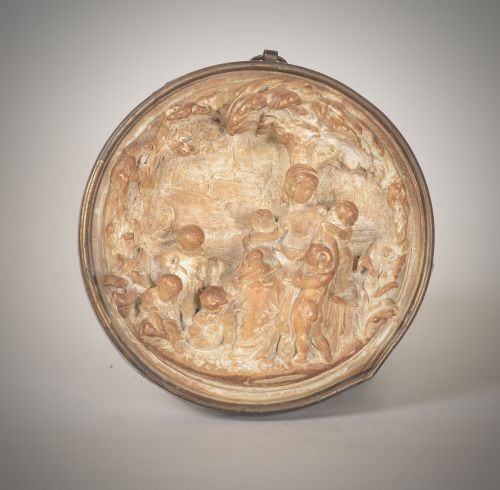
The makers utilised traditional artisan methods, casting plaster and gypsum reliefs in moulds taken directly from ancient gems and intaglios. These white plaster casts were then arranged meticulously inside wooden and giltwood frames against contrasting fabrics such as velvet and textile backdrops.
Other examples showcase hand-carved materials, including ivory and marble bas-relief profile portraits executed with fine chisels. Glazing protected these delicate compositions within wall plaques and framed art, while backing papers and textile linings secured the contents within the box frames.
Neoclassical Cameo Frame Retail Price Guide 2026
Typical asking prices for neoclassical cameo frame among the pieces listed under this phrase on Sellingantiques today, from the lower quarter to the upper quarter. They describe what is for sale here now, not the wider market.
Even ancient chariot drivers need a secure ride, as proven by the goddess Aurora steering her charges across a Georgian shell cameo.
What varies in quality
Quality reveals itself in the crispness of the cast or carved details within the neoclassical cameo frame, where sharper profiles indicate superior mould-making or more skilled hand-carving. The treatment of the surrounding woodwork, particularly the depth and execution of the giltwood gilding, further distinguishes finer examples from simpler wall decor.
The arrangement and preservation of multiple intaglios within a single frame also influence the overall character. Cohesive groupings set against clean, original fabric backings demonstrate deliberate curation, whereas mismatched or heavily altered interiors shift the piece toward the decorative end of the spectrum.
Giovanni Liberotti·Wedgwood
The Neoclassical Cameo Frame Glossary
- Intaglio
- A gem or gemstone carved in incuse so that the design sinks below the surface. This technique produces raised impressions when pressed into wax or plaster.
- Grand Tour
- A traditional trip of Europe undertaken by upper-class European young men of sufficient status and wealth during the eighteenth and nineteenth centuries. Souvenirs from these travels included framed plaster casts and carved plaques.
- Giltwood
- Wood that has been coated with gold leaf or a gold-coloured finish. It provides a reflective, ornate border typical of classical framing.
- Bas-relief
- A sculpture technique where the figures project only slightly from the background plane. It is commonly seen in marble and plaster portrait profiles.
Neoclassical Cameo Frame: Frequently Asked Questions
What is a neoclassical cameo frame?
A neoclassical cameo frame is a wall-mounted display housing classical portrait reliefs, plaster casts, or carved intaglios. These pieces reflect the classical revival styles of the eighteenth and nineteenth centuries.
They serve primarily as decorative wall art, preserving miniature profiles of Roman emperors, mythological figures, and antique gems.
How were these frames used historically?
Travellers on the Grand Tour collected individual plaster casts, carved ivories, and marble reliefs as tangible proof of their classical education and travels in Italy. Upon returning home, they arranged these souvenirs in custom wooden and giltwood frames to display on their walls.
Collectors assembled sets in specialised box frames to protect and showcase dozens of miniature intaglios together.
How do I care for a framed intaglio?
Keep framed plaster and glass pieces away from direct sunlight and damp environments to protect the fragile casts and backing textiles. Dust the exterior giltwood frames gently with a dry, soft cloth.
Avoid opening sealed box frames unless necessary, as the inner textiles and delicate gypsum casts are sensitive to atmospheric changes and handling.
How do I identify a Grand Tour piece?
Grand Tour pieces typically feature white plaster, gypsum, or sulphur casts arranged symmetrically on dark velvet or fabric backgrounds within nineteenth-century wooden frames. The subjects almost exclusively draw from classical mythology, Roman architecture, and antique portraiture.
Signatures or labels on the reverse sometimes name specific workshops or makers associated with souvenir production in Rome or Florence.