



Needlework Picture Panel
These needlework picture panel examples bring historical stitchcraft directly to the wall, offering tactile scenes rendered in wool, silk and metallic thread.
Needlework Picture Panel
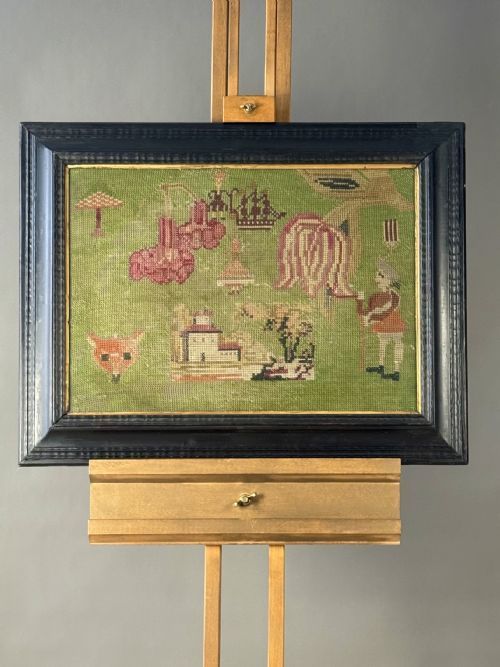
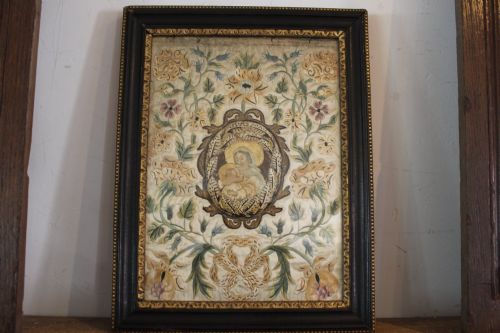
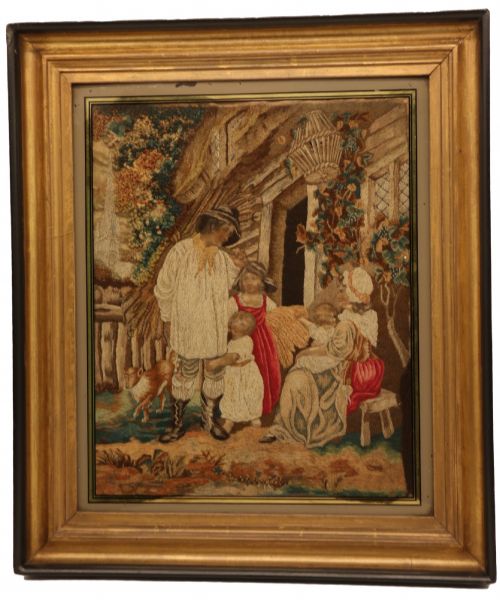
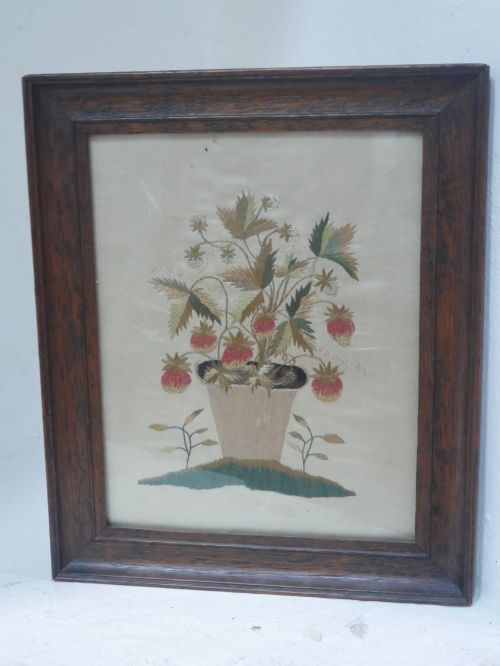
A needlework picture panel combines historical textile art with framing, preserving stitched compositions from the seventeenth century onwards. Buyers encounter diverse subjects ranging from pastoral farming and religious narratives to botanical studies and animal portraits.
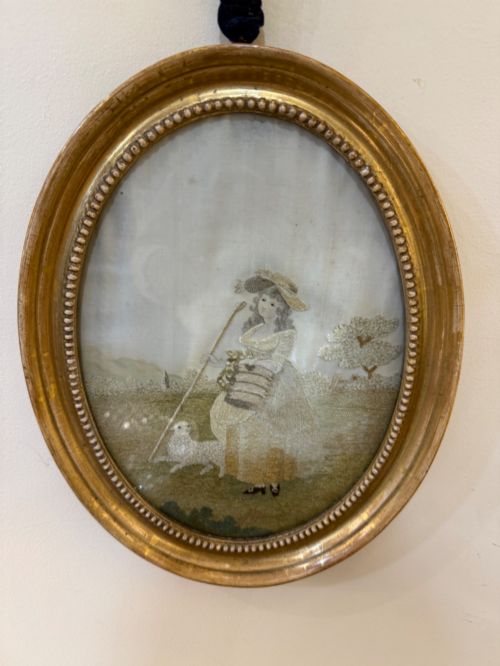
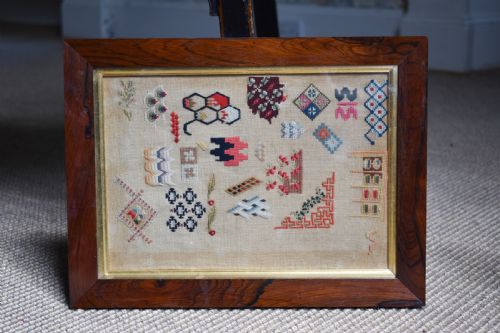
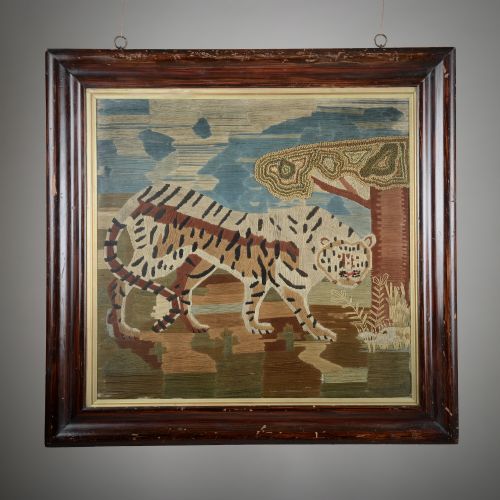
The nineteenth century yields significant numbers of Berlin work items, samplers, and pictorial embroideries alongside earlier Stuart stumpwork and eighteenth-century silkwork. Pieces arrive mounted in period frames such as burr maple, giltwood, or faux tortoiseshell.
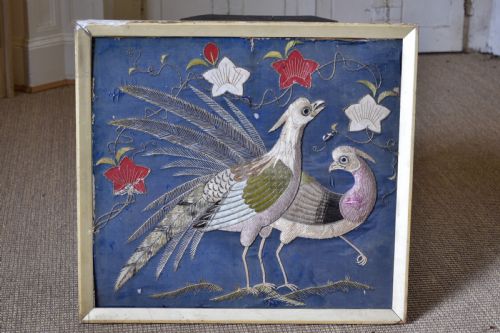
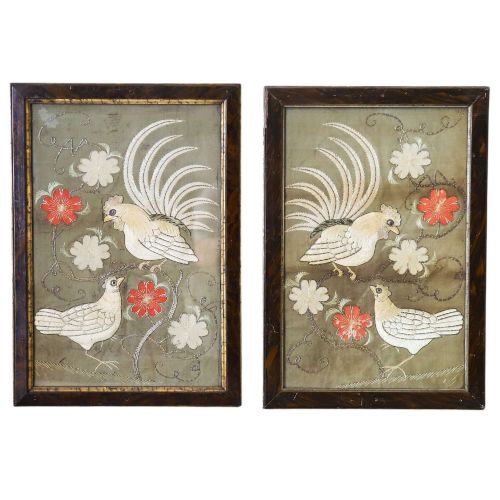
Regional variations span English alphabet samplers, French Rococo panels, and Chinese garden bird embroideries. Each framed wall art object records the domestic handiwork or professional stitching of past centuries.
Materials and construction methods
Maker execution relies on natural textile grounds like linen, canvas, and wool paired with silk floss and metallic thread. Stitchers applied varied techniques including gros-point wool work, crewel embroidery, and raised stumpwork to build texture and depth.
Finished textiles found protection behind glass within wooden frames, frequently incorporating hand-painted silk sections to complement the needlework. Surviving examples demonstrate careful mounting that preserves fragile stitches and beadwork fragments across generations.
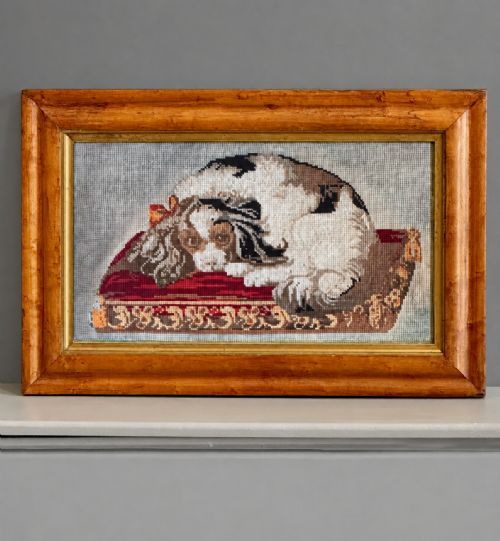
King Charles spaniels and little red riding hoods stare out across the centuries from wool work panels.
Judging quality in textile panels
Quality rests in the precision of the stitching, the complexity of the pictorial composition, and the survival of the original ground materials. Superior examples display intricate shading with silk floss and well-executed facial expressions or animal anatomy.
The integrity of the mounting and the character of the period frame contribute to the overall merit of the piece. Untouched original frames, particularly in burr maple or giltwood, elevate the historical context of the textile.
The Needlework Picture Panel Glossary
- Stumpwork
- A raised embroidery style popular in the seventeenth century, using padded underlays to create three-dimensional figures and motifs. This technique often depicts royal personages or biblical scenes with distinct relief.
- Berlin Work
- A nineteenth-century style of needlepoint worked from printed and hand-coloured grid patterns. It typically utilised brightly coloured wool on canvas.
- Sampler
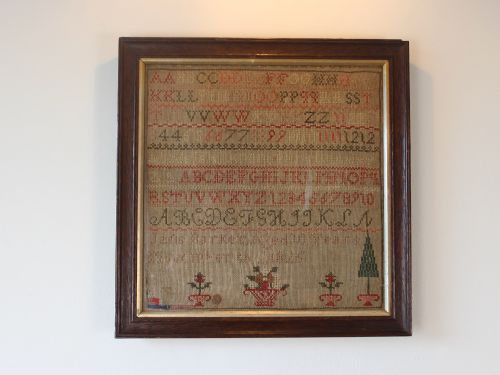
- A piece of needlework demonstrating various stitches and alphabets, often created by young makers to record their proficiency. Dated examples frequently include the maker name and age.
- Crewel Work
- Embroidery executed with wool yarn on a linen or cotton twill ground. This traditional technique produces robust surface designs with a rich tactile quality.
- Gros-Point
- A counted-thread needlepoint stitch worked on canvas, providing a durable and dense textured surface. It appears frequently in nineteenth-century tapestry portraits and pictorial hangings.
Needlework Picture Panel: Frequently Asked Questions
How do I hang a textile panel safely?
Protect the needlework from direct sunlight to prevent silk and wool threads from fading over time. Hang the framed piece in a stable environment away from excess moisture.
Ensure the hanging wire and wall fixings adequately support the weight of the wood frame and glass. Professional framing sealing helps keep dust and atmospheric pollutants away from the historic fabric.
How are different centuries told apart?
Seventeenth-century pieces frequently feature stumpwork or metallic thread, while eighteenth-century examples often present pastoral silk and wool pastoral scenes. Nineteenth-century works commonly include Berlin work, dated alphabet samplers, or animal subjects.
Frame styles and framing materials also offer chronological clues, matching the decorative tastes of the Georgian, Victorian, or Baroque periods.
Were these always framed?
Many textile panels entered frames soon after completion to protect the delicate threads from handling and dust. Some items, such as cushion covers and specific samplers, spent time unmounted or stored before later framing.
Original frames provide strong evidence of the period when the textile was valued and displayed as wall art.
What subjects are most common?
Floral studies, religious narratives, and allegorical figures appear frequently across eighteenth-century and earlier works. Natural history subjects, including birds, dogs, and farm animals, grow more common in nineteenth-century pieces.
Alphabet and numerical samplers record educational milestones for young stitchers, while literary scenes draw from popular stories.