


Needlepoint Upholstered Armchair
A needlepoint upholstered armchair brings tactile textile work and period timber together into a seating form designed for comfort.
Needlepoint Upholstered Armchair
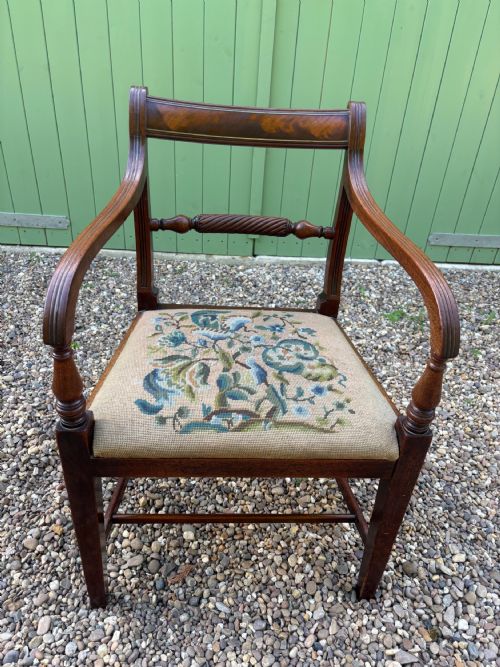
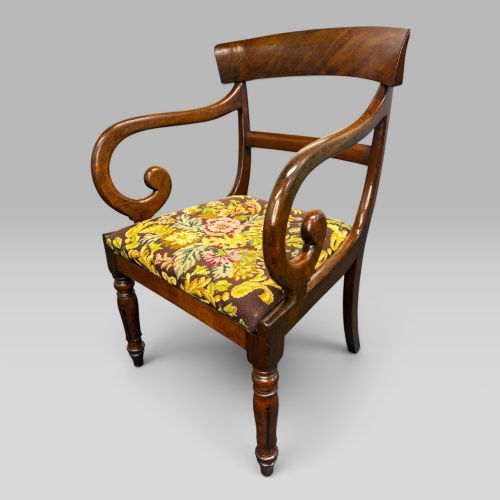
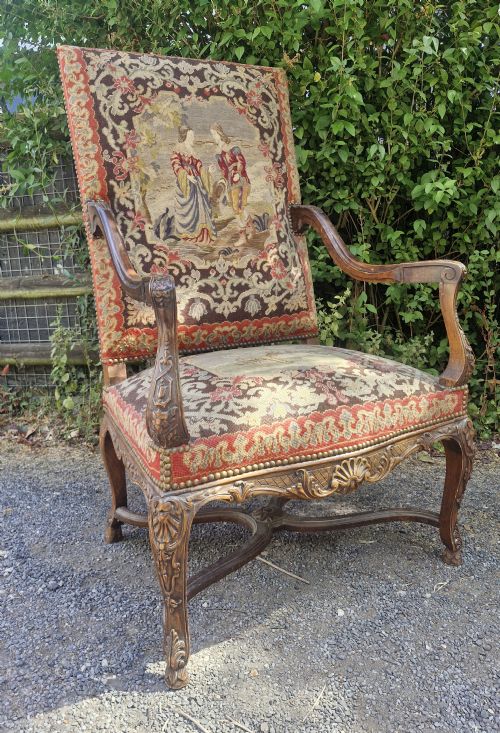
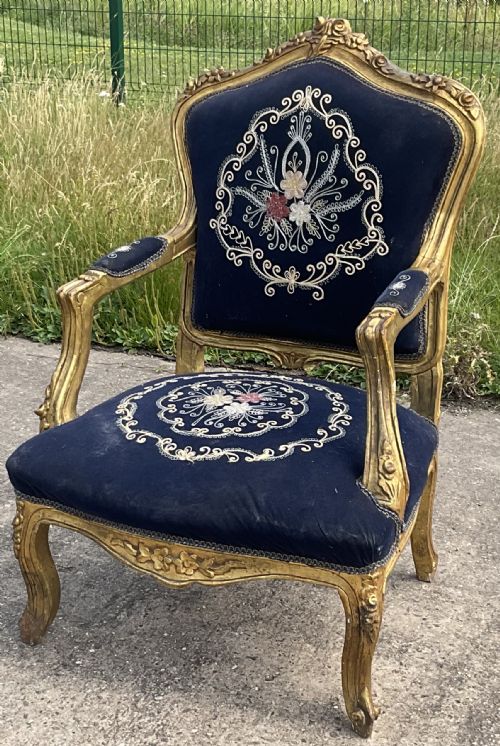
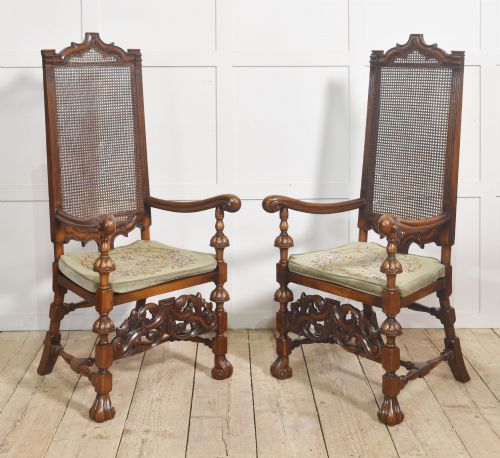
A needlepoint upholstered armchair combines supportive timber framing with hand-worked textile panels, taking forms that span from formal open armchairs and fireside wingbacks down to lower nursing and occasional chairs. The pieces found here cross multiple eras, drawing heavily on nineteenth-century Victorian production alongside eighteenth-century French and English designs.
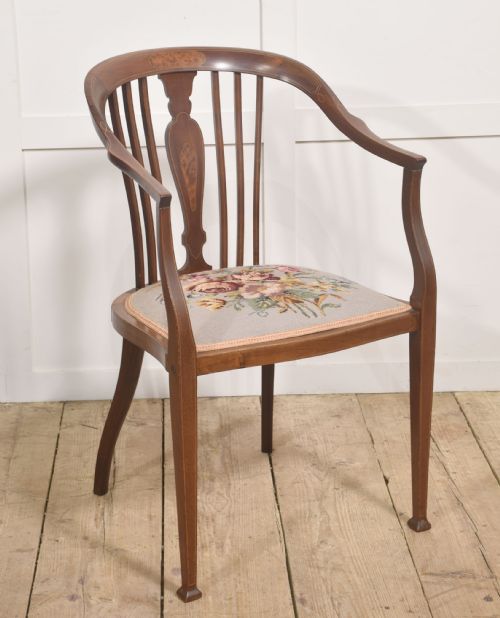
Buyers will frequently encounter nineteenth-century walnut and mahogany examples, alongside revival styles that imitate earlier French and English tastes. These range from substantial library and elbow chairs to smaller bedroom and corner seating.
Materials and Construction
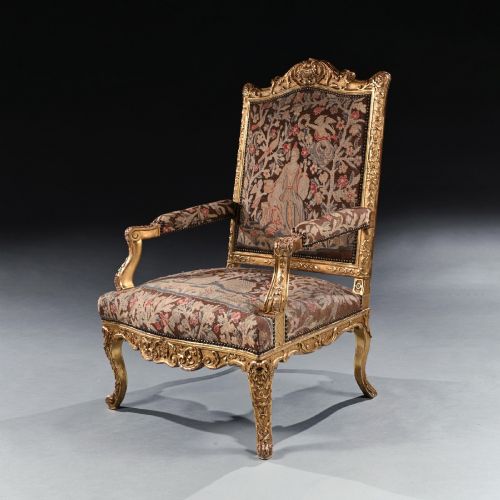
The structural framework relies on traditional hardwoods such as mahogany, walnut, and occasional rosewood, shaped through carving, turning, and joinery. Giltwood and painted finishes appear on continental pieces, while inlay work decorates specific mahogany and satinwood frames.
Upholstery techniques utilise worked tapestry, petit point, and needlework panels fixed over traditional stuffing. Brass accents and exposed timber frames complete the construction of these seated pieces.
Certain diminutive nursery chairs sit so low to the floor they were originally built to keep nannies at hearth level.
Judging Quality
Quality rests upon the crispness of the timber carving and the fineness of the needlepoint stitches. Dense hardwoods and detailed floral or armorial needlework distinguish superior examples from standard production.
Proportion and structural integrity separate fine workshop pieces from ordinary seating. The harmony between the timber frame and the needlework upholstery determines the overall standard.
Holland and Sons·Robert Strahan Dublin·Gillows
The Needlepoint Upholstered Armchair Glossary
- Needlepoint
- A type of canvas work embroidery executed with a yarn in a counted thread stitch. It forms the decorative upholstery panels seen on these chairs.
- Fauteuil
- An open-framed armchair with padded armrests originating in France. These timber frames often feature carved details and exposed wood.
- Petit point
- A fine needlepoint stitch worked on a high-count canvas, allowing for intricate pictorial detail. It denotes higher labour input in upholstery.
- Wingback
- An armchair with high back and side panels designed to shield the occupant from drafts. Early versions often incorporate fireside seating functions.
- Giltwood
- Timber treated with gold leaf or gilt preparation to create a metallic surface. This finish appears frequently on formal revival armchairs.
Needlepoint Upholstered Armchair: Frequently Asked Questions
How do I clean needlepoint upholstery safely?
Surface dust can be removed gently using a soft brush attachment on a vacuum cleaner at low suction. Avoid using liquid cleaners directly on the needlepoint panels.
For stubborn marks, consult a professional textile conservator who specialises in historic tapestries. Moisture can damage both the wool threads and the underlying stuffing.
Are these armchairs suitable for daily sitting?
Most historic armchairs are structurally sound for normal domestic use, provided the timber frame remains stable. Lighter occasional and nursing chairs are built for gentler use than heavy library armchairs.
Consider the age of the internal webbing and padding before placing a chair into high-traffic daily service. Periodic checks by a restorer help maintain structural longevity.
How can I tell a Victorian copy from an eighteenth-century original?
Eighteenth-century chairs often display hand-cut joinery marks, native timber wear patterns, and period-specific framing proportions. Revival pieces from the nineteenth century frequently employ machine assistance and heavier decorative carving.
Examining the underside of the seat frame and the wear on the timber joints usually reveals the true period of manufacture.
What is the difference between tapestry and needlepoint?
Needlepoint is stitched onto an open-weave canvas backing using wool or silk threads to cover the entire ground. Tapestry is traditionally woven on a loom as a single textile fabric before being applied to furniture.
Both terms describe rich decorative surfaces found across these period seating options.