
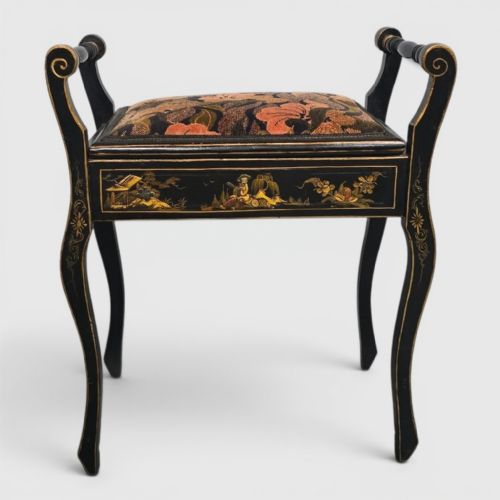
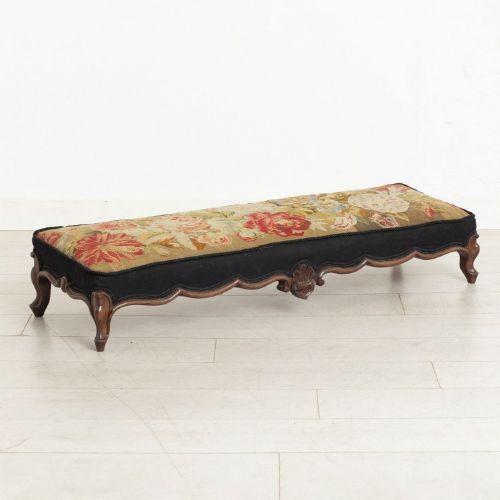


Needlepoint Padded Stool
A needlepoint padded stool brings tactile warmth and period character to any room, offering both decorative presence and practical seating.
Needlepoint Padded Stool
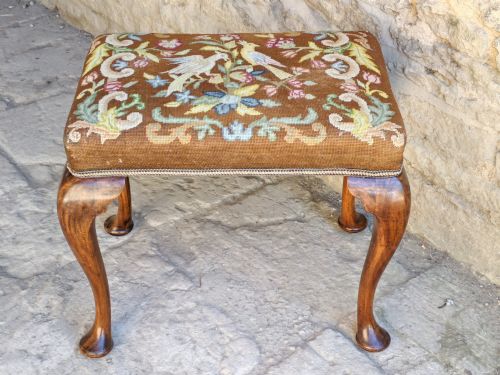
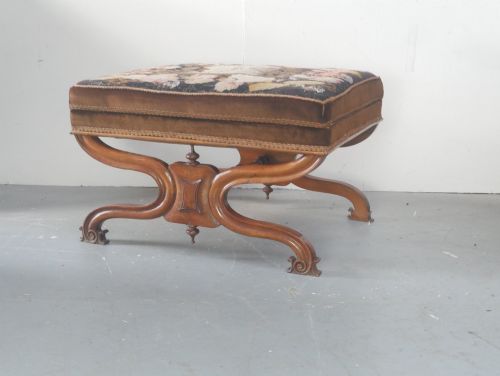
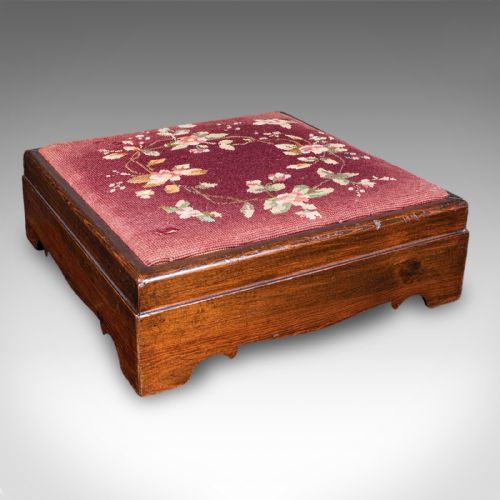
A needlepoint padded stool is a compact furnishing designed for resting feet or sitting, featuring a textile top worked in wool or tapestry over a supportive interior. You will frequently encounter Victorian and Edwardian examples alongside revival pieces from the early twentieth century, spanning forms from low footstools to piano seats and dressing table stools.
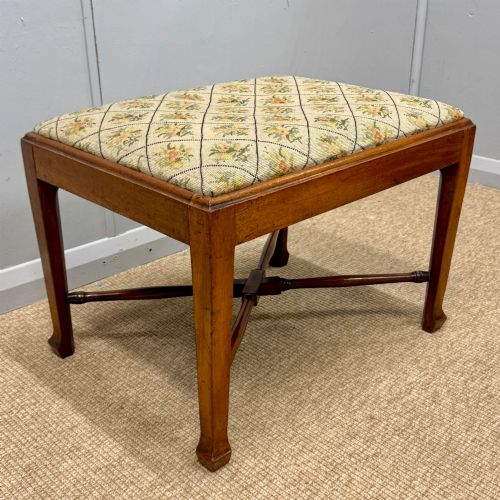
The wooden frames underpinning these pieces showcase diverse historic styles including Queen Anne, Chippendale, and Scottish Baronial interpretations. Walnut and mahogany form the backbone of the timber structures, often displaying turned legs, cross stretchers, or carved cabriole supports beneath the upholstered pad.
How they were made
Makers constructed the structural frames from dense hardwoods like mahogany, walnut, pitch pine, and rosewood, sometimes applying ebonised finishes or elaborate hand-carved details. Joinery techniques varied from simple pegging to intricate frame shaping, depending on whether the piece served a modest fireside role or a grander drawing-room setting.
The top cushioning relied on textile elements including wool, velvet, fabric, and tapestry worked in gros-point or detailed needlework, secured over padding with brass tacks or traditional webbing. Original covers frequently survived alongside the timber frames, preserving the hand-stitched floral, geometric, or trellis patterns executed by historical makers.
Listings feature needlepoint padded stools spanning the Victorian, Edwardian, and Georgian Revival periods, constructed primarily in walnut and mahogany.
What varies in quality
Quality in a needlepoint padded stool rests primarily on the integrity of the timber framing and the execution of the hand-worked upholstery. Pieces featuring robust carved mahogany or figured walnut with firm, well-proportioned cabriole legs sit securely at the higher end of craftsmanship.
The needlepoint itself reveals much about the piece's pedigree through the density of the wool stitching and the complexity of the design, such as floral trellises or Chinoiserie motifs. Integration between the textile top and the wooden chassis defines the overall harmony and lasting durability of the furnishing.
Jas Shoolbred·Whytock and Reid
The Needlepoint Padded Stool Glossary
- Needlepoint
- A type of counted thread embroidery stitched on an open weave canvas foundation. It forms the durable pictorial or geometric covers seen on historic footstools.
- Cabriole leg
- A furniture leg that curves out and then in, mimicking an animal's leg in motion. This form appears frequently on walnut and mahogany stools from the eighteenth and nineteenth centuries.
- Gros-point
- A coarse type of needlepoint worked with wool yarn on canvas. It provides a heavy, hard-wearing texture often found on nineteenth-century ottoman tops.
- Cross stretcher
- Horizontal wooden bracing connecting the legs of a stool for added stability. These structural supports are common on dressing table and piano stools.
- Tapestry
- A thick woven or embroidered textile used for upholstery. It frequently depicts floral or historical scenes on period seats.
Needlepoint Padded Stool: Frequently Asked Questions
How do I date a needlepoint padded stool?
Dating relies on combining the timber species, frame style, and textile characteristics. Earlier pieces from the Georgian era often display simpler structural lines, while Victorian examples introduce heavier carved walnut and ebonised finishes.
Revival pieces from the early twentieth century frequently emulate earlier styles like Queen Anne or Chippendale. Examining the construction methods underneath the upholstery helps confirm the period of manufacture.
Where should I place a footstool at home?
These versatile stools suit placement beside firesides, armchairs, or dressing tables where their compact footprint adds both utility and texture. Low footstools work well in living areas for resting feet, while dressing table stools provide comfortable, portable seating.
Their decorative tapestry or needlepoint tops also allow them to function as ornamental window seats or centre pieces in smaller rooms.
What is the difference between an ottoman and a footstool?
Ottomans generally offer a larger surface area and sometimes interior storage, whereas traditional footstools focus on compact dimensions for supporting feet or low seating. Both variants share padded textile tops worked in wool or tapestry.
Frame styles and timber choices overlap significantly between the two categories across the nineteenth and twentieth centuries.
How do I care for antique needlepoint upholstery?
Preserving historic needlepoint involves protecting the wool fibres from direct sunlight and gentle, regular vacuuming through a mesh screen. Avoiding harsh cleaning chemicals prevents damage to the delicate antique threads.
Keeping the underlying hardwood frame conditioned with appropriate wax maintains the timber's finish without affecting the surrounding fabric.