



Needlepoint Hall Chairs
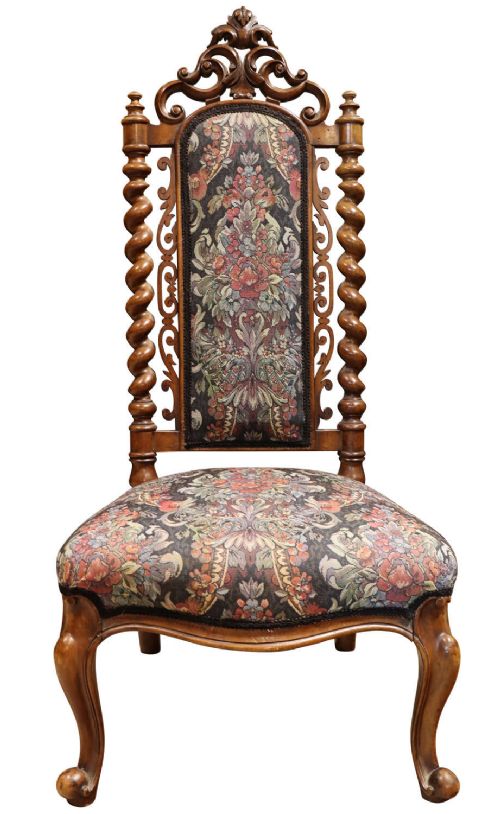
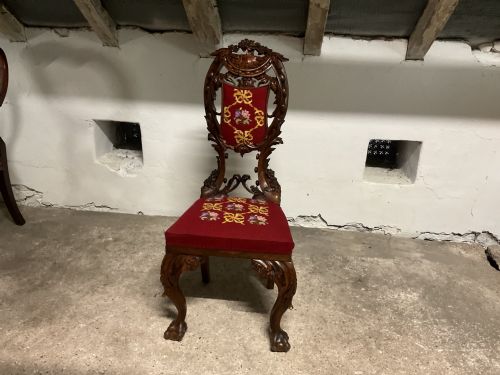
Needlepoint hall chairs are stoutly built seating pieces dressed in tactile needlework that bring historic texture and formal presence to an entrance space.
Needlepoint Hall Chairs
When you search for needlepoint hall chairs, you encounter a selection spanning Georgian, Victorian, and Edwardian periods. These pieces serve primarily as functional seating or decorative accents in corridors and reception areas, incorporating sturdy timbers like mahogany, walnut, and oak.
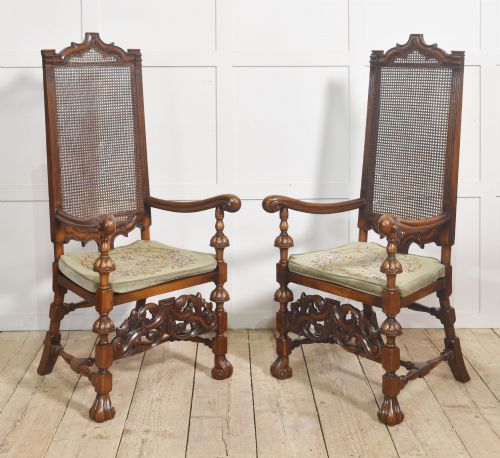
The form adapts across the nineteenth and early twentieth centuries, drawing on revival styles including Victorian Gothic, Queen Anne, William and Mary, and Regency. Side chairs and armchairs dominate the selection, often featuring stitched textile or tapestry seat inserts.
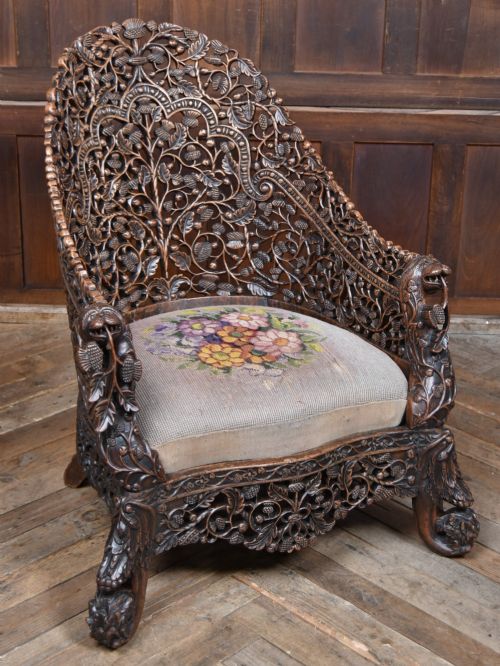
Origin and craftsmanship vary from English workshops to Burmese carved pieces and Scottish George III designs. Walnut and mahogany examples predominate, frequently paired with hand-stitched needlepoint fabric or tapestry upholstery.
Materials and construction methods
Cabinetmakers utilised dense hardwoods such as mahogany, walnut, oak, rosewood, and padouk to form the rigid frames required for daily use. These timbers were carved, ebonised, or stained to achieve the desired aesthetic finish.
Upholstery relies on textile, tapestry fabric, and needlepoint executed in wool or silk threads. Master stitchers worked floral, armorial, or geometric patterns directly onto canvas grounds before securing them to the wooden frames.
Periods represented span from the Georgian era through Victorian Gothic Revival and into Edwardian production.
Judging the quality of the work
Superior examples distinguish themselves through the depth and crispness of the timber carving and the tightness of the joinery. Finer pieces employ dense, well-figured walnut or mahogany with substantial structural integrity rather than lighter secondary woods.
The needlepoint upholstery itself forms a primary indicator of merit. Denser stitch counts, complex pictorial or armorial designs, and well-preserved historical threads separate exceptional specimens from simpler production.
Charles Tozer·Waring & Gillow·Liberty & Co
The Needlepoint Hall Chairs Glossary
- Hall chair
- A rigid wooden seat traditionally placed in an entrance hallway for brief use. These pieces often lack extensive padding to discourage lingering.
- Needlepoint
- A type of counted thread embroidery stitched onto a stiff open weave canvas. It provides a durable and decorative surface for chair seats.
- Padouk
- A heavy tropical hardwood valued for its reddish hue and resistance to decay. It appears in imported nineteenth-century carved furniture.
- Gothic Revival
- An architectural and decorative style popular during the Victorian era. It borrows pointed arches and tracery motifs from medieval buildings.
- Armorial
- A design incorporating a coat of arms or family crest. These motifs indicate commissioned or high-status domestic seating.
Needlepoint Hall Chairs: Frequently Asked Questions
Where should I place a needlepoint hall chair?
These chairs sit well in entranceways, corridors, and landings where their upright profiles and decorative seats command attention without obstructing passage.
They also function effectively as occasional desk chairs or bedroom accents when paired with traditional interior schemes.
How do I care for antique needlepoint upholstery?
Protect the stitched textile surfaces from direct sunlight to prevent the wool or silk threads from fading and becoming brittle over time.
Gentle surface cleaning with a soft brush removes dust without disturbing the historic fibres of the canvas.
How do I distinguish Victorian from Georgian examples?
Georgian chairs generally display restrained carved details and simpler structural lines derived from classical proportions. Victorian versions frequently embrace heavier revival styles with ornate carving and darker finishes.
Examining the underlying timber and the nature of the joinery often reveals the manufacturing period.
Were these chairs used for dining?
While formal hall chairs were designed for entryways and reception rooms, side chair variants frequently served secondary roles around dining tables. Their firm seats suited upright posture during formal meals.
Many surviving pieces retain compact dimensions suited to multi-purpose interior placement.