





Navy Border Wool Rug
A navy border wool rug brings deep indigo grounding and traditional Persian or Caucasian weave patterns into a room.
Navy Border Wool Rug
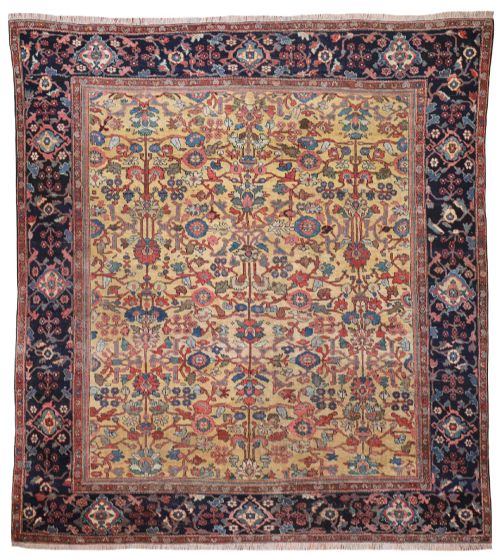
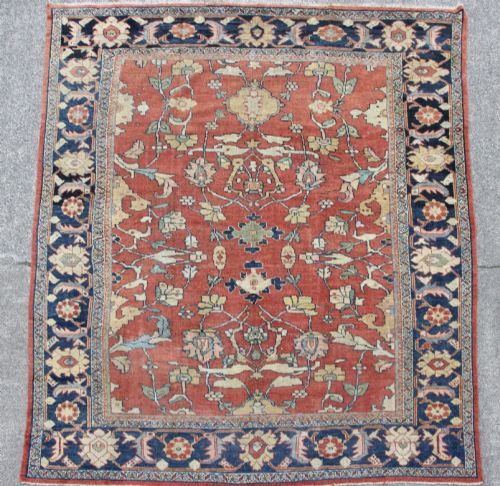
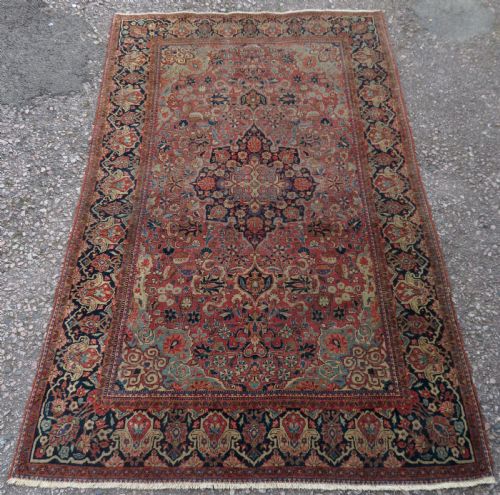
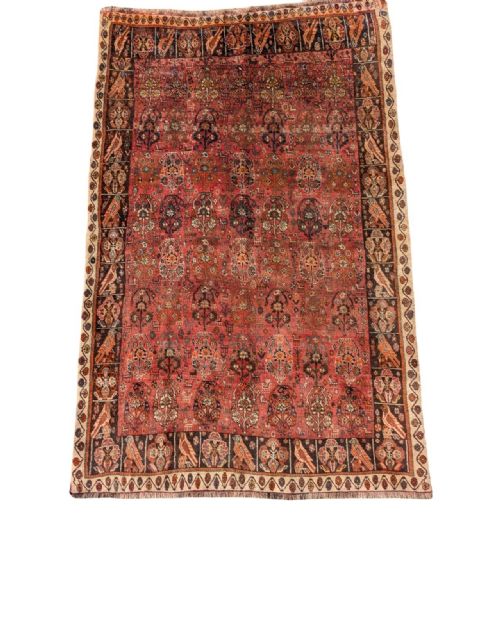
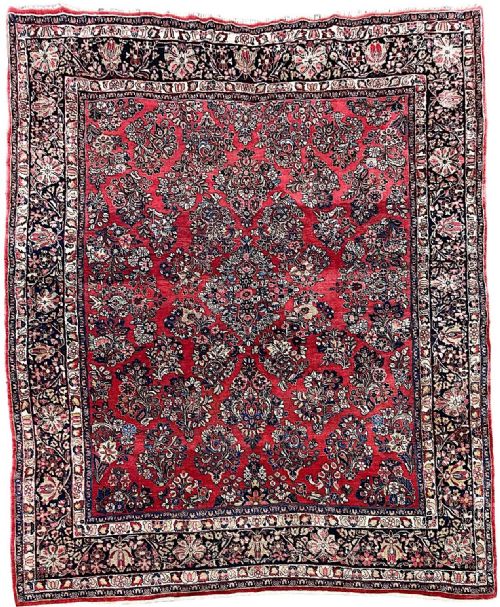
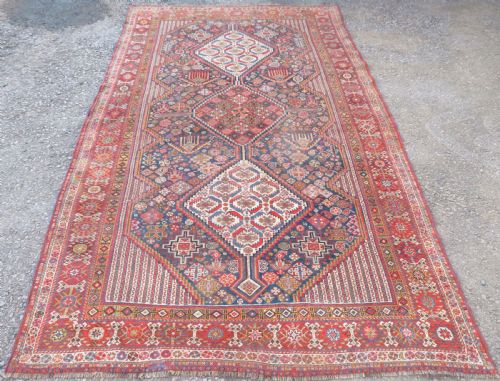
A navy border wool rug encompasses hand-knotted room-size carpets, gallery runners, and smaller area pieces originating primarily from Persian and Caucasian weaving traditions. When searching for a navy border wool rug, buyers encounter nineteenth and early twentieth-century examples featuring tribal motifs, geometric medallions, and large-scale floral designs. The selection spans distinct weaving centres including Heriz, Sarouk, Tabriz, and Ferahan, alongside pieces created by specific tribal groups.
The format ranges from square room-size formats to long runners suited for hallways. Many examples employ dark perimeter frames that anchor the composition, contrasting with terracotta, madder, or neutral fields. These floor coverings bridge centuries of regional weaving history, representing both nomadic production and established workshop output from the eighteen-fifties through the nineteen-thirties.
Materials and construction methods
Construction relies primarily on natural sheep wool combined with cotton foundations for warp and weft threads. Many regional pieces utilise hand-spun wool, which absorbs natural dye stuffs unevenly to create subtleabrash variations across the surface. The knotting technique determines density and pile height, varying from coarse tribal structures to fine city workshop executions.
Weavers employed traditional upright looms, tying symmetrical or asymmetrical knots by hand before clipping the pile to a uniform level. Natural dyes derived from plants, roots, and minerals provide the deep indigo tones found in the characteristic borders, alongside madder red and earthy secondary hues.
Navy Border Wool Rug Retail Price Guide 2026
Typical asking prices for navy border wool rug among the pieces listed under this phrase on Sellingantiques today, from the lower quarter to the upper quarter. They describe what is for sale here now, not the wider market.
Factors influencing quality and distinction
Quality separates through the integrity of the wool, the precision and complexity of the regional design, and the depth of the dye palette. Early workshop pieces from centres like Tabriz or Heriz demonstrate superior knot density and structural framing compared to simpler utilitarian weaves.
The handling of the wool pile and the preservation of original selvedges and end finishes determine an example's surviving condition. Subtle variations in hand-spun yarn and the richness of the indigo border distinguish standard regional output from exceptional collector pieces.
The Navy Border Wool Rug Glossary
- Abrash
- A natural variation of colour within the same dye lot of wool, caused by differences in dyeing batches or yarn spinning. This tonal shift creates subtle horizontal bands across the rug surface.
- Warp
- The vertical foundation threads stretched lengthwise on the loom before knotting begins. Cotton or wool threads form this structural grid.
- Weft
- The horizontal threads passed alternately over and under the warp threads after each row of knots is completed. It secures the knots firmly in place.
- Selvedge
- The reinforced outer edge binding running along the long sides of a rug. It protects the structure from fraying.
- Kelleh
- A large rectangular format rug traditionally longer than it is wide, common in Persian and Caucasian weaving traditions.
Navy Border Wool Rug: Frequently Asked Questions
How do I identify an antique Persian rug?
Antique Persian pieces display characteristic regional motifs, hand-spun wool foundations, and natural dye palettes that mellow over time. Examining the knot structure on the reverse side reveals the density and origin of the weaving centre.
Older examples from the nineteenth century often exhibit irregular abrash shading and vegetable-dyed wools that synthetic dyes cannot replicate.
What is a Heriz carpet?
Heriz carpets originate from the Iranian Azerbaijan region and are known for durable cotton foundations and sturdy wool piles. They frequently feature bold geometric medallions and strong architectural corner brackets.
These large formats were built to withstand heavy domestic use while maintaining distinct tribal and village design influences.
How should I care for a wool rug?
Regular gentle vacuuming without a beater bar prevents dust accumulation in the wool pile. Professional cleaning by specialists in antique textiles preserves the natural lanolin and dye stability.
Avoid placing antique wool pieces in direct sunlight to protect the deep indigo and madder tones from fading.
What is the difference between a rug and a runner?
Rugs are proportioned as square or rectangular formats designed for open floor areas or under furniture groupings. Runners provide an elongated, narrow format specifically scaled for corridors, hallways, and staircases.
Both formats utilise identical wool knotting techniques but serve different architectural functions within a room.