
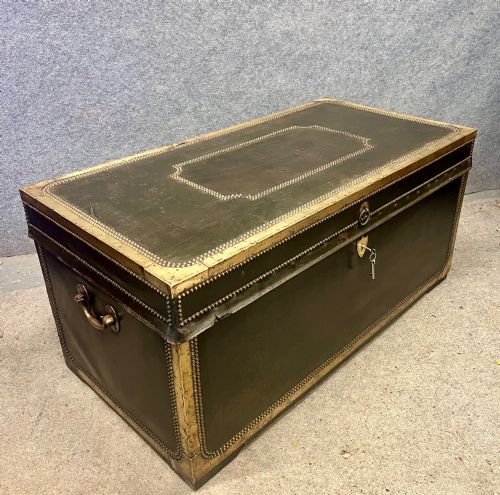
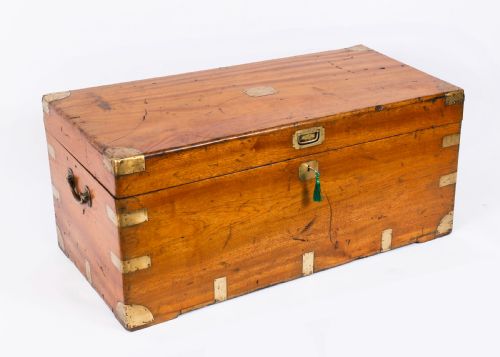
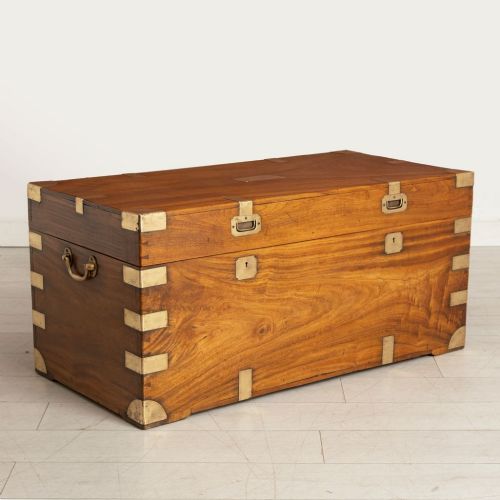
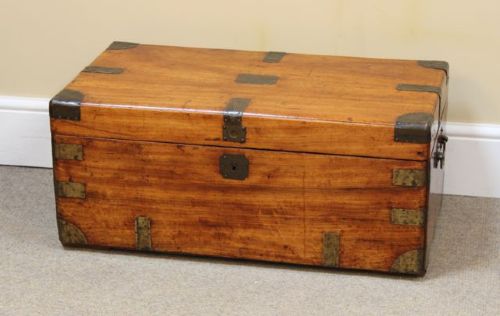


Naval Trunk Brass
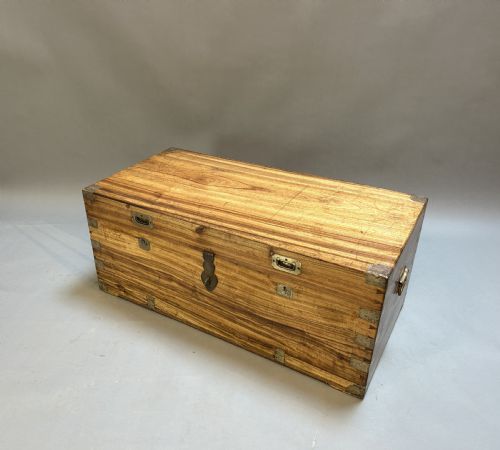
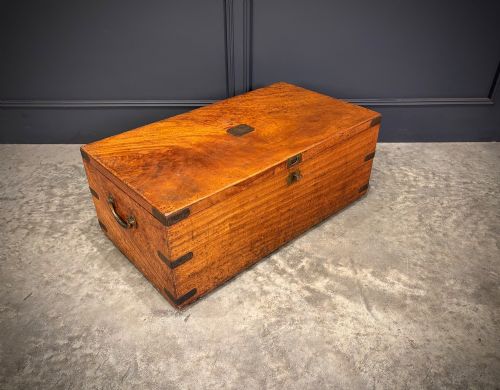
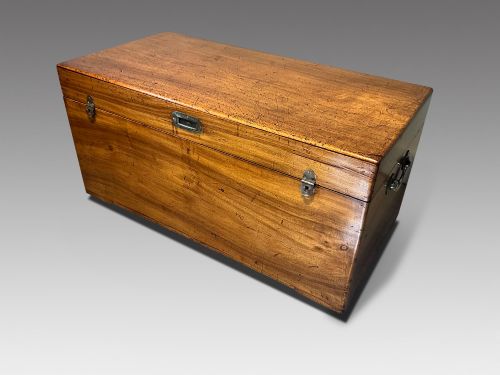
Naval trunk brass pieces are durable travel chests built for officers, bringing stout timber and metal reinforcement into the home.
Naval Trunk Brass
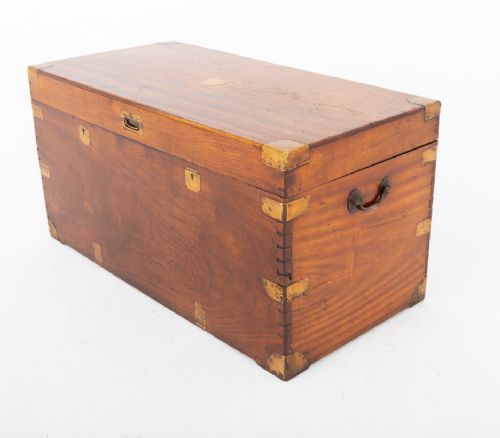
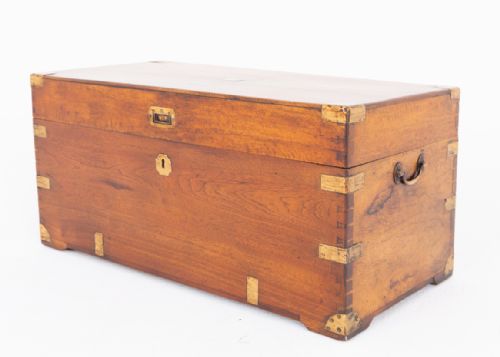
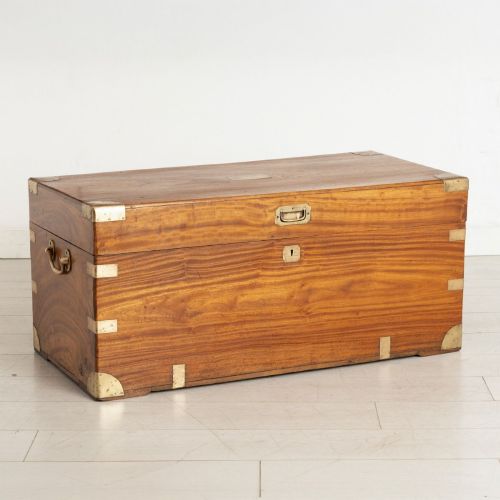
When you examine naval trunk brass items, you encounter sturdy chests designed for officers on the move during the nineteenth century. These pieces emerge in styles such as Victorian campaign, military campaign, and China trade variants.
The most common forms on this page include camphor wood chests and trunks featuring hinged lift-up lids, often fitted with iron or brass hardware. Solid camphorwood and teak serve as the primary timbers, shaped into practical storage units for travel and domestic use.
Construction and materials
Cabinet makers utilised dense woods like camphorwood, teak, and mahogany to withstand harsh sea voyages and tropical climates. These timbers resist pests and dampness, making them ideal for long-distance transport.
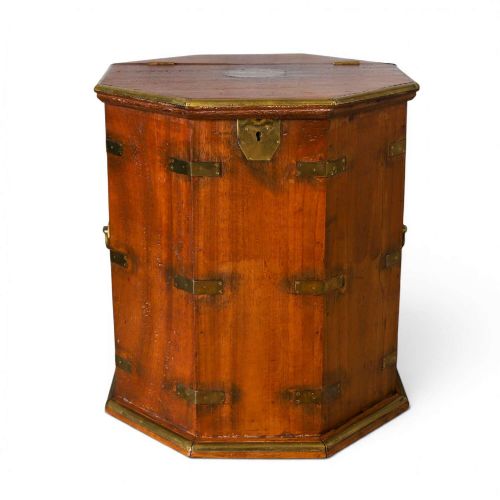
Makers reinforced the joints and corners with brass fittings, straps, and corner brackets to endure rough handling. Iron components also appear alongside brass hardware, adding structural integrity to heavy chests and boxes.
Opening an antique camphor chest releases a lingering scent that has survived overseas voyages and Victorian parlours alike.
Quality distinctions
The standard of a piece rests largely on the grain of the timber and the integrity of the original hardware. Beautifully grained camphorwood paired with substantial brass fittings marks the higher tier of these campaign chests.
Proportion and execution define the remaining differences across the range. Petit trunks and fitted interiors require greater joinery skill than simple blanket boxes, showing the original purpose of the chest.
The Naval Trunk Brass Glossary
- Campaign trunk
- A portable chest designed for military officers on active service abroad. These pieces feature recessed handles and reinforced corners to withstand frequent travel.
- Camphor wood
- An aromatic timber native to Asia, prized for its distinct scent and natural insect-repellent properties. It forms the primary material for nineteenth-century military chests.
- Brass bound
- A method of reinforcing box edges and corners with metal strips. This technique protects the wood from impact during transport.
- China Trade
- Goods manufactured in East Asia specifically for export to Western markets during the eighteenth and nineteenth centuries. These items often display local craftsmanship adapted to European tastes.
- Coffer
- A large box or chest used for storing valuables, linens, or travel gear. Lift-up lids provide top access to the main compartment.
Naval Trunk Brass: Frequently Asked Questions
What is a naval trunk brass?
A naval trunk brass is a sturdy wooden chest reinforced with metal fittings, built for transport by officers at sea or on land. These nineteenth-century pieces combined utility with durable construction.
Most examples utilise camphorwood or teak, designed to protect belongings from moisture and pests during long journeys.
How were these chests used?
Officers utilised these trunks to pack uniforms, books, and personal valuables while on military campaigns or merchant voyages. Their robust build allowed them to be loaded onto ships and carriages repeatedly.
Inside the home today, they function as practical coffee tables, blanket boxes, or general storage chests.
How do I date a campaign trunk?
Dating relies on timber selection, construction methods, and the style of the brass hardware. Nineteenth-century examples often exhibit hand-dovetailed joints and heavy brass strapping.
Victorian and Regency pieces display specific cabinet-making traits that help place them within the 1800s timeframe.
How do I care for camphor wood?
Camphor wood requires minimal maintenance due to its natural oils and dense grain. Keep the timber away from direct heat sources to prevent drying and splitting.
Applying a traditional wax polish occasionally will help maintain the lustre of the wood and protect the brass fittings.