




Nautical Folk Art Box
A nautical folk art box brings the rough magic of the nineteenth-century sea into a room through carved bone, painted pine, and layered canvas.
Nautical Folk Art Box
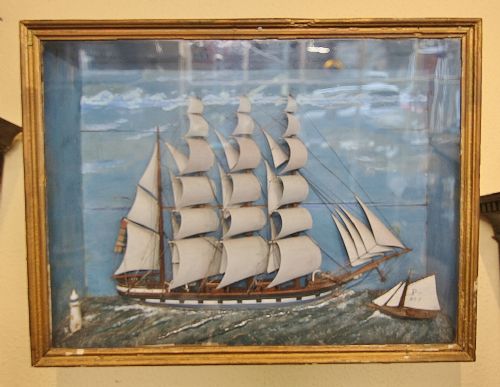
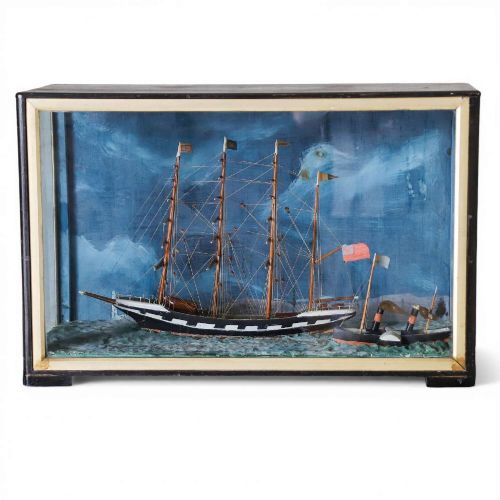
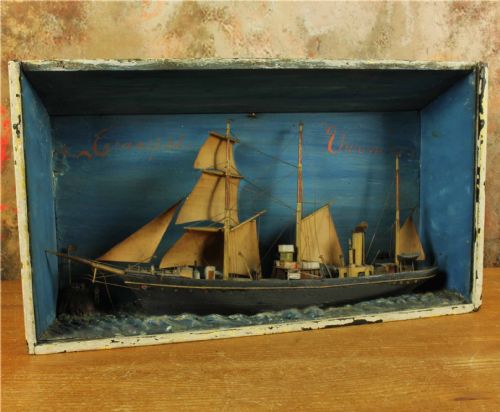
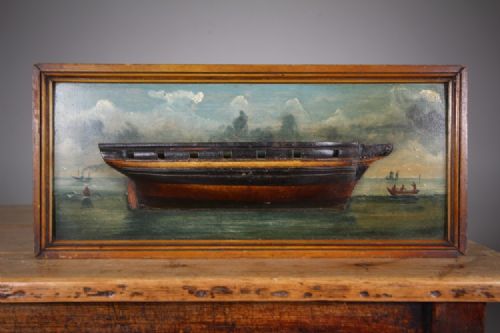
You will most frequently encounter nineteenth-century ship dioramas housed in glazed wooden cases, alongside scratch-built models and painted pine seaman's chests. The selection also includes shell work, straw work, and educational toy boxes bearing naval motifs from the Victorian era.
Originating across coastal English counties and French ports, these works reflect both professional maritime trade and domestic folk traditions. The common thread is a direct hand in materials like wood, glass, and bone, shaped far from formal academic art schools.
Materials and construction methods
Makers relied on accessible local materials, constructing primary structures from pine and hardwood while utilising glass panels to protect delicate interior scenes. Interiors combine painted canvas backdrops, carved wooden hulls, and intricate rigging fashioned from thread, wire, and bone.
Surface decoration frequently involves oil paint, straw marquetry, and applied shell work to build texture and coastal detail within the confines of a shadow box. Scratch-built components demonstrate ingenious improvisation, turning simple domestic scraps into complex miniature vessels.
Nautical Folk Art Box Retail Price Guide 2026
Typical asking prices for nautical folk art box among the pieces listed under this phrase on Sellingantiques today, from the lower quarter to the upper quarter. They describe what is for sale here now, not the wider market.
Listings feature items dated from the 1860s through the 1930s, utilising wood, paint, glass, plaster, canvas, pine, fabric, and bone.
Distinguishing quality in maritime pieces
Quality rests in the precision of the miniature rigging, the depth of the painted seascapes, and the structural integrity of the housing box. Superior examples demonstrate accurate vessel proportions and harmonious spatial arrangement within tight shadow box frames.
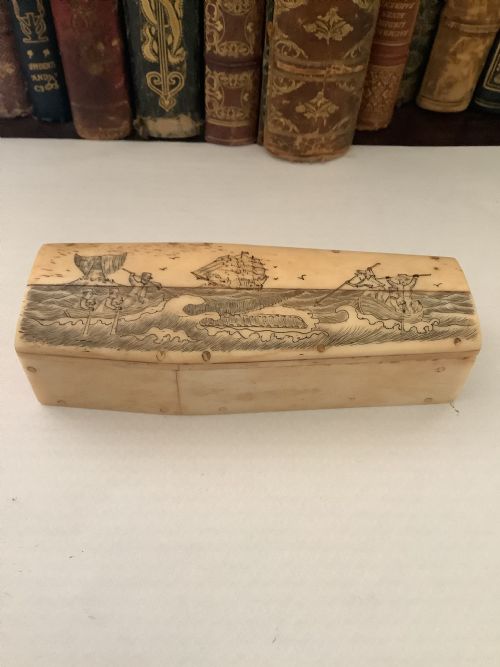
The sophistication of auxiliary decoration, such as straw work or carved bone elements, elevates a utilitarian box into a compelling sculptural object. Pieces retaining their original painted surfaces and unclouded display glass hold greater visual presence.
The Nautical Folk Art Box Glossary
- Shadow box
- A deep, glass-fronted frame designed to hold three-dimensional displays protected from dust and damage. These enclosures allow complex multi-layered dioramas of ships at sea to be hung on a wall.
- Memento mori
- An artistic reminder of the inevitability of death, frequently rendered in carved bone during the nineteenth century. These items served as poignant keepsakes for sailors facing long voyages.
- Scratch-built
- An object constructed entirely from raw materials and found components rather than from a pre-manufactured kit. In maritime folk art, this denotes genuine hand-tooled ingenuity.
- Straw work
- A decorative technique utilising split straw flattened and pasted onto surfaces to create geometric or pictorial designs. This painstaking method creates a shimmering marquetry effect.
- Diorama
- A three-dimensional scene depicting historical, maritime, or fictional events within a miniature setting. Coastal examples use painted backdrops and carved models to simulate movement on the water.
Nautical Folk Art Box: Frequently Asked Questions
How do I hang a heavy maritime diorama box?
Most heavy shadow boxes and dioramas require secure wall anchors rated for the combined weight of the wood, glass, and internal models. Ensure the weight rests on sturdy picture wire attached to solid brass D-rings screwed into the main frame.
Avoid hanging these pieces in areas with direct sunlight or high humidity, as fluctuations can warp the wood and damage fragile painted canvas backdrops or glued straw work.
What is the difference between a shadow box and a seaman's chest?
A shadow box is primarily a display object enclosed in glass, designed to present a miniature ship model or coastal scene on a wall. These pieces focus on visual narrative rather than storage.
A seaman's chest is a utilitarian storage trunk built out of painted pine to travel on ships, often featuring maritime painting or inscriptions like the ones found on nineteenth-century examples.
Can I date a piece without a visible maker's mark?
Dating relies on observing construction techniques, materials, and stylistic cues such as Victorian framing methods, paint formulations, and the specific rig of the depicted sailing vessels. Nineteenth-century pine boxes often show distinct hand-planed joinery and iron hardware characteristic of the period.
Comparing the vessel types, such as four-masted sailing ships or steam barges, against known maritime history helps narrow down the era of construction.