


Nautical Art Print
These nautical art print pieces bring maritime history into a room, offering a tangible connection to nineteenth and early twentieth-century shipping.
Nautical Art Print
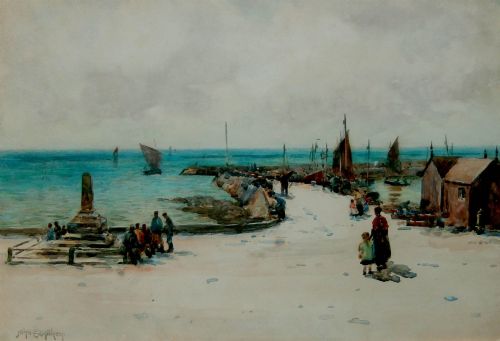
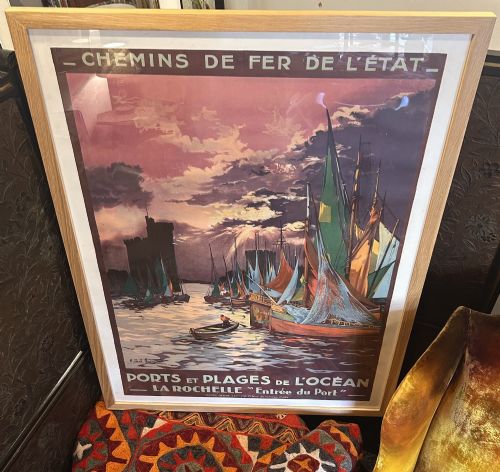
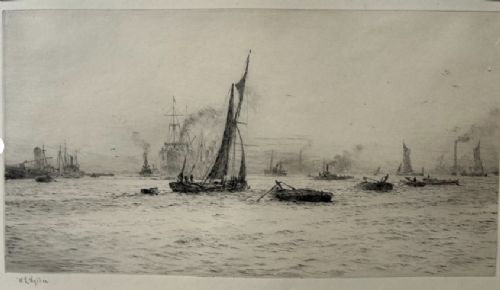
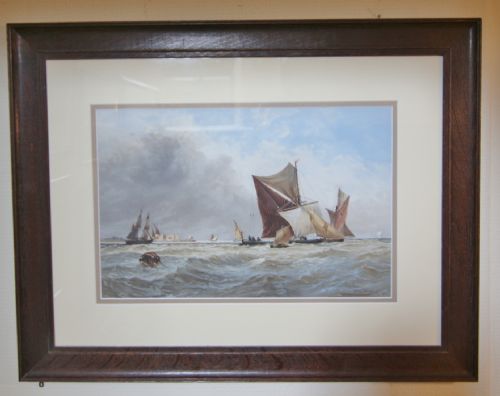
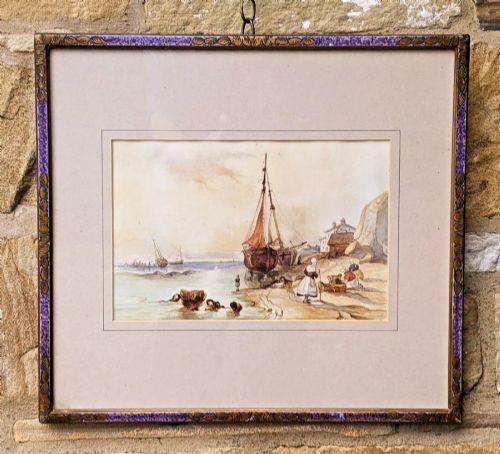
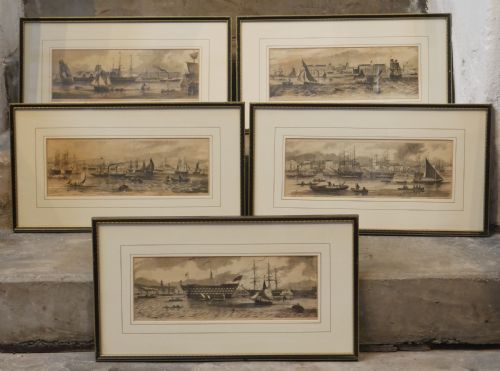
A nautical art print encompasses a wide range of maritime depictions, from detailed nineteenth-century engravings and aquatints to original watercolours and early photographs. Buyers searching for a nautical art print encounter historical views of naval vessels, bustling fishing harbours, and coastal scenes spanning the Victorian era through the mid-twentieth century.
What varies in quality
The distinction between standard works and exceptional pieces lies in the precision of the draughtsmanship and the clarity of the print impression. Stronger examples display a confident command of maritime architecture and atmospheric conditions, whether executed in delicate watercolour or sharp etched lines.
Condition and originality also dictate the standing of a piece, particularly the preservation of the paper support and the retention of period frames that complement the age of the artwork.
Sailors occasionally kept photographic portraits aboard, capturing life at sea right down to the captain's steadfast gaze.
John E. Aitken·William Lionel Wyllie·TB Hardy·Frank Wood·WF Mitchell
The Nautical Art Print Glossary
- Aquatint
- A intaglio printmaking technique that produces tones resembling watercolours by using acid to etch resin-covered copper plates. This method allowed printmakers to achieve subtle tonal variations across sea and sky.
- Etching
- A process where lines are incised into a metal plate through acid biting before ink is applied and pressed onto paper. It produces fine, crisp lines characteristic of detailed ship rigging.
- Lithography
- A planographic printing method based on the repulsion of oil and water, widely used for commercial maritime prints and ship portraits in the nineteenth century.
- Giltwood
- Wood that has been coated with a thin layer of gold leaf or gilt powder, commonly found on the ornate frames enclosing Victorian marine paintings and prints.
- Engraving
- A technique involving the direct cutting of lines into a hard plate with a burin, yielding precise and enduring geometric marks.
Nautical Art Print: Frequently Asked Questions
How do I date an old marine print?
Dating relies on examining the paper type, printing technique, and stylistic clues within the subject matter, such as the rigging style of depicted vessels or naval uniforms.
Secondary evidence like framemakers' labels or inscriptions on the reverse often provide additional chronological markers.
Are these prints originals or reproductions?
The selection includes original period works such as hand-pulled etchings, aquatints, and unique watercolours produced during the nineteenth and early twentieth centuries.
Modern mass reproductions do not appear in this historic inventory.
How should I frame and hang antique paper art?
Protect antique paper by using acid-free mounts and conservation-grade glass to filter harmful ultraviolet light that causes fading.
Hang the pieces away from direct sunlight and damp environments to preserve the integrity of the paper and any underlying watercolour pigments.
What subjects are most common in maritime prints?
Common subjects include royal yachts, naval reviews at Spithead, commercial sailing barques, and quiet coastal harbours with beached fishing boats.
These depictions reflect Britain's historical reliance on the sea for trade, naval defence, and coastal livelihood.