


Natural Wood Kitchen Table
A natural wood kitchen table brings warmth and practicality to a room, offering a sturdy surface built for daily life.
Natural Wood Kitchen Table
A natural wood kitchen table forms the working heart of a home, designed for daily culinary prep and family meals. Buyers seeking a natural wood kitchen table encounter dining tables, work tables, butchers blocks and benches spanning the eighteenth, nineteenth and early twentieth centuries.
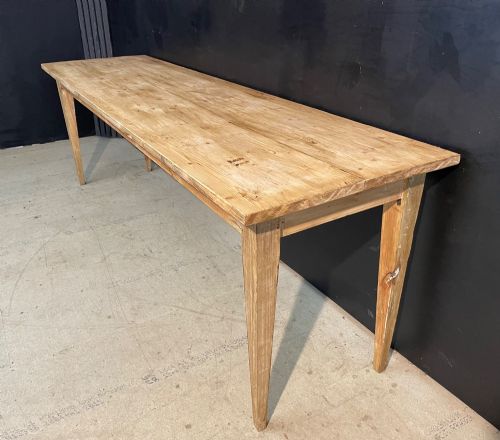
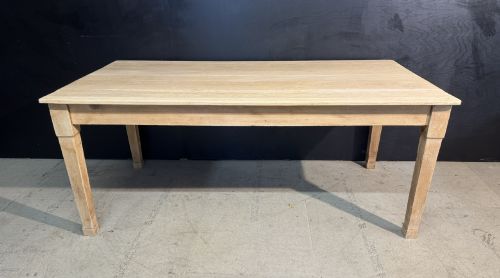
The pieces appearing here lean heavily into rustic and provincial traditions, hailing from English, French, Welsh and Swedish workshops. Pine, oak and elm dominate the selection, often taking the form of robust farmhouse tables with scrubbed or bleached finishes.
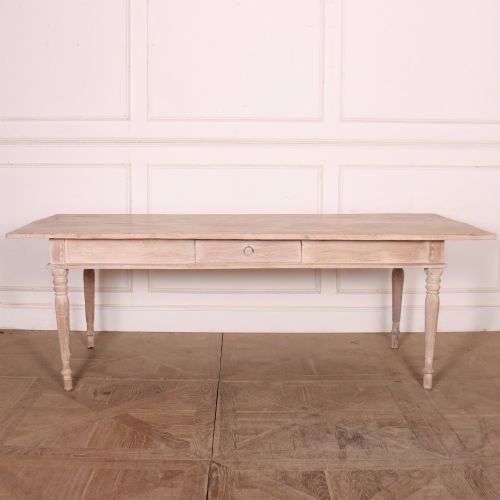
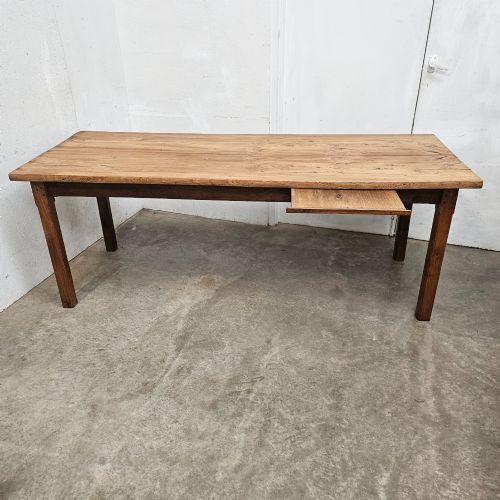
Makers ranged from local carpenters to specialist cabinet makers, utilising indigenous timbers to build heavy, utilitarian furniture. Many examples retain functional details such as single drawers or sliding bread boards.
Materials and Construction
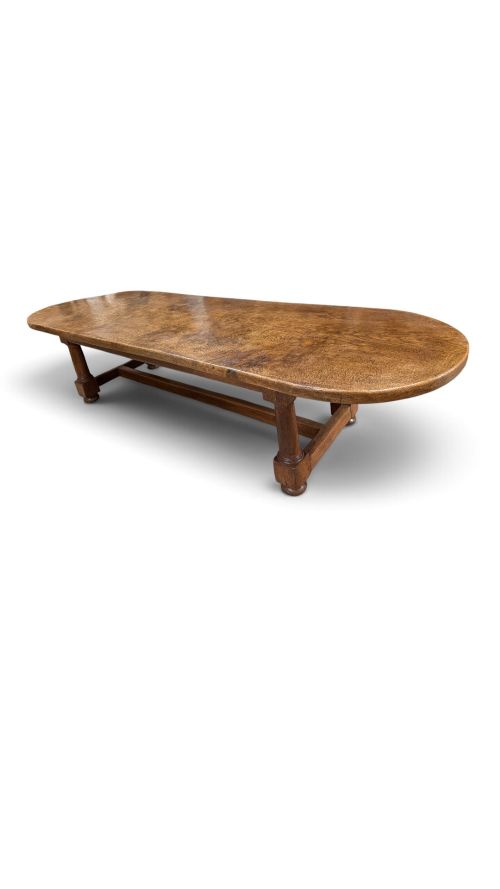
Construction relies upon solid timbers including pine, oak, elm, ash, beech, sycamore and cherrywood. Heavy single-plank and two-board table tops demonstrate the availability of mature trees during the eighteenth and nineteenth centuries.
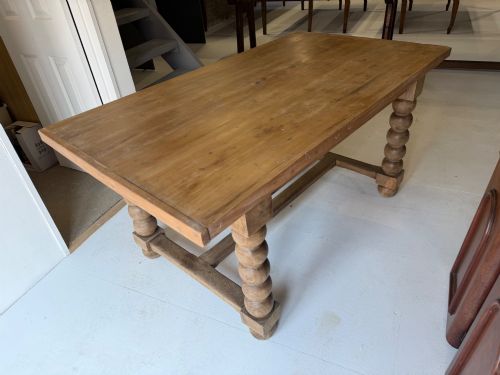
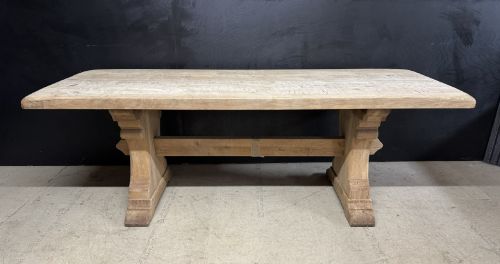
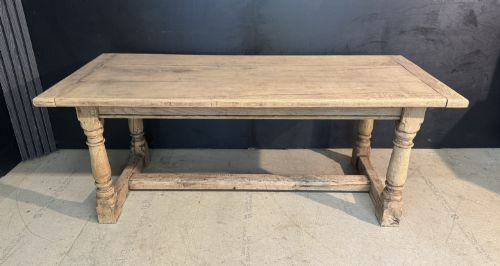
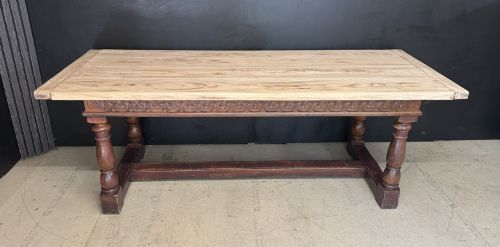
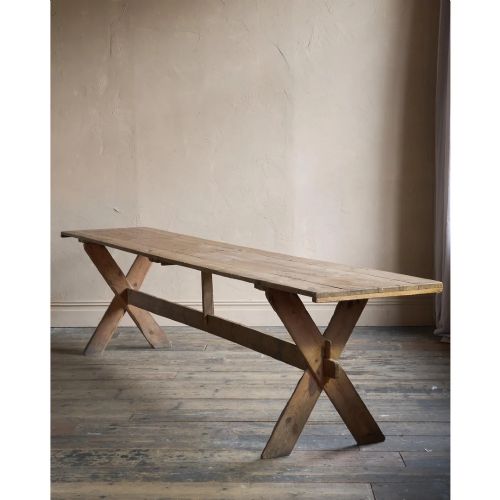
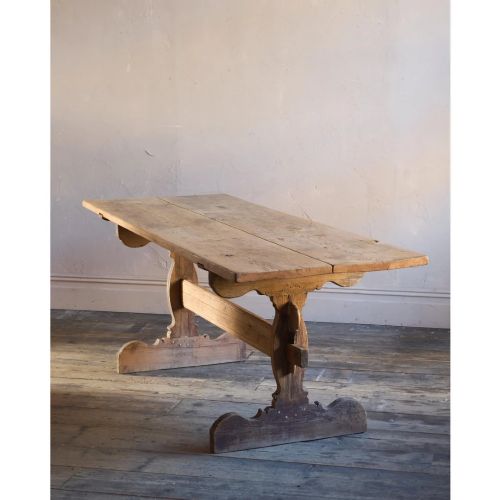
Joinery techniques prioritize durability, employing trestle frames, bobbin legs, cabriole legs and X-frames to support heavy wooden surfaces. Metal mounts appear on specific functional items like butchers blocks alongside traditional wooden pegs and mortise joints.
Listings feature timbers including pine, oak, elm, ash, beech, sycamore and cherrywood across periods spanning the eighteenth to the twentieth centuries.
Quality and Character
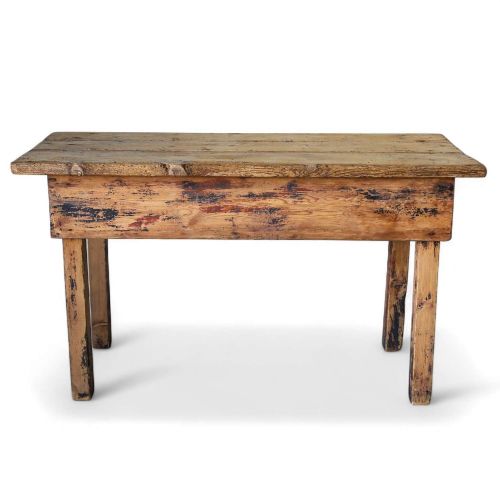
Quality rests in the integrity of the timber and the honesty of the construction rather than pristine surfaces. Tables featuring thick single planks or mature scrubbed sycamore and bleached oak stand apart from simpler utility pieces.
Proportion and regional style dictate distinction, from Swedish trestle tables to French provincial designs. The depth of patination accumulated through generations of daily use defines the visual merit of each piece.
Hennes France
The Natural Wood Kitchen Table Glossary
- Scrub top
- A wooden table top that has been repeatedly scrubbed clean, resulting in a pale, weathered surface. This finish is typical of Victorian and earlier kitchen tables.
- Bleached oak
- Oak timber treated to achieve a lighter, softer tone. This finish appears frequently on early twentieth-century French farmhouse tables.
- Trestle table
- A table supported by two or more vertical frames connected by a horizontal beam. This design provides maximum legroom beneath the top.
- Butchers block
- A heavy, thick-topped wooden table designed for meat preparation. These pieces often incorporate robust end-grain timber and specialised mountings.
- Bread board
- A sliding wooden board integrated beneath the table top for food preparation. It extends the working surface when needed.
Natural Wood Kitchen Table: Frequently Asked Questions
How do I clean a natural wood table?
Use a damp cloth with mild soap to wipe down the surface after meals. Avoid harsh chemicals that strip the natural oils and patination from the timber.
Dry the wood thoroughly immediately after cleaning to prevent moisture damage. Periodic application of suitable wax or oil helps protect older pine and oak surfaces.
Can I use a farmhouse table daily?
These tables were originally built for heavy daily use in kitchens and dairies. Their solid construction in oak, pine and elm handles normal family life with ease.
Using placemats and coasters protects the historic timber from excessive heat and moisture rings. Embracing minor marks preserves the authentic character of the piece.
What is a scrub top table?
A scrub top refers to a wooden table top cleaned repeatedly with water and scrubbing brushes over decades. This process lightens the timber and creates a distinctive tactile texture.
Victorian pine kitchen tables frequently feature this characteristic pale surface. It reflects the practical hygiene methods of nineteenth-century households.
How do I identify French provincial styles?
French provincial tables often utilise fruitwoods or bleached oak with subtle decorative carving. Cabriole legs and integrated drawers mark distinct regional workshop traditions.
These pieces balance domestic utility with refined craftsmanship suited to country homes. They contrast with the simpler lines found in traditional English vernacular furniture.