




Natural Sapphire Cluster Ring
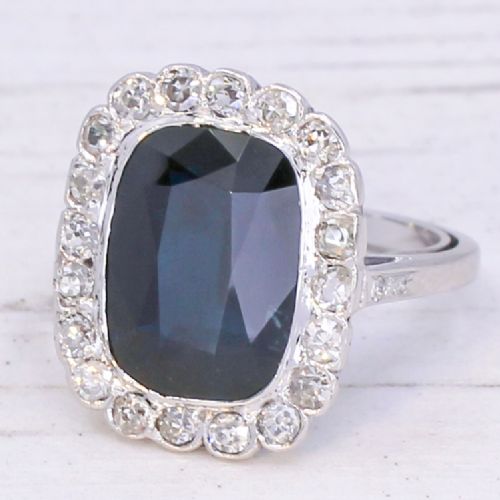
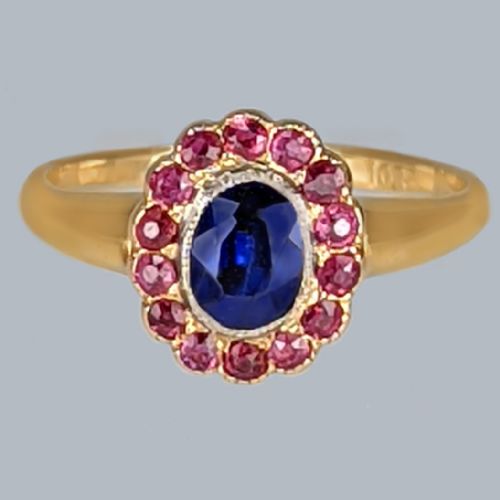
A natural sapphire cluster ring centres a rich blue or pink stone within a border of diamonds, offering striking contrast and enduring style.
Natural Sapphire Cluster Ring
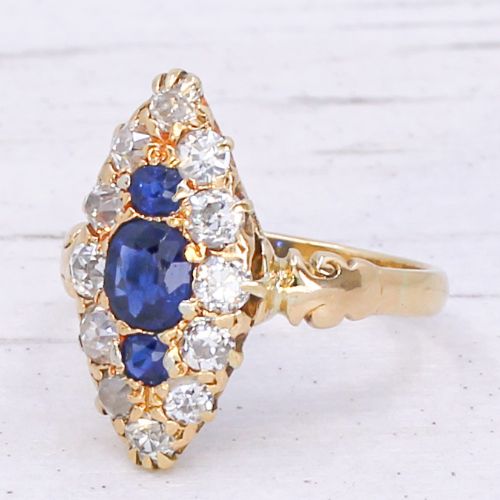
A natural sapphire cluster ring groups smaller diamonds around a central sapphire, creating a bold face upon the hand. These pieces appear most frequently from the Edwardian, Art Deco, and Mid-Century periods, taking forms from delicate halos to large cocktail rings.
The central stones range from deep blue Burmese and Ceylon sapphires to vibrant pink varieties. Surrounding diamond cuts span old cuts, rose cuts, and brilliant cuts depending on the era of manufacture.
Makers set these stones into platinum, yellow gold, or 18ct white gold mountings. The resulting ring functions as both a historic jewel and a practical piece for regular wear.
How They Were Made
Goldsmiths constructed these rings using platinum, yellow gold, and 18ct white gold to securely hold the central sapphire and surrounding diamonds. Platinum settings during the Art Deco period allowed for intricate, fine metalwork around stone clusters.
Gemstones were shaped into traditional faceted cuts or smooth cabochons. Diamond surrounds utilised old cuts, rose cuts, or brilliant cuts to frame the main sapphire.
Listings feature yellow gold, white gold, and platinum metals paired with pink and blue sapphires.
What Varies in Quality
The origin and thermal treatment of the central sapphire dictate much of the piece's distinction, with unheated stones from sources like Burma or Ceylon commanding particular attention. The depth of colour and clarity within the sapphire shape the visual impact of the cluster.
The harmony between the central stone and the surrounding diamonds determines the overall balance of the ring. Heavier platinum or gold mountings with intact period hallmarks indicate careful historic construction.
F & F Felger
The Natural Sapphire Cluster Ring Glossary
- Cluster ring
- A ring design featuring a central gemstone encircled by a group of smaller stones, typically diamonds. This layout maximises the visual presence of the jewellery upon the hand.
- Cabochon
- A gemstone cut with a smooth, rounded, convex top rather than faceted surfaces. This style is often utilised for sapphires to highlight internal colour and phenomena.
- Old cut
- An early form of diamond cutting with a small table, high crown, and large culet. These cuts characterise pieces from the Victorian and Edwardian eras.
- Rose cut
- A diamond cut featuring a flat base and a domed crown faceted with triangles. Such cuts appear frequently in antique and mid-century cluster settings.
- Unheated sapphire
- A natural sapphire that has undergone no thermal enhancement to improve colour or clarity. Certification often accompanies these scarce stones.
Natural Sapphire Cluster Ring: Frequently Asked Questions
What periods do these rings come from?
The pieces span several decades, encompassing Victorian, Edwardian, Art Deco, Retro, and Mid-Century designs. Each era brings distinct metal choices and diamond cuts to the cluster format.
Art Deco examples lean towards geometric platinum settings, while Victorian and Edwardian pieces frequently utilise yellow gold and old cut diamonds.
Are the sapphires treated?
Many sapphires remain in their natural state without heat treatment, while others possess standard treatments. Gemological reports often accompany unheated stones to confirm their origin and status.
Ceylon and Burma are common origins recorded for these natural gemstones across the historical periods.
Can I wear one every day?
Sapphirs rate high on the Mohs hardness scale, making them durable enough for daily wear with appropriate care. Platinum and 18ct gold mountings provide sturdy housing for the stones.
Regular checks by a jeweller help ensure the claw settings remain secure around the cluster.
What is a cocktail ring?
A cocktail ring is a large, statement piece designed to catch the eye during evening gatherings. These rings often feature substantial central sapphires surrounded by generous diamond borders.
Mid-century and later periods produced many of the prominent cocktail rings found in this category.