



Natural Ruby Ring
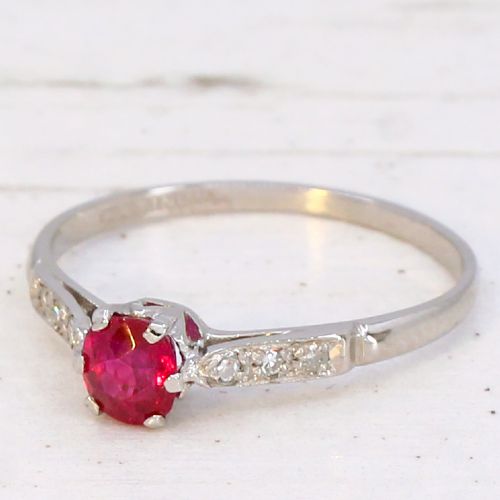
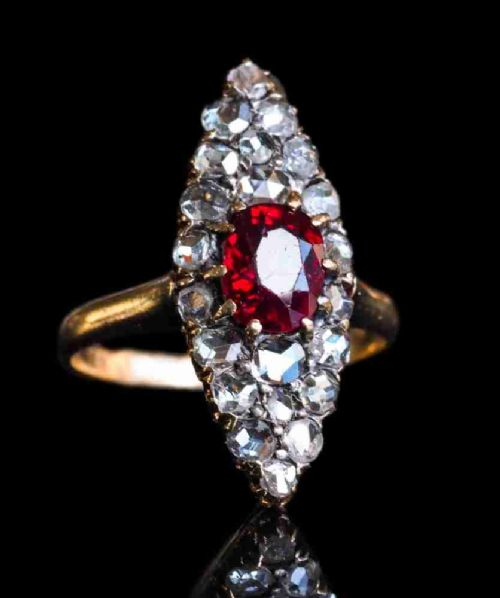
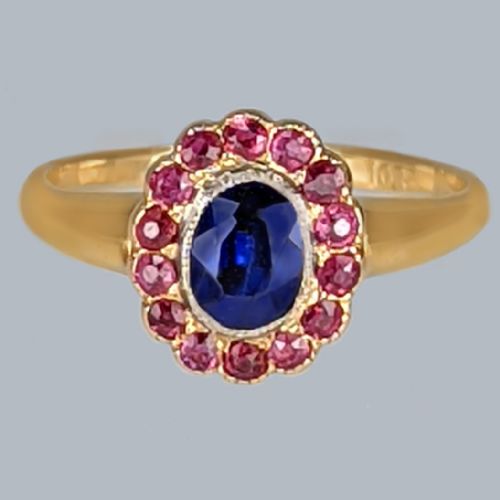
A natural ruby ring brings together deep crimson corundum and bright antique diamonds within settings shaped across the Victorian, Edwardian, and Art Deco periods.
Natural Ruby Ring
A natural ruby ring centres upon unheated or treated corundum stones mined in locations such as Burma, paired frequently with supportive diamonds. The pieces gathered here span from the late nineteenth century through the mid-twentieth century, capturing distinct shifts in jewellers' design priorities.
Victorian examples often favour rich yellow gold settings arranged in boat, cluster, or multi-stone configurations, sometimes incorporating rose cut diamonds or pearls. Edwardian creations introduce lighter platinum work, clover motifs, and delicate navette or marquis silhouettes.
Art Deco specimens lean into geometric rigour, showcasing checkerboard patterns, trilogy formats, and substantial calibre-cut stones flanked by old cut diamonds. Later Retro Modern and mid-century designs display bolder tank styles and asymmetrical cluster arrangements.
Metals and mounting techniques
Goldsmiths of the nineteenth and twentieth centuries relied primarily on 18ct yellow gold and platinum to house their gemstones. Yellow gold provided warm contrast for deep red rubies during the Victorian and Edwardian eras, while platinum gained favour in the Art Deco period for its tensile strength and bright white surface.
Gemstones were secured using various hand-tooled methods, including grain setting for smaller diamonds and robust claw or bezel mounts for central rubies. Artisans cut stones by hand, resulting in characteristic old mine cuts, rose cuts, and early brilliant facets that give each piece distinct optical depth.
Listings feature yellow gold, platinum, and diamonds alongside unheated Burmese rubies across Edwardian, Victorian, and Art Deco periods.
Distinctions in construction and stones
Quality rests significantly upon the origin, colour saturation, and thermal treatment status of the central ruby. Stones possessing natural unheated origins, particularly from Burmese sources like Mogok, command attention for their intense saturation and internal silk.
The precision of the surrounding metalwork and the matching of secondary diamonds further distinguish finer items. Hand-carved galleries, undamaged original prongs, and balanced proportions between the ruby and its diamond borders mark superior historical workshop output.
The Natural Ruby Ring Glossary
- Navette
- A boat-shaped or marquise setting that tapers to sharp points at either end. This elongated silhouette sits flat along the finger.
- Trilogy
- A three-stone arrangement typically symbolising past, present, and future. Central stones are often flanked by matched diamonds.
- Calibre cut
- Small gemstones shaped specifically to fit tightly together within a geometric channel or cluster without visible metal gaps.
- Old cut
- A hand-faceted diamond style predating modern brilliant cutting, characterised by a smaller table, higher crown, and open culet.
- Ballerina
- A mid-century cluster design featuring a central stone encircled by an outreaching skirt of tapered baguette or brilliant cut diamonds.
Natural Ruby Ring: Frequently Asked Questions
How do I care for my ring?
Clean antique jewellery gently using warm water, mild soap, and a soft brush to remove everyday oils. Avoid harsh ultrasonic cleaners, particularly on pieces containing pearls or treated stones.
Store each ring separately in a lined box to prevent scratching softer metals or chipping adjacent diamond facets.
How can I tell the eras apart?
Victorian pieces utilise heavier yellow gold bands with rich scrollwork and star or boat cluster formations. Edwardian versions incorporate intricate millegrain detailing and platinum highlights.
Art Deco items display strict symmetry, geometric checkerboard patterns, and architectural lines. Mid-century examples shift towards heavy gold tank styles and sweeping organic fan motifs.
Are these rubies treated?
Many historical stones remain completely untreated, while others may show evidence of traditional thermal enhancement used to improve clarity and colour. Independent gemological reports often accompany significant pieces to confirm origin and treatment status.
Examining internal inclusions under magnification reveals natural growth patterns unique to unheated corundum.
Can antique rings be resized?
Most gold and platinum bands can be altered by a skilled bench jeweller without compromising structural integrity. Elaborate full eternity rings or heavily carved shoulders require careful evaluation before any adjustment is attempted.