




Natural Ruby Dress Ring
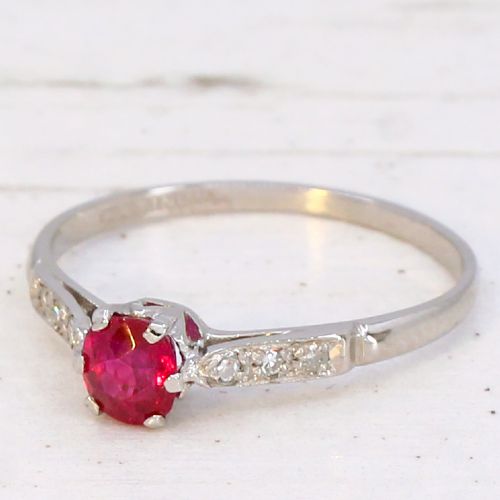
A natural ruby dress ring brings together vibrant red stones and diamonds in gold or platinum settings spanning the Victorian to Retro Modern eras.
Natural Ruby Dress Ring
When you search for a natural ruby dress ring, you encounter finger adornments designed to showcase red corundum alongside supporting diamonds.
The selections here span periods from the late nineteenth century through Victorian, Edwardian, Art Deco, and Retro Modern designs.
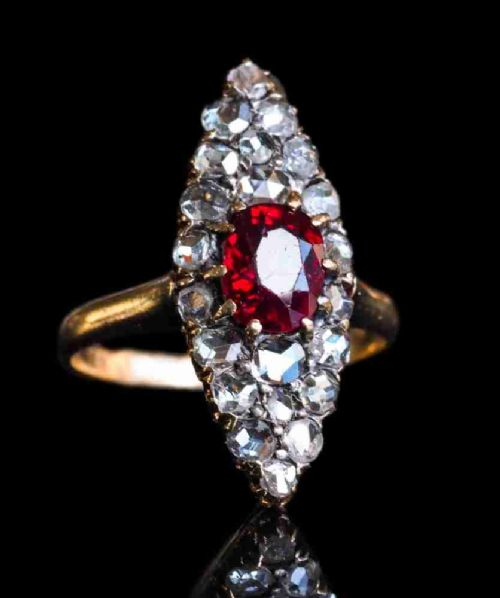
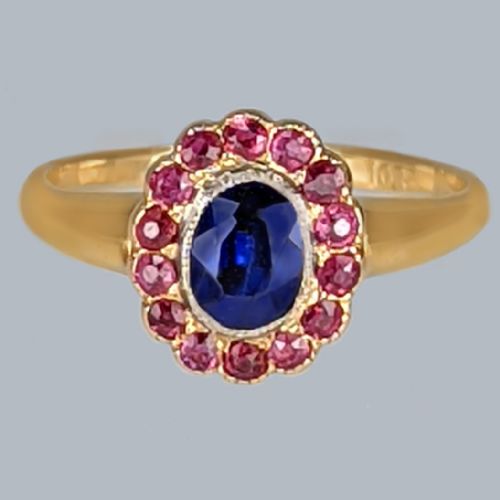
Cluster, navette, and three-stone configurations appear frequently, often pairing the central red gem with old-cut or rose-cut diamonds.
How they were made
Jewellers shaped mounts primarily in 18ct yellow gold, 18k gold, and platinum to secure the rubies and diamonds.
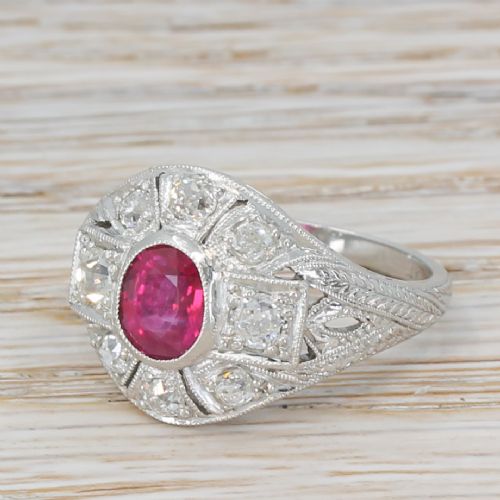
Craftsmen utilised stone-setting techniques suited to navette, checkerboard cluster, and multi-stone cluster arrangements.
One Edwardian piece cleverly incorporates a three-leaf clover motif into a ruby and diamond cluster.
What varies in quality
Distinctions in quality rest upon the origin and thermal treatment of the ruby, alongside the presence of gemological reports.
The precision of the diamond cutting and the structural integrity of the gold or platinum settings distinguish finer examples.
The Natural Ruby Dress Ring Glossary
- Navette
- A boat-shaped ring setting that tapers to points at either end. This elongated silhouette sits lengthwise along the finger.
- Cluster
- An arrangement where a central ruby is surrounded by a border of smaller diamonds. This layout maximises visual impact on the hand.
- Old Cut
- A historic diamond cutting style characterised by a high crown and small table facet. These stones predate modern brilliant cuts.
- Unheated
- A descriptor for rubies that have undergone no thermal enhancement to improve colour or clarity. Such stones retain their natural geological properties.
Natural Ruby Dress Ring: Frequently Asked Questions
How do I care for a ruby ring?
Clean the metal and stones gently using warm soapy water and a soft brush. Avoid harsh chemical dips that might affect the setting.
Store the piece separately from harder gems to prevent scratching the gold or platinum band over time.
Are all these rubies untreated?
Selected pieces specify unheated stones originating from sources such as Mogok or Burma. Gem reports often accompany these specific examples.
Other pieces feature natural rubies without explicit mention of unheated status, reflecting diverse origins across the listed eras.
What metals are used in these rings?
The selections utilise 18ct yellow gold, standard 18k gold, and platinum. Yellow gold dominates the Victorian and Edwardian examples.
Platinum appears alongside gold, particularly in pieces from the Art Deco period where white metal settings were favoured.
How can I tell an Art Deco ring?
Art Deco rings often feature geometric cluster shapes, checkerboard patterns, and platinum work framing the central ruby and diamonds. These designs emerged around the 1920s and 1930s.
They contrast with the organic floral motifs seen in earlier Victorian and Edwardian three-leaf clover or cluster styles.