
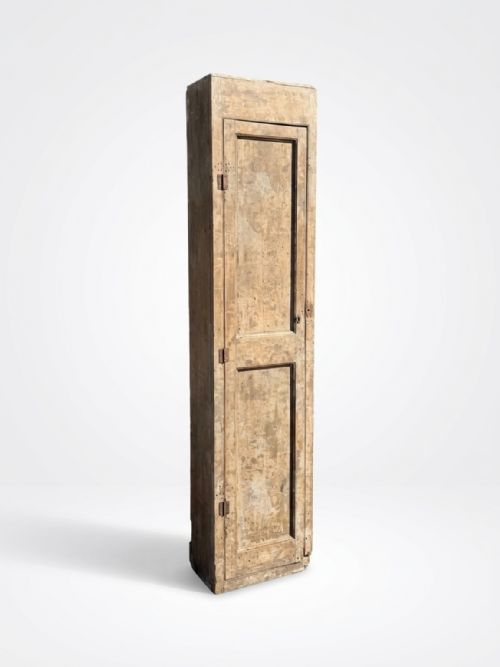
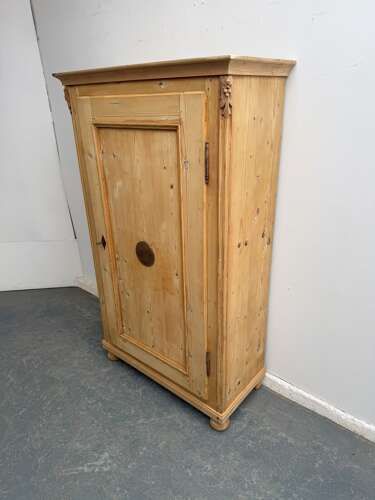
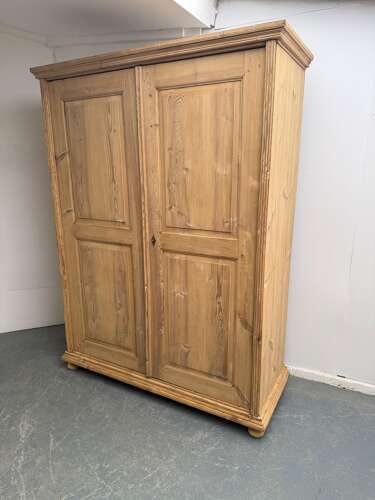
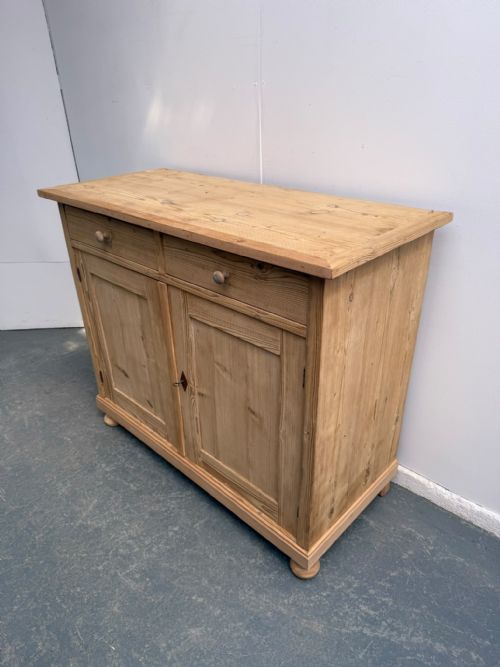
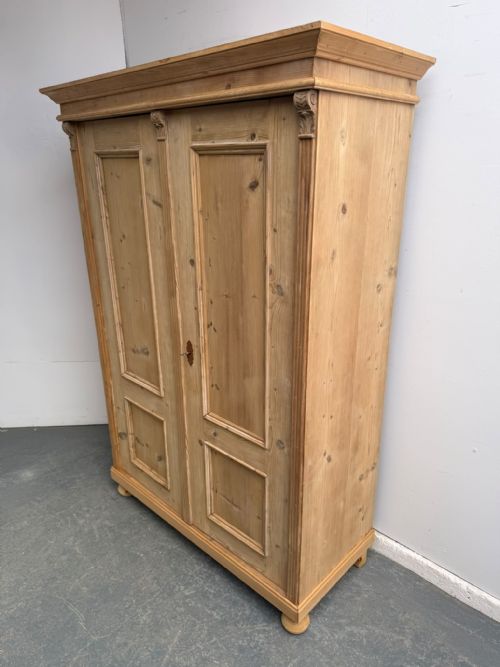

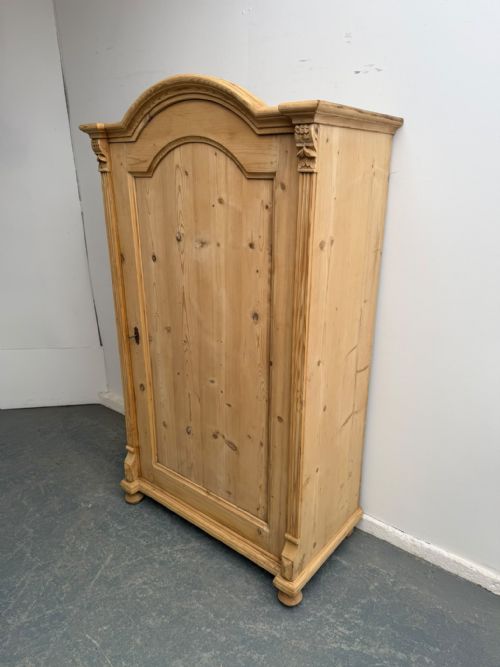
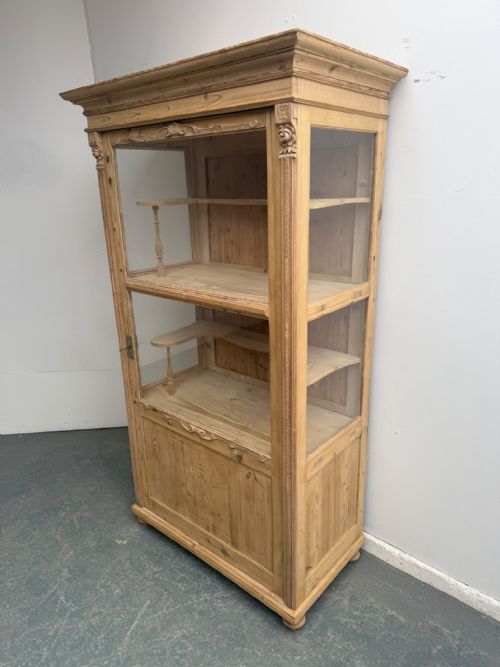


Natural Pine Tall Cupboard
These tall natural pine cupboards offer substantial storage with rustic character, bringing practical height and warmth to any room.
Natural Pine Tall Cupboard
A natural pine tall cupboard provides vertical storage capacity while maintaining the warm, honest surface character that buyers seeking this phrase expect. These pieces span utility and display, ranging from single door larder cupboards to wide two-door storage units and corner cabinets.
The selections available here draw primarily from Victorian, Georgian, and early twentieth-century periods, alongside regional European traditions like Dutch, Swedish, and Eastern European country styles. Common formats include one-door and two-door storage cupboards, linen presses, display cabinets, and tall corner units.
Many of these cupboards arrive prepared for waxing or painting, retaining bare or historic pine surfaces that show the grain and knots clearly. Buyers encounter both single-piece constructions and knockdown or partially dismantling wardrobes designed for easier transport.
How they were made
These pieces are constructed predominantly from solid pine, often augmented with iron or brass hinges, latches, and occasional glass panels in display doors. Cabinetmakers utilised sturdy timber frames, tongue-and-groove planking, and pegged or nailed joints suited to domestic utility.
Surfaces frequently show the marks of hand-planing and early preparation intended to receive traditional wax finishes or paint layers over time. Hardware such as iron drop handles and brass fittings reflects the functional requirements of country workshops and regional cabinetmakers.
One remarkably ambitious example stands as a very tall eight-foot English larder cabinet.
What varies in quality
Quality in these pine cupboards rests on the integrity of the timber framing, the retention of original hardware, and the balance of proportions across tall structures. Pieces with well-fitted panel doors, sound internal shelving, and intact structural mouldings stand apart from simpler utilitarian boxes.
The distinction between standard storage items and finer examples also lies in regional joinery details, such as sophisticated cornice work, arched panels, or functional knockdown designs that maintain rigidity when assembled.
The Natural Pine Tall Cupboard Glossary
- Knockdown wardrobe
- A large wardrobe constructed with modular or pegged sections that dismantle for transportation and reassembly in the home.
- Linen press
- A tall cupboard featuring upper shelving or sliding trays for textile storage, often positioned above a base section fitted with drawers.
- Dresser base
- A low or mid-height storage unit with cupboards and drawers, appearing here in substantial tall formats suited to heavy utility.
- Cornice
- The decorative mouldings running around the topmost edge of a tall cupboard, defining its architectural proportion and period style.
Natural Pine Tall Cupboard: Frequently Asked Questions
How do I clean a waxed pine cupboard?
Dust the surface regularly with a soft, dry cloth to prevent dirt accumulation within the grain.
Apply a traditional beeswax polish sparingly once or twice a year, buffing gently to maintain the soft sheen without building up heavy residues.
Can tall pine cupboards be dismantled for moving?
Certain larger wardrobes and cupboards incorporate knockdown designs with pegged or bolted sections specifically engineered to separate into manageable parts.
Many period country cupboards remain as single solid pieces, requiring careful measurement of stairwells and doorways prior to transport.
What is the difference between a larder cupboard and a standard storage cupboard?
Larder cupboards traditionally feature deep internal shelving or ventilation provisions originally intended for food storage in country kitchens.
Standard storage cupboards offer general compartment space suitable for linens, books, or everyday household items.
How do I date a Victorian pine cupboard?
Examine the construction methods, such as hand-sawn timber marks, early iron or brass hardware, and the style of the mouldings.
Victorian pieces often display characteristic beadwork, drawer linings, and structural proportions distinct from Georgian or twentieth-century counterparts.