
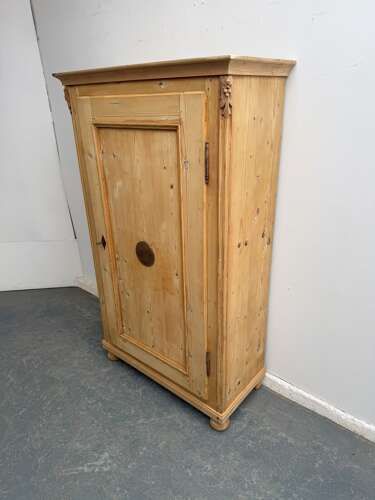
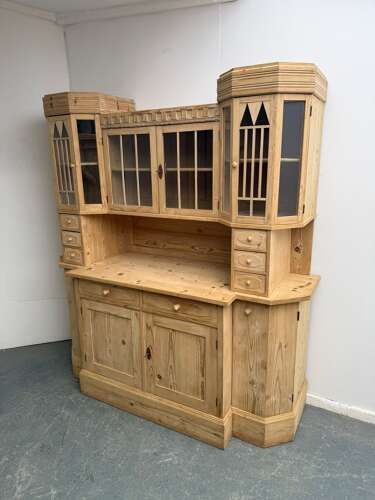
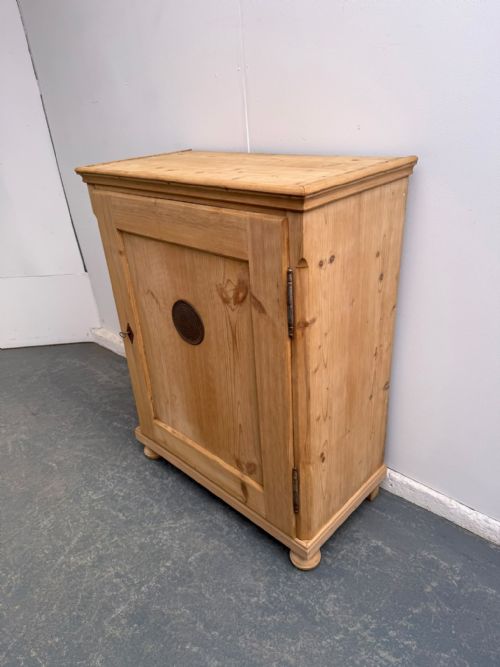
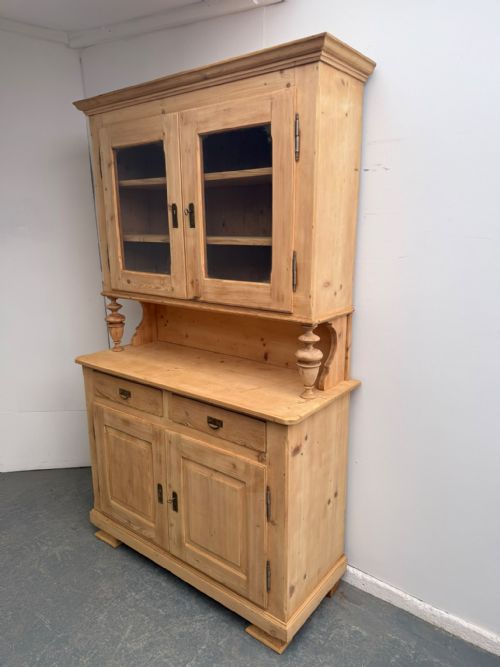

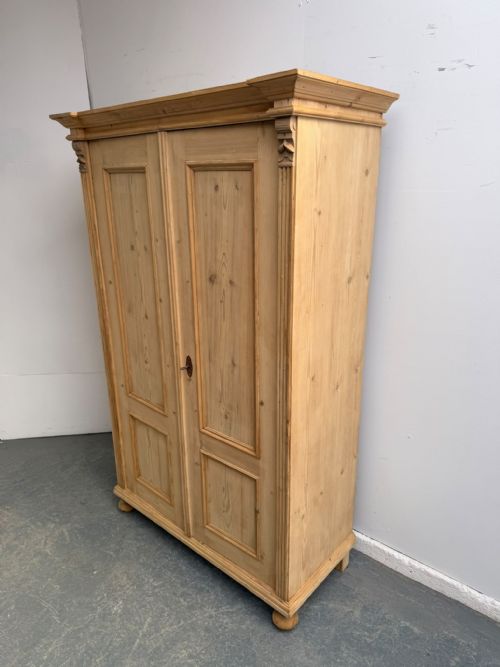
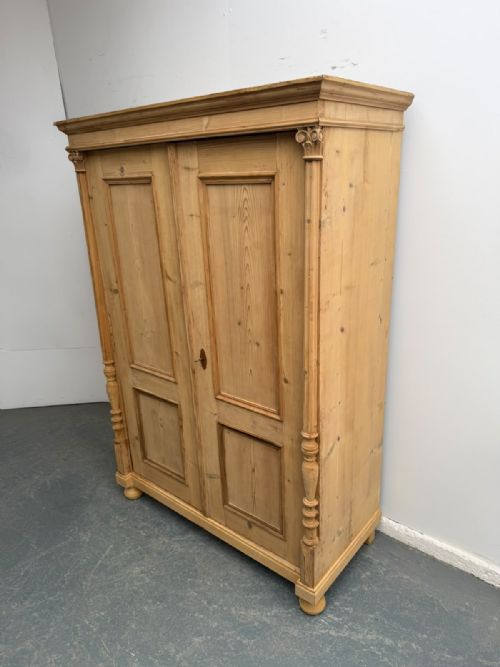
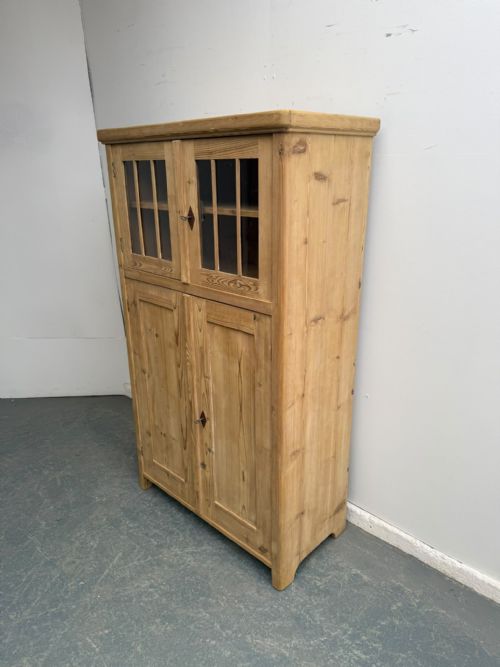
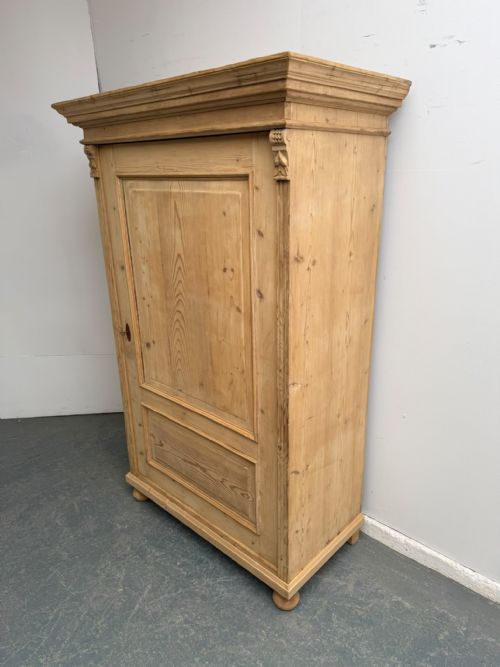
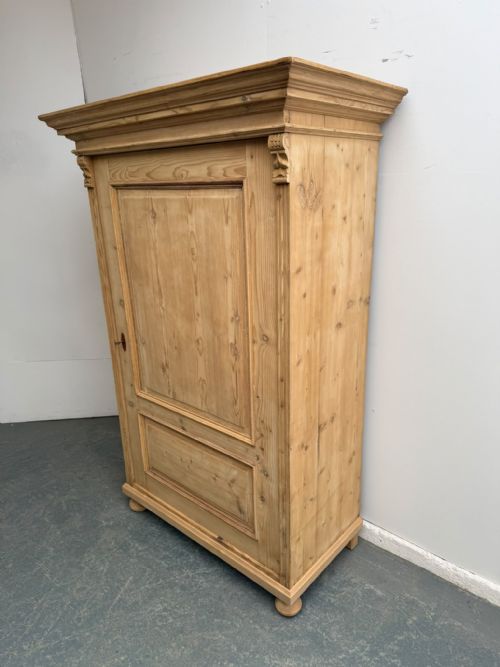
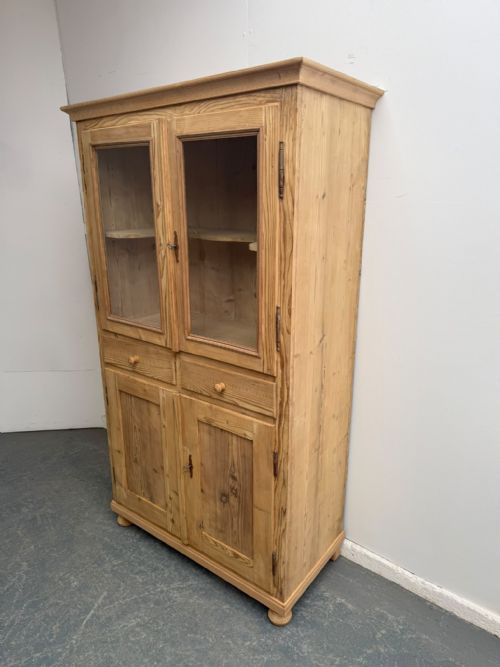
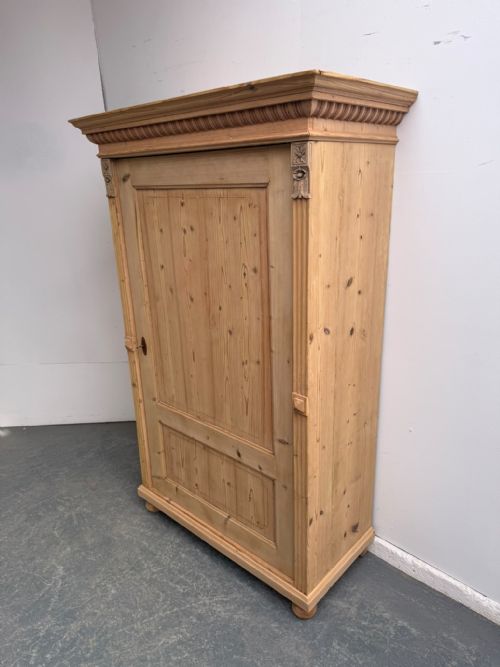
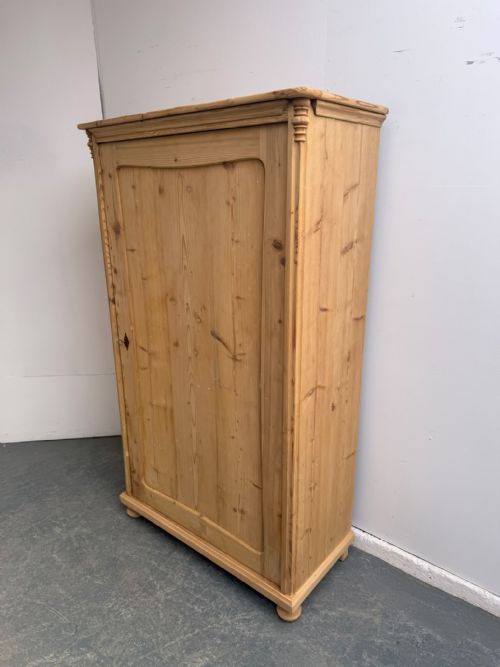
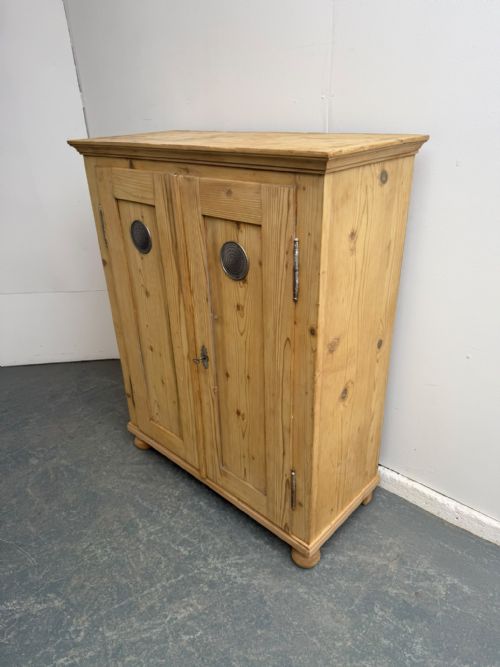
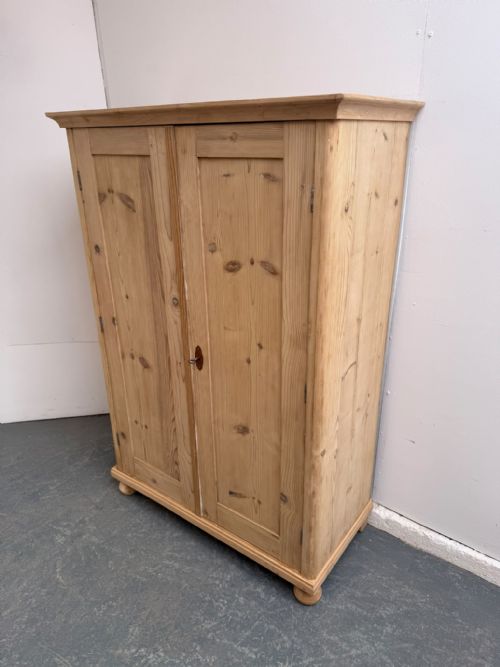
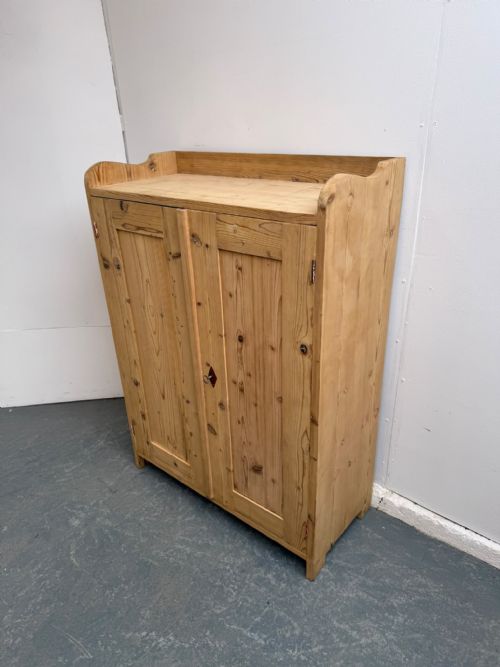
Stripped Pine Larder Cupboard
A stripped pine larder cupboard is a sturdy storage piece built for household provisions, offering practical utility and honest country charm.
Stripped Pine Larder Cupboard
A stripped pine larder cupboard provides essential food and kitchen storage in a robust domestic format. These pieces emerge primarily from the Victorian period, alongside Georgian and early twentieth-century examples.
Buyers encounter single and multi-door configurations, often featuring drawers, glazed display sections, or vented panels for food preservation. Styles range from Victorian Country and French Country to Arts and Crafts and rustic farmhouse interpretations.
The form adapts easily to contemporary kitchens and pantries while retaining its original utilitarian character. Most examples arrive finished for waxing or painting, allowing the wood to suit modern interiors.
How They Were Made
Joinery methods include fielded panels and beaded detailing, with some pieces incorporating adjustable shelving or fitted internal compartments. Surfaces are stripped back to bare timber, ready for traditional wax finishes or paint.
Listings span the Georgian, Victorian, and 1910 periods, utilising pine alongside iron, glass, and brass hardware.
What Varies in Quality
Quality rests in the balance of proportions and the integrity of the original construction, from shallow single-door cupboards to large four-door formats. Superior pieces display refined joinery, such as cleanly executed fielded panels and well-fitted drawers.
Hardware choices and functional details, including ventilation panels and adjustable internal shelving, differentiate standard utility items from more considered regional carpentry.
The Stripped Pine Larder Cupboard Glossary
- Fielded panel
- A central wood panel with bevelled edges designed to fit securely into a grooved frame. This technique accommodates seasonal wood movement while adding depth to cupboard doors.
- Vented cupboard
- A storage unit incorporating pierced or mesh panels to permit air circulation. Such airflow helped keep stored provisions cool and fresh before mechanical refrigeration.
- Arts and Crafts
- A design movement prioritising traditional craftsmanship and utility over ornate mass production. Pieces from this era often highlight honest materials and simplified forms.
- Georgian period
- An era spanning the eighteenth and early nineteenth centuries characterised by classical proportions and functional country interpretations in pine.
Stripped Pine Larder Cupboard: Frequently Asked Questions
How do I use a larder cupboard today?
These cabinets serve well in kitchens or dining rooms for storing tableware, dry goods, or cookware. Their deep shelves and generous door capacity help organise everyday household items.
The natural pine surface integrates easily into both traditional and modern spaces, functioning as a standalone pantry or linen press.
What periods do these cupboards come from?
The selection spans Georgian, Victorian, and early twentieth-century eras. Victorian pieces form the majority of the available items.
Each period brings subtle variations in door configuration, hardware, and decorative detailing, such as carved elements or beaded panels.
Are the shelves adjustable?
Certain storage cupboards include adjustable internal arrangements to accommodate tall containers or stacked dishware. Fixed shelving remains common in traditional country formats.
Checking the specific internal configuration helps determine suitability for particular storage needs.
Should I wax or paint the pine?
Most pieces are offered ready for waxing or painting, giving buyers control over the final appearance. Traditional wax feeds the stripped timber and enhances the grain.
Alternatively, applying paint allows the cupboard to match existing room decor while preserving the underlying woodwork.