


Natural Pine Corner Cabinet
A natural pine corner cabinet brings warmth and practical storage to an overlooked room angle.
Natural Pine Corner Cabinet
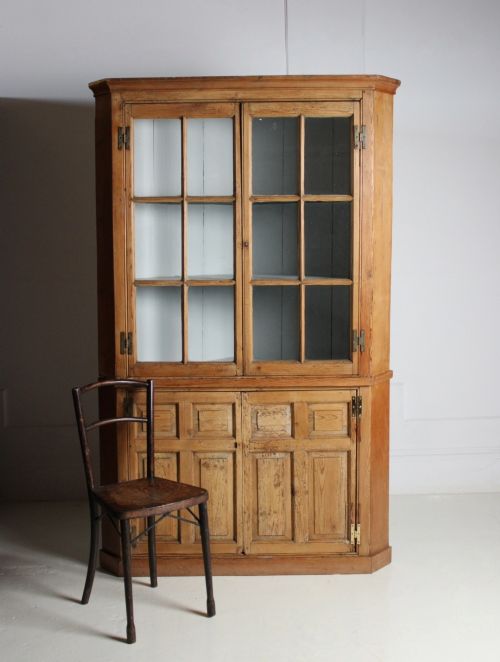
A natural pine corner cabinet turns a difficult room junction into functional display or storage space, fitting snugly where standard furniture cannot go. These pieces span centuries of domestic design, from early Georgian forms through Victorian country versions up to pieces from nineteen ten.
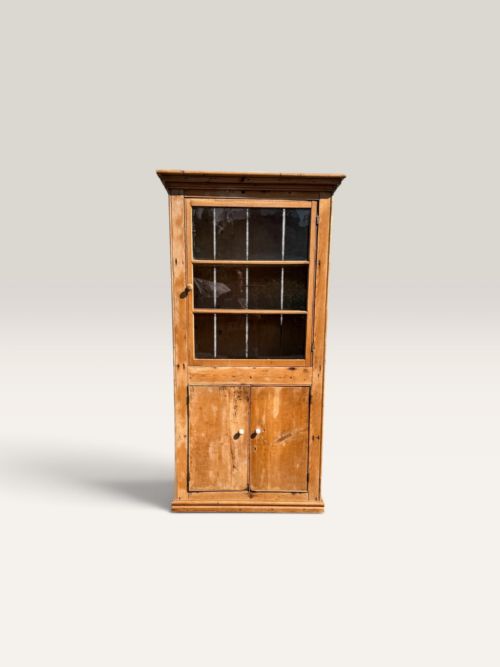
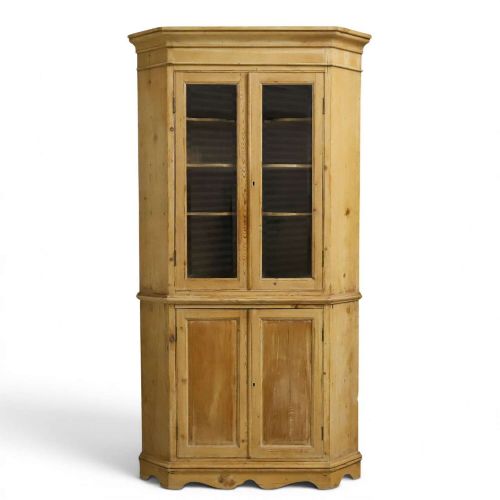
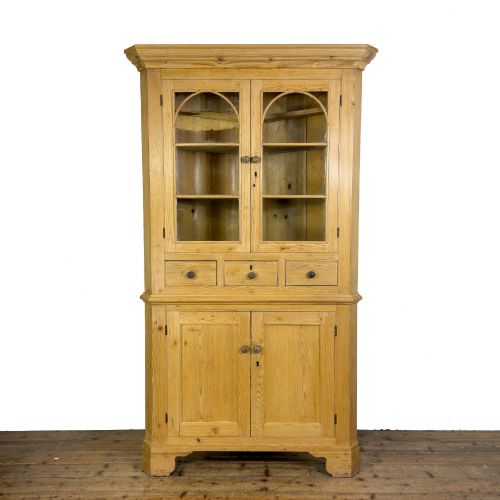
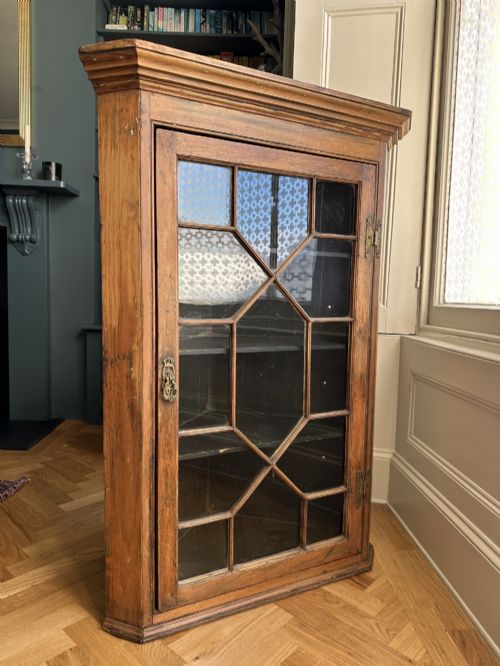
The evidence shows both one-piece and two-part formats, alongside tall designs and dome top fitted cabinets. Buyers commonly encounter glazed doors, glass panels, and solid timber panels across these listings.
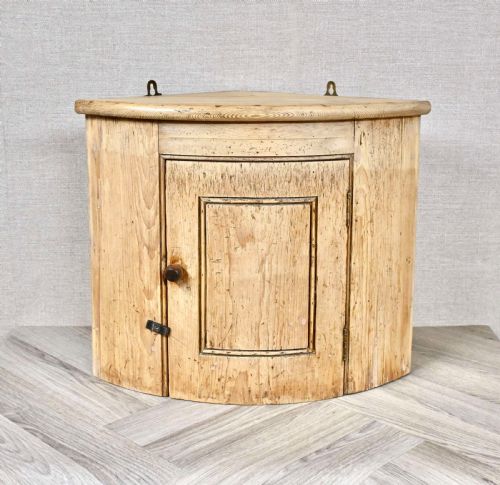
Origins represented in the evidence include English pieces alongside rustic farmhouse and Victorian country styles. Some examples feature original painted interiors or bow front shaping that softens the rigid geometry of a room corner.
How they were made
Makers utilised solid pine and pitch pine as the primary timber, occasionally shaping wood into curved bow fronts or dome tops. Carved details and astral glazing bars add architectural depth to the doors.
Hardware incorporates brass and iron elements for hinges and latches, whilst glass provides transparency for display compartments. Some cabinets retain original painted surfaces on the interior behind their glazed or solid doors.
Some nineteenth-century cupboards hide remarkably bright painted interiors behind sober wooden doors.
What varies in quality
The distinction between standard examples and finer items rests upon the sophistication of the carpentry, such as the intricacy of dome top carving or the precision of astral glazing. Early Georgian constructions demonstrate superior joinery compared to later rustic farmhouse utility pieces.
Proportion and scale dictate the visual weight of the furniture, with tall three-door formats or barrel back designs demanding greater skill from the maker. The presence of untouched interior paintwork or original glass adds substantive interest to a piece.
The Natural Pine Corner Cabinet Glossary
- Astral glazed
- Refers to doors fitted with wooden bars that divide the glass pane into smaller segments. This technique is typical of finer Georgian cabinetry.
- Bow front
- A convex, outward-curving cabinet facade. This curved profile softens the sharp angles inherent in corner furniture.
- Pitch pine
- A dense, resinous variety of pine timber utilised for durability. It often displays a pronounced grain pattern.
- Two-part form
- A cabinet constructed in separate upper and lower sections stacked together. This method aided transportation of large tall cupboards.
- Barrel back
- An interior cabinet configuration featuring a curved, semicircular rear wall. It creates a seamless display space for contents.
Natural Pine Corner Cabinet: Frequently Asked Questions
Where should I place a corner cabinet?
These cabinets fit directly into any ninety-degree room junction to utilise dead space effectively.
They anchor dining rooms, hallways, or living spaces without jutting too far into the main floor area.
How do I clean stripped pine?
Dust the surfaces regularly with a dry cloth to prevent dirt accumulation in the grain.
Avoid harsh chemical cleaners that strip the natural timber oils and dry out the old wood.
Can I store heavy items inside?
Solid pine construction provides sturdy shelving for everyday crockery and glassware storage needs.
Check the internal fixed or adjustable shelf supports before loading exceptionally heavy kitchenware.
Are these cabinets difficult to move?
Single-piece cabinets require two people to lift safely due to the solid timber weight.
Two-part forms separate into upper and lighter lower sections to make transport significantly easier.
How do I date a pine cupboard?
Examine the construction methods, hardware types, and overall style cues present in the woodwork.
Georgian pieces display different proportions and joinery compared to later Victorian or nineteen-ten examples.